

The Vintage 'Burger' From The '50s We'd Actually Eat Today

Post-World War II America is an interesting time to look into for cuisine history buffs. Numerous advancements were made in processing and packaging long-lasting foods that could make the long journey from the States to points around the globe to feed the troops. Once the war ended, all that innovation had to go somewhere — so it landed in American homes. That's how we went from scratch cooking to becoming obsessed with convenience food.
Lots of interesting dishes and creations came about during this time, but perhaps more interesting than most of the plenty of '50s sandwiches was the so-called "Friday burger." Think of it as a more retro predecessor to the tuna melt. On toasted hamburger buns, you have breadcrumb-coated canned tuna dressed with Miracle Whip and celery salt. Right on top of this tuna patty would be a few rings of onion, dill pickles, and a classic slice of American cheese. Unlike some Depression-era oddities (emergency steak comes to mind), this vintage sandwich actually sounds delicious by today's standards.
But the biggest question you probably have is the name — why is it called a Friday burger? There are very few sources that go into the sandwich's origin, but it's likely linked to Roman Catholic tradition, as Fridays meant abstaining from meat. Fish, however, was okay, so Friday meals would often consist of baked salmon, tuna noodle casseroles, or fish sticks. Someone eventually came up with the idea of swapping the beef patty in their burger with tuna to get a Fish Friday–appropriate meal, and that's how the Friday Burger came to be.
The ingredients you must use for a period-accurate Friday Burger
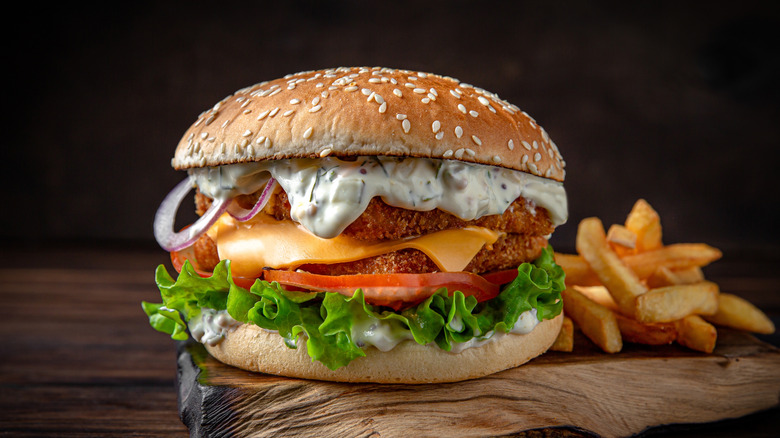
While you can use any brand or any type for most listed ingredients in a Friday Burger (including canned tuna), there are two things you must get right to get a proper Friday Burger: the Miracle Whip and the celery salt. If you can take a time machine back to the '50s right now and ask people what salad dressing they like, most will tell you "Miracle Whip" — not Thousand Island or Caesar. Miracle Whip was everywhere back then, partly because this sweet-and-sour sauce was also included in soldiers' rations. As troops returned home, they brought the sauce with them and introduced it to their families, and beyond backyard BBQs, Miracle Whip would later appear on our Friday burger.
The second thing is celery salt — the same one you'll find in Old Bay seasoning and Chicago-style hot dogs. Playing into the theme of ultra-convenience during this period, celery salt was used as a two-in-one solution for salting and adding a subtle grassy flavor to the burger without requiring you to add fresh celery to the burger. The burger wouldn't taste the same with a vegetal hint, so don't skimp on it if you can.