

Ree Drummond Adds Buttermilk And Milk To Her Cornbread. Here's Why You Should Too

If you ask different bakers their key to the perfect cornbread, you'll receive a variety of ardent tips and opinions. Though a recipe as simple as cornbread may not seem so complicated, people often debate the core ingredients; buttermilk vs regular whole milk, for instance. But, in the case of these dairy ingredients, has anyone stopped to ask, "Why choose between the two?"
Thankfully, the answer is yes. Food Network chef and host of "The Pioneer Woman," Ree Drummond, adds both buttermilk and milk to her skillet cornbread recipe, explaining that buttermilk adds tang and moisture, while regular milk "balances the whole thing out and thins out the batter a little."
Some say regular whole milk is how they've always made cornbread. Others claim that buttermilk is essential to a true Southern cornbread. As a food scientist and baker who is always interested in experimenting in the kitchen, Drummond's 1 cup of buttermilk plus a half cup of regular milk instantly made sense to me from a chemistry perspective. After all, fermented, acidic buttermilk gives cornbread a slightly tangy, buttery taste, like in buttermilk pancakes. The combination of its acid with baking soda (like in Drummond's recipe) can also contribute moisture and an undeniably tender, fluffy crumb structure. But buttermilk is a bit thick and sour-tasting. Cutting it with regular whole milk makes for a less dense batter that's still rich, but puts some of the flavor focus back on the corn, butter, and slight hints of sweetness. Genius.
Adding both dairy ingredients gives equilibrium
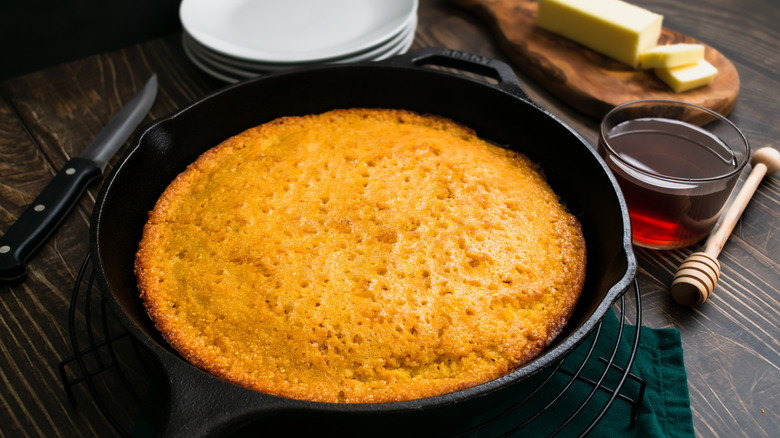
Cornbread can be an unexpectedly personal topic. You may like your cornbread light and airy, in the form of muffins. I like mine a little more dense and baked in a skillet or rectangular pan, so I can cut it into thick squares to serve with a bowl of hearty chili. To each their own, right? Drummond's recipe is basically the best of both worlds and holds up well served in a variety of applications.
With a variety of seriously crave-able cornbread recipes at your fingertips, don't stress over something as simple as milk vs buttermilk. If you have both on hand, mix both into the batter. You'll find that the more balanced taste (more subtle dairy and less of a strong tang) allows you room to experiment with other flavor variations on the classic, such as honey sage skillet cornbread or spicy jalapeño cornbread.
If you don't have buttermilk in the fridge, you can make a DIY buttermilk substitute by adding a tablespoon of white vinegar or lemon juice to a cup of milk. The taste won't be quite the same, but it will help give your cornbread a little extra rise when combined with the leavening agents in the recipe.