

The Simple Prep Step That Will Make Or Break Your Beef Stew
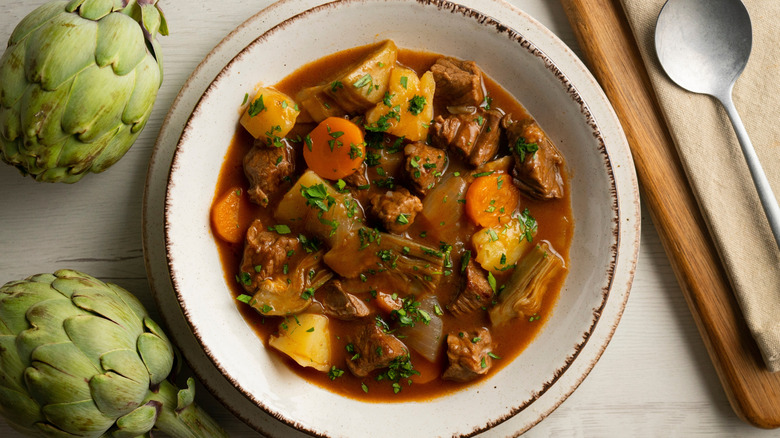
Beef stew may seem like the ultimate "throw it in a pot" meal, but even the most homey dish still requires some careful preparation. Good stew of any kind isn't just about the flavor of the ingredients you use, but also the balance with which they're added, and the timing of when you add them. Carrots and other veggies cut too small, or added too early, will end up unpleasantly mushy.
Similarly, not browning your beef before adding it to the stew means you are leaving flavor on the table. But of all the best tips for making beef stew, one of the easiest ones to overlook is trimming the fat and shaping your beef.
You certainly want some fat in your beef when you stew it. Fat adds flavor and helps contribute to the luxurious sheen and rich texture. However the best cuts of beef to use in stew – including beef chuck, short rib, and brisket — are often very fatty, as they are full of collagen that will turn to gelatin as the meat slow cooks. This imparts that body that you want in stew, but these cuts also often have large chunks of hard fat around their exterior or dotted through the meat. Trimming these large chunks of fat will prevent your stew from being too heavy, while still leaving enough fat to make it flavorful.
Trim and shape your beef chunks so they cook evenly and don't make your stew too fatty
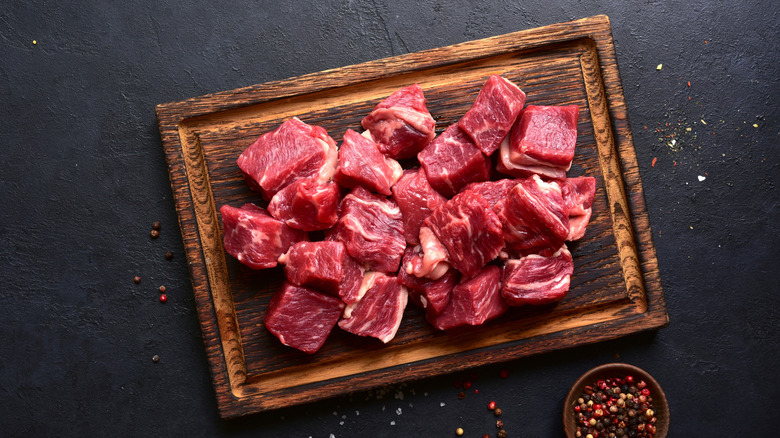
While a nice, rustic beef stew isn't going to be perfectly uniform, you also want to cut your beef chunks into roughly similar sizes so that they cook at the same rate. Getting tough cuts like chuck and brisket to be meltingly tender means having enough time to break down all that collagen, which can take hours, and larger chunks may still be tough when the rest of the stew is done.
You can also end up overcooking or undercooking the meat if you aren't careful. While the moist environment makes cooking stew beef more forgiving than other methods, chunks that are too small can end up tough and dry after hours in a simmering stew. On the other end, chunks that are too big can take too long to tenderize.
While you don't need to be exact with your beef stew meat, you should aim for square chunks that are about 1 inch in diameter. Different beef stew recipes may call for smaller or larger sizes depending on how long the recipe is supposed to cook, so if one specifies a size for the beef, follow it. If you are splurging for more tender cuts of beef you can go smaller. But 1 inch chunks are a good middle ground for stews that will take a few hours to cook. It is beef stew after all — so you should be making sure the beef itself is perfect.