

An Old-World Grain Is Making A Modern Comeback As A Nutritional Powerhouse
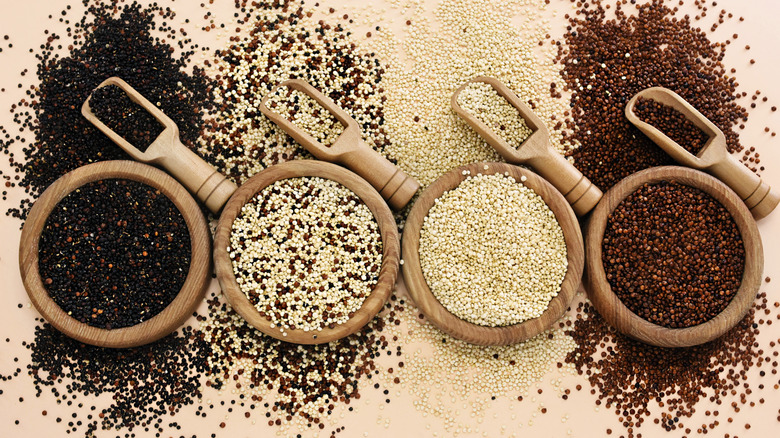
Sorghum is one of the world's oldest cultivated grains, domesticated around 8,000 B.C. and grown in Africa, India, and the Middle East. Bred and well adapted to necessity, it spread across the regions through tribal movement, a hardy and bountiful plant that could reliably deliver a harvest despite the harsh environmental conditions and poor soils of the region. All parts of the plant have a utility, with an early recorded mention of sorghum in the United States found in a letter written by Benjamin Franklin to his sister in 1757, sending along some seeds of a special type of sorghum used to make brooms and whisks, called "broomcorn."
Sorghum grows on about a third of the water corn needs and doesn't rely heavily on fertilizer, making it one of the most sustainable, resource-efficient cereal grains in commercial rotation. The grain itself is small and pale gold, naturally gluten-free, with a mild sweetness and a texture somewhere between barley and brown rice. Whole, it cooks into a mildly earthy base for grain bowls or salads, with a much lower glycemic index than rice. Ground, it becomes a nutty-tasting flour that can easily be incorporated into most recipes that call for flour, although rarely on its own. The natural sweetness and caramel tones add a depth to baking and brewing, making it a favorite addition to many gluten-free beers for this reason.
As climate change alters what can grow where, this grain's durability is becoming more appealing and crucial. Today, most of the world's sorghum comes from the United States, planted on nearly nine million U.S. acres, worth almost $2 billion, and making expanding as dry regions look for more sustainable cash crops. Breeding advances over the last few decades have made it viable across a wide band from Texas to South Dakota, producing high yields even in thin soil.
Ancient and relevant
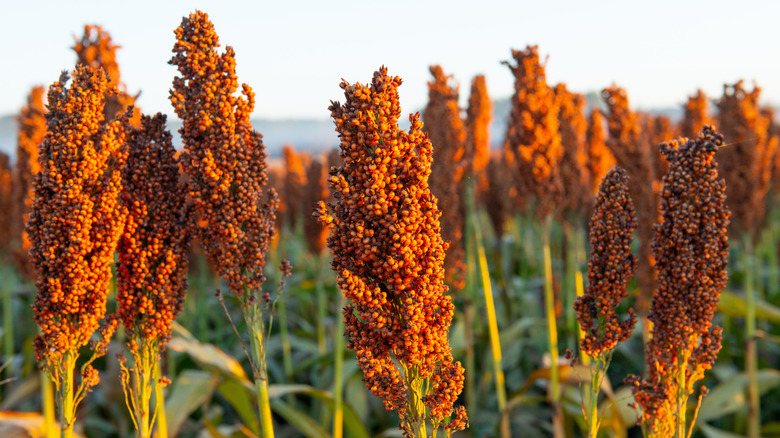
Sorghum is sometimes called "great millet", and in India, it's known as "jowar" and ground into flour for soft, savory rotis that are pliant even without gluten, good for mopping up curries. In Sudan and Ethiopia, it's soaked and fermented into porridges or sour batters for breads like kisra and injera. In China, it's distilled into baijiu, a clear, high-proof liquor with a deep, roasted aroma and a somewhat controversial taste.
Sorghum's American story began on ships that carried enslaved Africans to the colonies, who knew to use it for porridge, feed, and broom fiber. By the mid-1800s, Northern abolitionists had turned to sorghum syrup as a moral and practical substitute for cane sugar, which depended on enslaved labor. When the Civil War cut off Southern cane production, and tariffs drove up imports, sorghum became the people's sugar, cheap and adaptable, and possible to make at home. Similarly to the familiar and beloved cane syrup, families could crush the stalks in horse-drawn mills and boil the juice in open pans until it thickened into a thick, copper-colored sweetener, sometimes called sorghum molasses, that you can still find sold in roadside jars next to local honey and boiled peanuts.
After the war, the crop boomed, then slowly waned as industrial sugar beets took over and Americans developed a taste for the cheaply produced crystalline white sugar. Amish and Mennonite farmers kept the tradition of growing cane sorghum, pressing and bottling it for bake sales and markets. Sorghum syrup tastes smoky and faintly grassy, with a minerally sweetness that deepen and matures when cooked. It doesn't crystallize into sugar, but keeps as a pourable treacle that goes easily into baking, but is also suited to ham glazes and barbecue sauces.
Sorghum steps foward
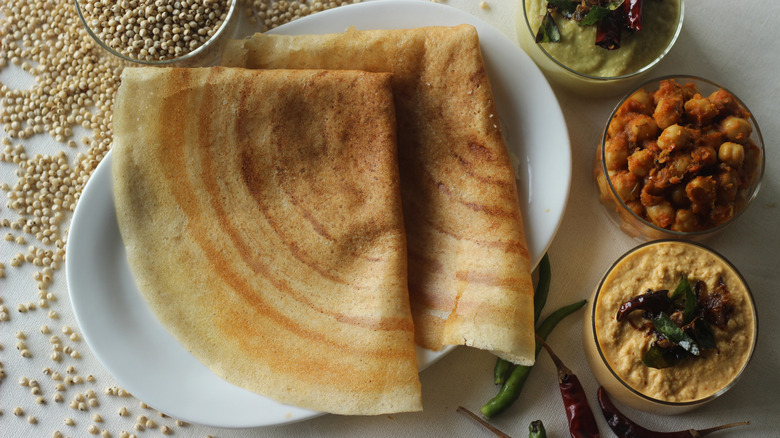
Nutritionally, sorghum earns its place as a comeback kid. With a truly impressive 21 grams of protein per cooked cup, the grain has even more fiber than brown rice. It's also low in lectins, and a good source of essential micronutrients like iron, magnesium, and B vitamins, among others. Compared with refined grains like white rice, sorghum digests more slowly, causing a gentler rise in blood sugar. In a study from Japan, people who ate sorghum porridge had significantly lower post-meal glucose levels even two hours later, suggesting the grain may help support steadier energy and long-term blood-sugar balance and metabolic health.
Sorghum holds the imprint of every hand that's tended it throughout history, now handing it over to climate-minded growers and health-conscious eaters today. Chefs and researchers are finding new uses for sorghum as more than a subsistence or substitute crop, and you'll find it holding its shape in gluten-free pasta, while the stalks are being tested for compostable packaging. Whole-grain sorghum is landing on menus as risotto and grain bowls, and even entering fermentation experiments like miso. You can also pop whole sorghum like tiny popcorn, and toss into trail mix or on top of a salad. Pigmented sorghums concentrate polyphenols in the bran (their hull), delivering berry-like antioxidant function; gentle heat from steaming or roasting can free some of these bound compounds, making them more bio-available, while prolonged boiling/extrusion may reduce them.
Sorghum is a valuable, practical grain that connects resourcefulness across centuries. From the fields of Sudan to Southern mills to modern test kitchens, it has moved through hands and centuries without losing its purpose. It's a grain that is part of our history, and will be part of our future.