

How Grocery Outlet's Price Tags Help Shoppers Find The Best Deals
With compact stores and ridiculously low costs, Grocery Outlet Bargain Market gives competitors like Aldi and Trader Joe's a run for their money. If you're from the West Coast or the Mid-Atlantic areas of the U.S., you're likely already familiar with this peculiar grocery gem. The chain currently operates over 500 stores mainly in these regions of the country, and it's continuing to grow — largely thanks to its too-good-to-be-true prices.
Grocery Outlet stores stand at just 15,000 to 22,000 square feet (for reference, Aldi locations are typically around 22,000), and shopping at one is like going on a treasure hunt. Each location is stocked with a range of brand-name products and grocery staples, all offered at steep markdowns – sometimes even 40% to 60% less than what you'd pay at a traditional supermarket. Shoppers can find "WOW!" deals on every shelf. But if you take a closer look at the price tags, you may just be able to sniff out the absolute best deals of the bunch.
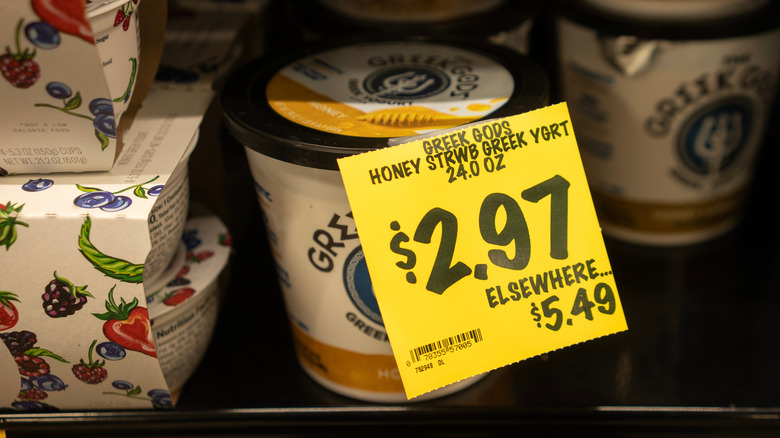
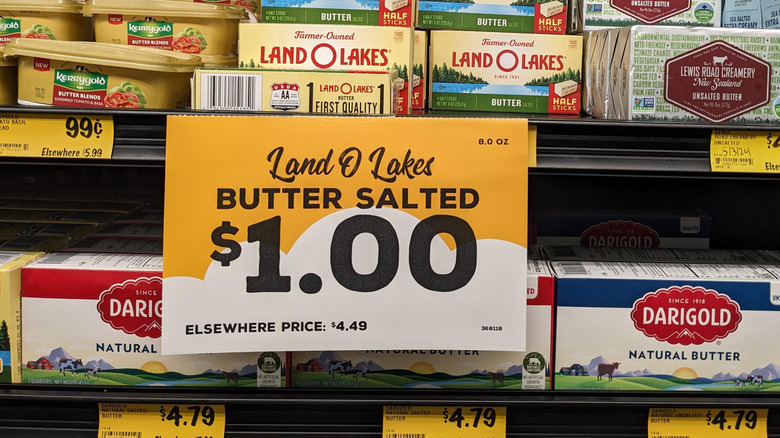
On of the store's price tags, customers can find the designated Grocery Outlet price for the product in addition to an "elsewhere" price – a reference price for what shoppers could expect to pay for the same item at a different retailer. This feature helps customers quickly identify the biggest savings throughout the store, and those savings can really add up, creating some seriously unbelievable Grocery Outlet grocery hauls. According to Grocery Outlet's website, as of October 2025, the company has helped its customers save nearly $3 billion in just the past year alone.
How does Grocery Outlet offer such competitive prices?
Grocery Outlet has earned its reputation as one of the most affordable grocery stores in the country. But how does it manage to sell brand-name products for so much less? The answer lies in its unique opportunistic buying model. Sometimes described as a T.J. Maxx for food, the company started as a military surplus store in 1946 and has continued on with a similar operational approach ever since. Grocery Outlet purchases excess inventory from brands facing packaging changes, manufacturing overruns, or product closeouts, oftentimes for pennies on the dollar. It then passes those low-cost products onto customers.
Now, this approach doesn't work for every kind of grocery product. For items like meat, dairy, and eggs, Grocery Outlet sources conventionally, while still striving to keep prices as competitive as possible. Under this model, freshness may also take a back seat. Like Aldi, Grocery Outlet isn't necessarily known as one of the grocery store chains with the best produce selections. But it's a great choice for shelf-stable items like pantry staples. It's also worth noting that the chain has faced some controversy around its "elsewhere" pricing.
A lawsuit out of Oregon claimed these comparison prices were deceptive or not based on real market data. On Reddit, a Grocery Outlet employee even suggested the numbers were sometimes made up, though others in the thread insisted they were real, verifiable numbers. There are certainly deals to be found at Grocery Outlet. But it sounds like you may want to take those "elsewhere" prices with a grain of salt, or do a little research of your own.