

The Biggest Mistake Everyone Makes When Buying Pears
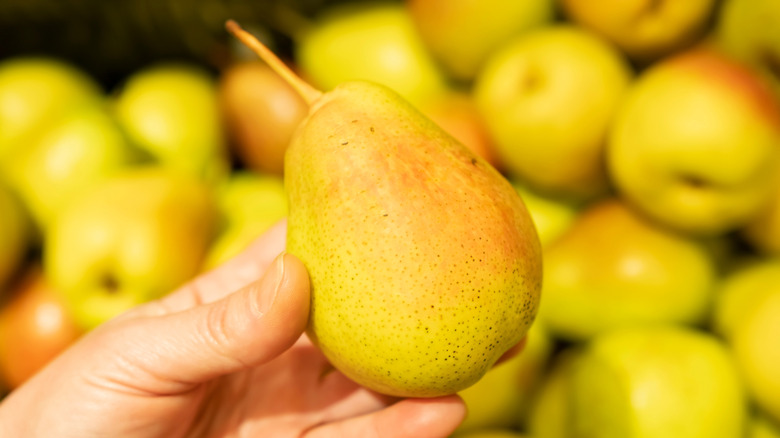
Pears can often seem like the Goldilocks of seasonal fruit varieties. They can be too hard or too soft, but rarely just right. That is, unless you learn how to buy the fruit correctly. The biggest mistake everyone makes when buying pears is thinking that they should be soft and ripe when you take them home from the store or farmers' market. Actually, though, pears that already exhibit soft flesh throughout are likely overripe, at risk for falling apart, and have that dreaded mealy bite. So, how do you avoid disintegrating, overly tender fruit? Since pears are typically harvested from their trees before they've ripened fully, it's best to buy pears that are still firm so they can ripen in your own kitchen.
While some pears change color as they ripen, not all varieties do. So, the best way to confirm a pear isn't overly ripe is to feel the top around the stem for a slight give that indicates the fruit is pretty much ripe and ready to eat. For pears that last longer once you bring them home, choose fruit that still feels firm at the top and throughout. Then, let unripe pears sit out on the counter until they soften and become optimally ripe, sweet, and juicy. After a few days of ripening at home, pear tops should be soft — but not squishy or slimy — indicating the fruit is ready to enjoy sliced as a snack or in your favorite pear salad recipe.
More tips for selecting and cooking with pears
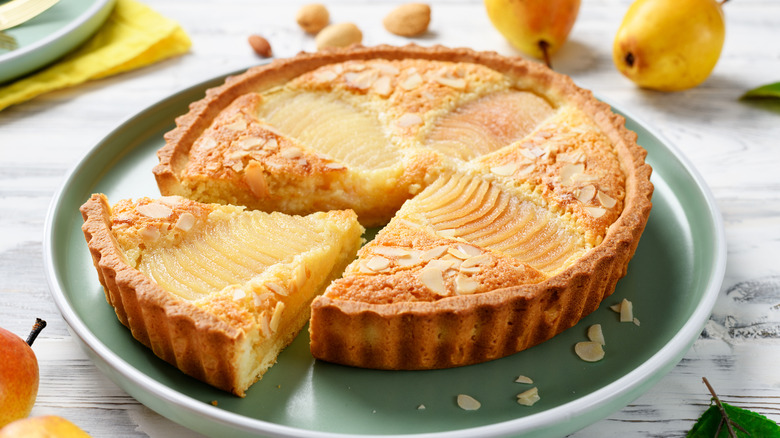
While it might be tempting to buy a bag of ripened pears from the local market, only do so if you're prepared to cook with them immediately and in certain applications. Ripe or overripe pears are excellent for making into pear butter, where the softened texture doesn't matter as much. However, overly ripe pears can quickly start to disintegrate and become difficult to slice and cook with. So, watch out for fruit that's extremely soft or bruised — even if you plan on using it quickly.
You also don't want to bite into a hard pear (unless we're talking about apple-like Asian pear varieties), which has not yet developed its sugars and become optimally tender and juicy. In the case of popular store-bought pear varieties like Bartlett or Anjou, let them ripen on the counter or place them in a paper bag to quicken the process by exposing the fruit to its own ethylene gas (or that of additional fruit you place in the bag). To preserve ripe pears, pop them in the fridge for a few days. And to make the most of the seasonal fruit, bake a pear almond tart, caramelize them and serve with ice cream, or freeze perfectly ripe pears to keep on hand for smoothies.