

Should You Cook Tomatoes In Cast Iron? It Depends
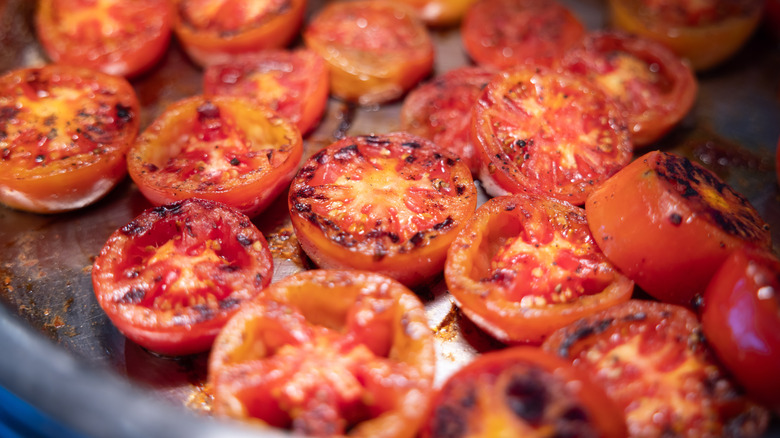
If you've got a cast-iron pan, you've probably heard the horror stories about how cooking anything acidic in it will make your meal taste like rust and damage your cookware. It's a pretty popular belief, and quite a few people staunchly avoid cooking so much as a tomato for even a second in their cast-iron skillet. But how true is it?
Well, it depends, but generally speaking, this is not a myth. It's true that acidic ingredients can cause iron to leach into the food. In a study published in the Journal of Food Science, researchers found that when they cooked corn porridge, its acidity was boosted with a touch of organic acids, and the iron content of the meal skyrocketed from 1.7 milligrams to 26.8 milligrams. The metal itself isn't harmful (in fact, the researchers even noted that this phenomenon could help increase dietary iron intake), but the real problem is the metallic taste it imparts on the food.
In a review made by America's Test Kitchen, however, it was found that you may have to simmer the acidic food for up to 30 minutes for the concentration of iron to get high enough for you to taste it. So, for short cooking times with tomatoes, like pan-grilling a few slices for your full English breakfast, it's totally alright.
Are seasoned cast iron more resistant?

To make it last longer, people often season cast iron with cooking oil to build a non-stick, non-reactive layer on its surface. The oil is essentially "baked" into the metal, forming a non-reactive layer on top of the bare material. This layer will keep the tomato juice from making direct contact with the metal surface and reacting with it. However, the seasoning isn't invincible. The entire time that the tomatoes are sitting and stewing on your glistening, well-seasoned cast iron, it's wearing it down bit by bit.
You may be able to get a few extra minutes on top of the 30-minute threshold of an unseasoned pan, but a seasoning layer won't make your cast-iron skillet acid-proof by any significant margin. Over time, repeated exposure to acid can actually start to erode the seasoning and even cause pitting — tiny spots and divots on the pan where the acidity visibly eats into the metal itself. Fortunately, this won't happen after just one meal, but too much acid for too long will take its toll on your cast-iron cookware.
But let's say you're a cast-iron devotee and you don't have a stainless steel skillet handy. You can add a teeny bit of baking soda to the tomato sauce, which, being basic, is highly effective at neutralizing the acidity in the sauce. Just don't forget to reseason your cast-iron skillet to avoid any other common mistakes.