

Why You May Want To Avoid Monk Fruit Sweetener
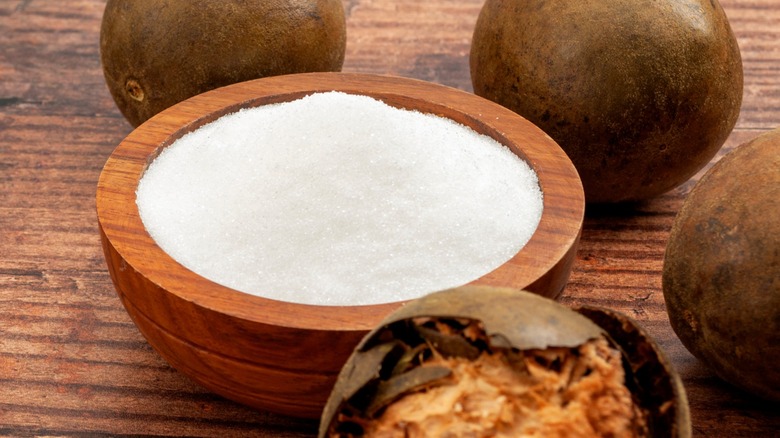
Many folks have a love-hate relationship with sugar, resulting in a roaming eye for viable substitutes. Some alternatives don't tickle the tastebuds, while others fail to match lifestyle standards. Then there's a somewhat mysterious stranger called monk fruit sweetener, which seems like a promising candidate. It's super sweet, has zero calories, doesn't raise blood glucose, and harbors something called mogrosides that are said to be anti-inflammatory. It also comes with two cool nicknames: luo han guo and swingle.
What's not to love? Unfortunately, a few things. While monk fruit sweetener seems like a promising sugar alternative, the downsides warrant a closer look. First are issues with availability and cost. The fruit grows in limited areas, mostly southern China for commercial use, and it requires careful harvesting and extraction of the crucial mogroside compounds, which is where most of the sweet stuff resides. This makes the cultivated product more expensive and harder to find than other types of sweeteners. If the goal is to broadly replace cane or granulated sugar in your household, monk fruit sweeteners aren't necessarily a practical choice.
Then there are the potential issues with taste and additives. While some people note the fruity, warm, and sweet flavor of monk fruit extract, others describe a bitter or metallic aftertaste. Even more concerning for people seeking natural sweeteners is that many monk fruit–based products are not pure monk fruit extract but blends, which can contain other sweeteners or sugar alcohols that potentially bring negative health effects, according to Healthline.
Monk fruit research and allergies
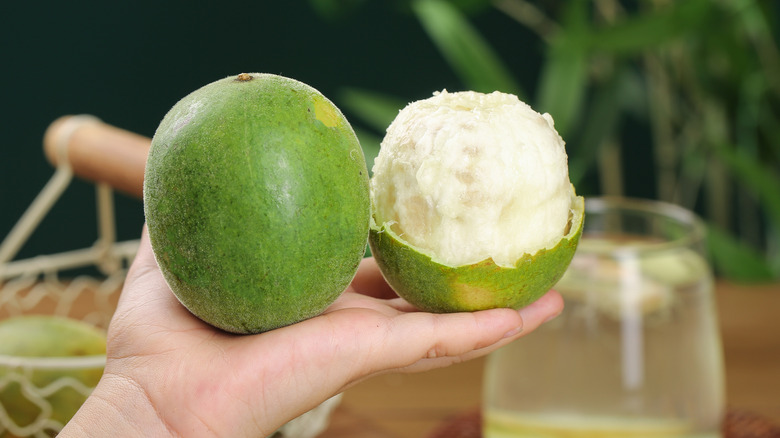
While monk fruit sweetener is generally recognized as safe (GRAS) by the U.S. Food & Drug Administration, the long-term research is limited. No harmful side effects have been identified thus far, but safety studies are still in early stages with no determination as yet on potential effects of using the sweeteners over long periods of time. This is a consideration if you're using monk fruit on a daily basis or as a permanent sugar alternative. Until more research comes to light, it could be best to use it sparingly.
Though reported allergic reactions to monk fruit extracts appear to be rare, they are possible, so anyone with allergy sensitivities should be cautious and aware of potential exposure. For example, monk fruit belongs to the gourd family (Cucurbitaceae), so anyone allergic to melons, pumpkins, or squash might have some risk exposure. Signs of an allergic reaction to monk fruit can include things like hives, rashes, dizziness, difficulty breathing, erratic pulse, swollen tongue or throat, stomach pain, or vomiting.
Monk fruit brings a lot of potential to the realm of natural sweeteners, and plenty of folks sing its praises. But given all the known and unknown factors — cost and availability, taste and cultivation issues, limited long-term research, and the potential for allergies — monk fruit sweetener isn't quite yet a shoe-in for replacing everyday table sugar.