

What Decanting Wine Really Does (And Why You Should Do It)
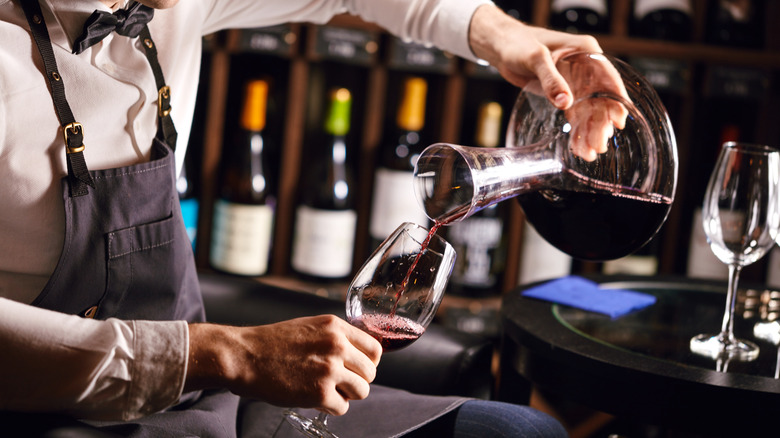
As wine ages, sediment from the grapes can settle and accumulate at the bottom of the bottle. This is where decanting comes into play. We spoke to Gabriel Corbett, AGM and Head Sommelier at two-Michelin-starred JÔNT, about what decanting wine does and why you should do it. According to Corbett, removing sediment from the bottle is only half of the equation.
"Decanting can be done for one of two reasons," he says. "[Either] decanting away sediment from an old bottle or bringing air into a young wine." Aged wines collect tannic sediments that cause an astringent and unpleasant mouthfeel, but decanting can remove these particles and even soften tannins. Introducing oxygen to younger wine can also be beneficial to amplify tasting notes. For that matter, aerating (letting wine breath) is important for both young and aged wines to enhance complexity while also reducing carbon dioxide for better aromas that will more positively affect taste.
To that effect, Corbett told us, "With decanting any wine, there will be oxygen contact, so the older wines that might be at their peak should be double decanted. Essentially, rinse out the bottle that it came in and pour the wine back in the bottle." Aged wine is delicate, so you don't want to expose it to too much oxygen by leaving it in a decanter. Plus, by pouring the wine back into the bottle, you and your guests can see the label. Rinsing out the bottle allows you to pour every last drop out without sediment in sight.
Is decanting wine always a must?
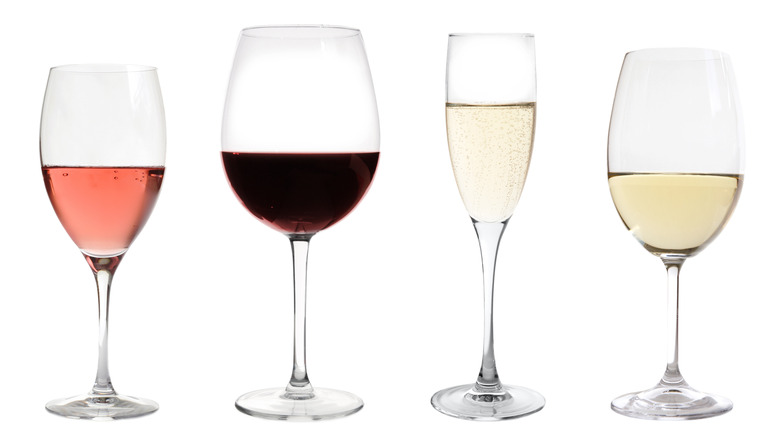
If you're wondering if this practice is necessary for every wine, Corbett argues, "Decanting can be useful for all types of wine, even Champagne! Rich and oxidative styles of white wine I find to be lovely with a little time in a decanter." While some argue that you usually don't need to decant white wine because it doesn't have tannins and is meant to be enjoyed young, certain white wines undergo a unique aging process in which they are exposed to oxygen, making them especially complex. With a savory and nutty profile, decanting oxidative and heavily aged white wines serves to accentuate their depth even more.
Still, Corbett admits, "Not all wine should be decanted. Heavier grapes like Cabernet Sauvignon, Merlot, or Nebbiolo can benefit, though." Young wines and bubbly bottles generally don't need decanting, nor do most roses or crisp whites like Vinho Verde. Light red wines like pinot noir and Beaujolais are fruity, young, and almost devoid of tannins, so you can also serve them right out of the bottle. That said, you can make an executive decision upon tasting the wine; if a young white or red is too acidic right out of the bottle, decanting will soften overly tart flavors, revealing more nuanced tasting notes. Whether you're decanting a young or old wine, we consulted another sommelier for the top decanting tips that run the gamut from pouring techniques to aeration times and decanter maintenance.