

Vintage One-Pot Meals That Deserve A Comeback
A home-cooked meal is arguably even more satisfying when it's been whipped up in one pot. This fuss-free approach saves time and effort, while allowing you to build rich, complex flavors and making serving a breeze. One-pot cooking has been a go-to in busy households for generations, and many modern favorites lean into this convenient technique. But today we're focusing on some forgotten one-pot classics that bring just as much simplicity, comfort, and deliciousness.
A common theme amongst one-pot meals is heartiness, and there's certainly plenty of that on offer here. In this lineup of vintage classics, you'll find warming soups and stews, cheesy casseroles, and savory breakfast dishes. Perfectly balancing indulgence and nourishment, these meals were a hit in their time, but somewhere along the line, they've fallen off the radar. Hence, we're on a mission to give these dishes the revival they deserve. So, if your usual chili or mac and cheese is on the dinner menu this week, why not switch things up and try one of these old-school recipes instead?
American goulash
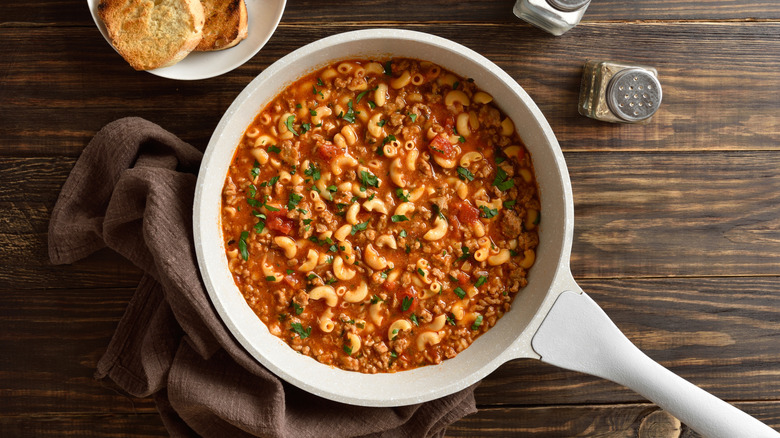
Dating back to the early 1900s, American goulash is a wonderfully satisfying blend of pasta, meat, and veggies. This dish is the epitome of hearty, budget-friendly comfort food. It's super quick to prep, packed with flavor, and sure to please a crowd, all while providing a great balance of protein, carbs, and other essential nutrients.
Goulash has its origins in medieval Hungary, where it took the form of a simple beef and onion soup that was prepared by local herdsmen. Over time, it evolved to include new ingredients, with paprika becoming an integral addition in the 16th century. When the dish was brought to America in the 20th century, it was adapted further. Early American versions also included beef and onions, but carrots, spaghetti, or rice were often incorporated, too. By the 1940s, canned tomatoes had become a go-to add-in, and the carb element was typically macaroni. This approach stuck, and the dish remained popular in the decades that followed. In fact, a 1969 Gallup Poll put goulash amongst the top five favorite meat-based dishes in the U.S.
Today, American goulash certainly doesn't get the widespread recognition it once did, though it remains a staple in the Midwest. Modern versions are often enhanced with rich flavor boosters like red wine and soy sauce, and feature a medley of aromatic herbs and veggies. And, Midwesterners are clearly on to something, because there's so much to love about this versatile one-pot creation.
Chicken a la king
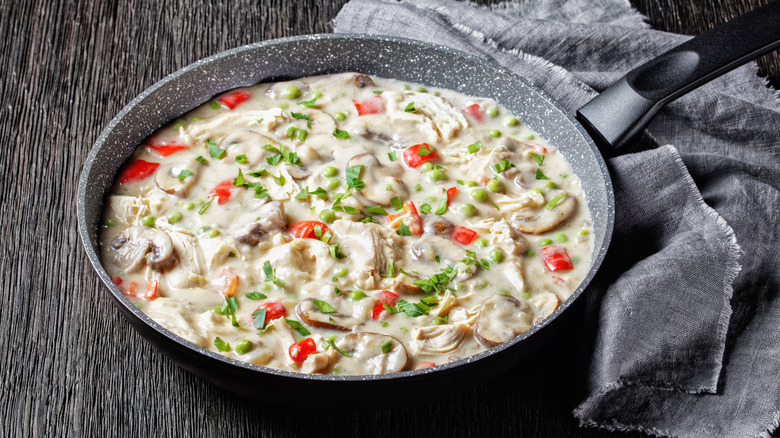
Chicken a la king is a rich and creamy one-pot wonder that's oozing with elegance. It typically combines tender chicken, mushrooms, and peppers in a silky wine-infused cream sauce, and this moreish medley was a household favorite across America in the mid-20th century. Often served with biscuits, rice, or noodles, the dish served as a hassle-free weeknight dinner that also brought a touch of sophistication to the table.
The exact origins of chicken a la king are somewhat disputed, but it likely came about in the late 1800s. Some credit chef George Greenwald of New York's Brighton Beach Hotel, who allegedly created it for the hotel's owners. Others claim it was invented in Philadelphia, or in the restaurant of Claridge's — a luxury hotel in London. Regardless of when it began, this dish later became a firm favorite amongst home cooks. In the 1950s and '60s, convenience cooking was all the rage, and crafting the sauce with a simple can of creamy soup became commonplace. Opting for canned or leftover chicken was another great way to simplify the prep process, shaving off cooking time while reducing food waste.
Now seemingly overlooked, chicken a la king may no longer top the weeknight dinner charts, but it absolutely deserves a comeback. It's rich but not excessively heavy, easy to whip up, and fantastically versatile. Swap the chicken for turkey or seafood, or throw in some extra veggies for an extra nutritional boost, and this dish is sure to impress.
Porcupine meatballs
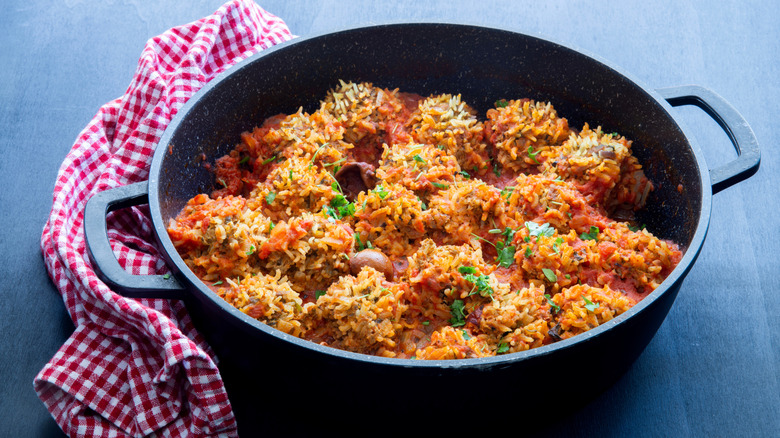
Despite the name, there are no exotic meats to be found in porcupine meatballs. Ground beef is the main ingredient of choice here, and like many meatball recipes, this old-school version sees the meat combined with onion, seasonings, and a binding agent. But, rather than the traditional breadcrumbs, porcupine meatballs call for uncooked rice, and it's this unconventional add-in that gives the dish its name. As everything simmers in the tangy tomato sauce, the grains poke through the surface of the meatballs, resembling tiny quills. As well as giving the meaty morsels a rather pleasing appearance, the rice also amps up the dish's comfort factor, adding texture and making each bite all the more filling.
Porcupine meatballs were especially popular during the Great Depression, a time when keeping mealtimes simple and budget-friendly was essential. Adding rice to the beef helped the meat go further, and only a handful of extra ingredients were required to transform it into a well-rounded, crowd-pleasing dish. This retro recipe remains an affordable option today, and you could even make it in your slow cooker or Instant Pot for a straightforward, hands-off approach. The resulting dish is perfect for spooning over spaghetti or mashed potatoes, perhaps with a generous handful of shredded cheese scattered on top.
Swiss steak
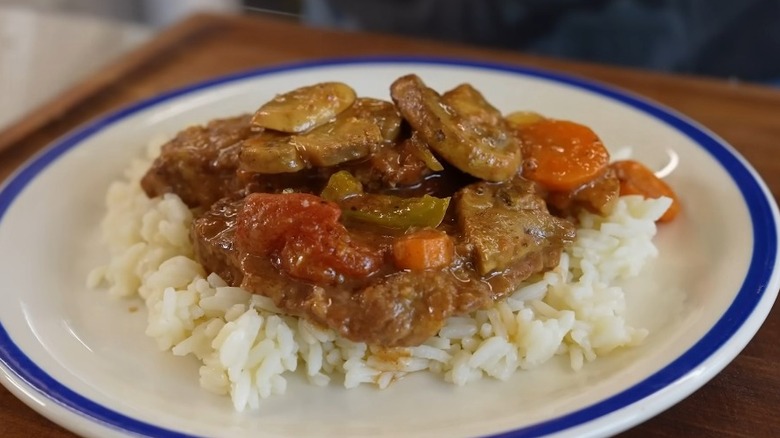
Another beloved mid-century staple, Swiss steak makes the most of often-overlooked, inexpensive cuts of beef by transforming them into a rich, comforting stew. Early forms of this recipe can be traced back to 1915, though the ingredients were altered slightly over time, with tomatoes added in the 1930s. While its name would suggest Swiss origins, this actually doesn't refer to its geographical roots at all. In fact, it comes from the word "swissing" — a technique that sees tough cuts of meat tenderized using a specialized machine.
Bottom round or boneless chuck steaks are ideal picks for this dish. Since most home kitchens are not equipped with a swissing machine, the meat can instead be tenderized by pounding it with a meat mallet. Then, once cut into large chunks, the steak gets seared before being slow-simmered with sliced onions, canned tomatoes, and any other veggies of your choice. Some recipes also call for beef broth, and enhance the mixture with additional seasonings like garlic powder, paprika, and Worcestershire sauce. As it cooks, the meat becomes wonderfully juicy and tender, enveloped in a rich sauce that's bursting with savory flavor. This hearty creation makes a fitting accompaniment to carb-based sides, such as roasted potatoes or fluffy white rice. A side of steamed greens works beautifully here, too.
Chicken dumpling soup
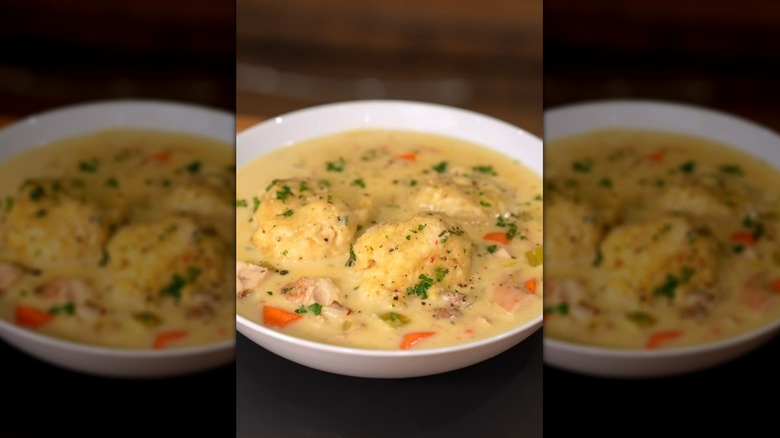
For a dinner that brings all the nostalgic, cozy vibes, consider whipping up a batch of old-school chicken dumpling soup. This warming meal combines fluffy, doughy dumplings with tender shreds of chicken and a soothing broth, and it's pretty hard to beat on a chilly winter evening. A staple in thrifty Depression-era kitchens, chicken dumpling soup served as a delicious way to make use of leftovers and trusty pantry staples. However, the concept of pairing dumplings, meat, and broth can be traced back as far as 1879.
In the mid-20th century, various versions of this savory delight were popping up across America. The Southern states crafted dumpling dough into thin strips called "slickers," while in the North, dollops of dough were spooned directly into the broth. To make dumplings from scratch, you'll typically need just three ingredients: eggs, flour, and milk. However, some modernized recipes call for store-bought biscuit dough, keeping the prep quick and convenient. The base of the soup can be crafted with the classic trio of diced onions, celery, and carrots, with aromatic garlic and fragrant herbs making excellent additions. A splash of heavy cream also brings a wonderful richness to the broth. The final dish is a filling, complete meal in itself, that's sure to leave you feeling nourished.
Turkey Tetrazzini
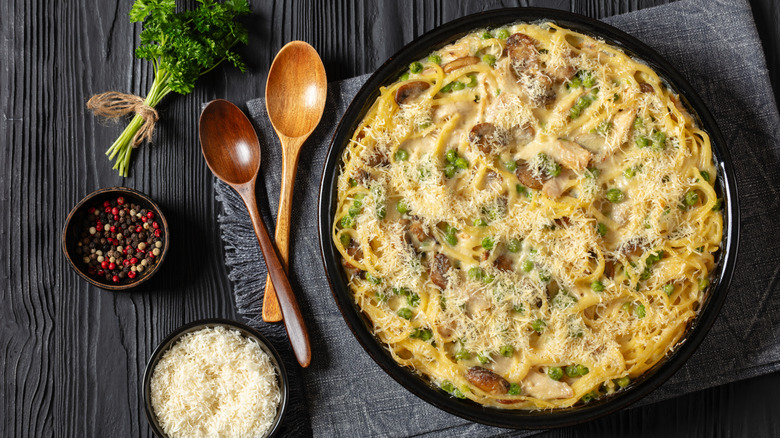
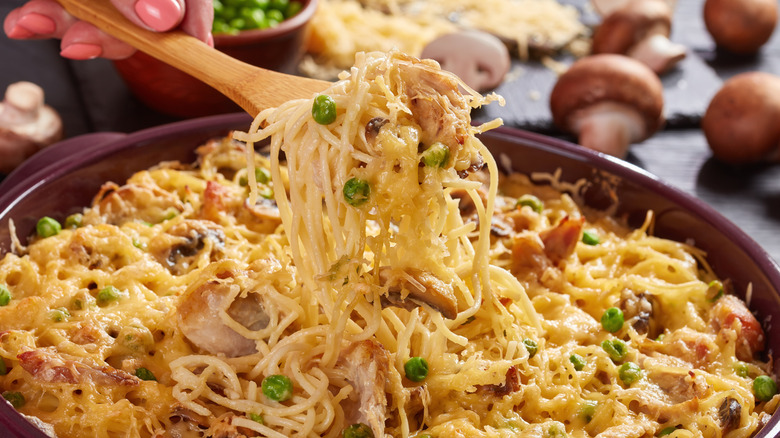
You can't go wrong with a creamy one-pot pasta, especially one that helps you put leftover roasted meat to good use. Traditionally made with spaghetti or egg noodles tossed in a silky sauce of cream, cheese, sherry, and mushrooms, turkey Tetrazzini gained popularity in the early 1900s, and it became a post-Thanksgiving favorite for many American families. It remained a staple well into the '60s and '70s, when canned soup was often used as a shortcut for creating the creamy sauce.
This dish is said to have been named after Luisa Tetrazzini, a renowned Italian opera singer of the time, although there's conflicting information about the exact origin of the recipe. Evidence points towards a number of hotel restaurants in both New York and San Francisco that either have ties to local opera houses or the singer herself.
When making turkey tetrazzini, there's no need to boil the pasta separately. Instead, the noodles can cook directly in the sauce. Herbs like thyme and oregano are great for adding depth to the creamy base, while frozen peas bring a nutritious pop of color. The cooked turkey, which chicken can easily replace, is simply shredded and added towards the end of cooking, yielding a wonderfully satisfying, protein-rich meal. The dish comes together in around 30 minutes, and there's minimal clean-up to contend with at the end, so it's definitely one to consider for your weeknight dinner rotation.
Mulligan stew
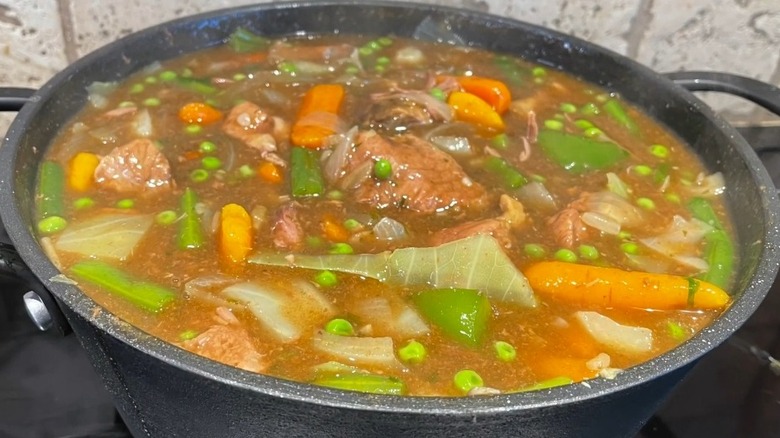
Mulligan stew is a simple one-pot concoction of meat, broth, and vegetables, with strong ties to the "hobo" culture of the Great Depression. During this time, out-of-work men who roamed America in search of jobs would cook around campfires, pooling whatever ingredients they had to create a shared meal. Thus, the stew has many variations. While it was often called "hobo stew," the name "Mulligan," a common Irish surname, likely relates to the dish's similarity to a traditional Irish beef stew.
With no access to fridges, shelf-stable foods were an essential part of the hobo diet. A Mulligan stew recipe from a 1940 issue of The Brookshire Times newspaper calls for a medley of convenient canned ingredients. There was corned beef, peas, minced onion, and, rather unusually, a pretty hefty amount of tomato ketchup. These ingredients were combined in a pot with water, salt, and pepper, and left to simmer for around an hour. As the stew garnered wider recognition, versions made with fresh ingredients became more typical. Modern takes generally incorporate chunks of beef stewing meat and fresh or frozen vegetables like celery, carrots, and corn. Canned tomatoes or tomato sauce also tend to replace the ketchup.
There's no questioning the versatility of this stew, and if you're a fan of hearty beef dishes, you may well have cooked up something similar to this vintage favorite. But see this as a reminder that the simplest of ingredients can often yield the most wholesome and flavorful meals.
Shipwreck casserole
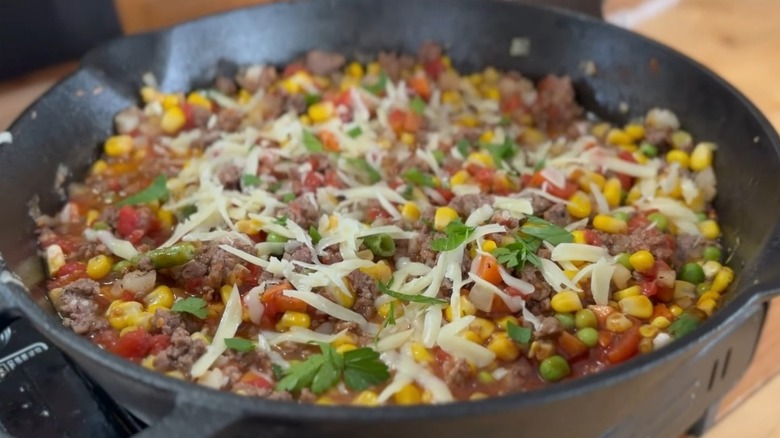
Shipwreck casserole is a dish that truly takes the hassle out of dinner prep, and we think it's about time it had a revival. Though recipes seem to vary from household to household, the core elements of the dish are ground beef and vegetables. There's often a carb element thrown in too, perhaps in the form of rice , potatoes, or shredded hash browns . Canned beans and tomatoes also serve as easy, nutritious additions to the mixture, and a final layer of shredded cheese can provide a rich, gooey topping.
While its history is a little cloudy, shipwreck casserole was likely first created in the 1940s. During World War II, it was a go-to for families who had to make the best of whichever assortment of ingredients they had on hand. There are two main theories as to how this dish got its unusual name. The first suggests that sailors sourced the ingredients used to make it from an actual shipwreck. The second theory is that the name is just a nod to the dish's rather haphazard nature.
Some versions of this dish see the ground beef browned in a skillet first, but this certainly isn't essential. Another perfectly effective method involves simply mixing all of the uncooked ingredients together in a large, lidded casserole pot and slow-cooking everything for around two hours. The diverse medley of ingredients meld together beautifully during cooking, building an irresistible savory depth. We reckon this meaty delight would taste incredible with a side of crusty garlic bread.
Kedgeree
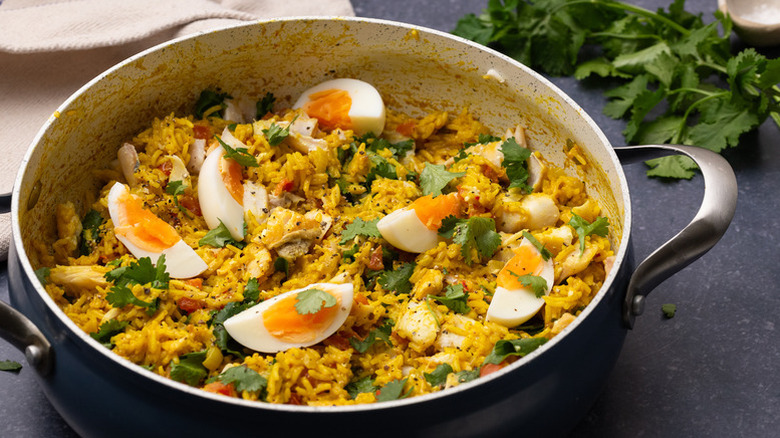
This fragrant dish is closely associated with the U.K., but its main inspiration comes from the fragrant flavors of Indian cuisine. British kedgeree comprises a spicy rice base, with smoked fish such as kippers, haddock, or salmon, and boiled or fried eggs. This delightfully simple mash-up can be enjoyed for breakfast, lunch, or dinner, and it's perfectly possible to whip up in one pan.
It's thought that kedgeree stems from khichdi, a South Asian dish that blends rice and lentils with warming spices and aromatics. When British workers based in India sampled khichdi back in the 17th and 18th centuries, they returned home with a fondness for its bold flavors. This led to them crafting their own versions of the beloved dish, giving it a familiar twist by incorporating eggs and fish, as well as the typical Indian spices like curry powder, garam masala, and turmeric. Over time, lentils were removed from the dish, and the name evolved to kidgeri, before later becoming kedgeree. Loved for its light yet flavor-rich nature, this dish was a favorite in Victorian households and held onto its popularity well into the 20th century. Today, however, it's not quite as widely consumed.
Some kedgeree recipes involve separately cooking rice and hard-boiling eggs, but a simple hack to keep things one-pot friendly is using pre-cooked rice. This way, you can saute your aromatics and spices, then flake in the smoked fish, before stirring in the rice. Once you've spooned the mixture out onto plates, the eggs can then be fried in the same pan.
Hoppin' John
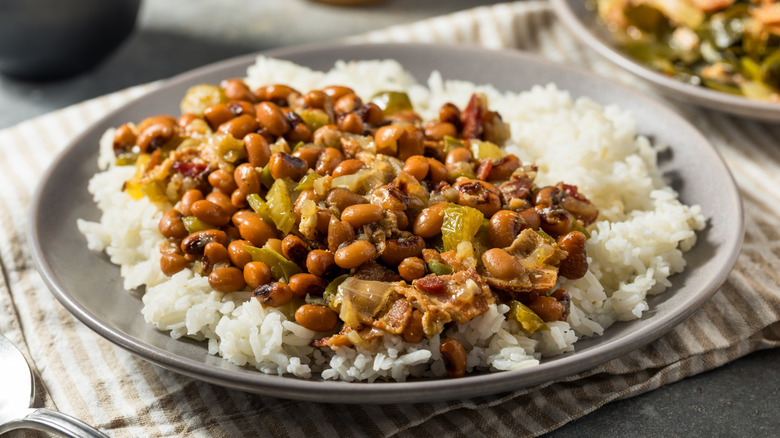
Easily prepared with just a handful of ingredients, Hoppin' John is a Southern classic that provides the perfect blend of comfort and nutrition. It's traditionally made with black-eyed peas, diced onions, rice, and smoked meat like ham hock, bacon, or sausage. Everything gets simmered together in savory broth, yielding a dish that's rich in protein and fiber, but big on flavor too.
Deeply rooted in Southern history, Hoppin' John has origins linked to the West African rice and bean dishes that were brought to the Americas through the transatlantic slave trade. The recipe was first created by the African-American Gullah people of the Southeastern states, with the oldest printed copy dating back to 1838. Being simple, affordable, and flavorful, Hoppin' John appealed to the masses, and this humble combination of ingredients grew in popularity throughout the 19th century and beyond. The dish has long been associated with good fortune, especially when served on New Year's Day, when it's said to bring prosperity for the year ahead. It's often served alongside collard greens and cornbread, but it works just as well spooned over rice or mashed potatoes.
Though Hoppin' John is still a staple dish for some Southerners, if you ask us, it doesn't get the nationwide appreciation it deserves. So, next time you're craving something warming and nourishing, grab some dried black-eyed peas and give this one a try.