

Buying Steak From The Supermarket Is Convenient, But An Expert Suggests A Better Option
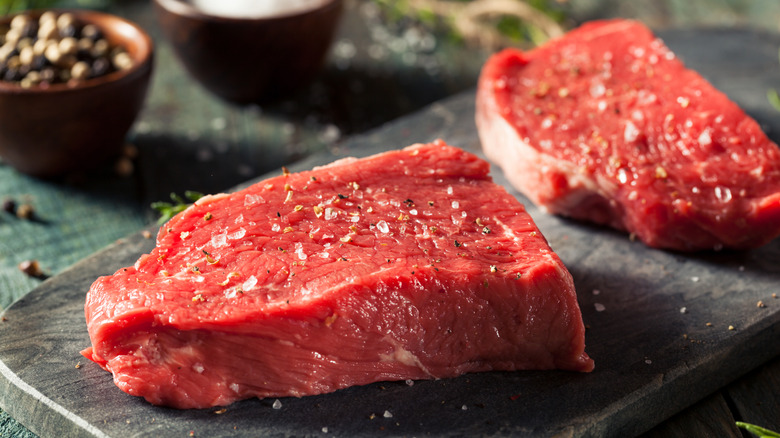
Picking up pre-cut steaks from grocery-store meat counters is quick, easy, and relatively affordable, a big plus for busy folks or those with limited alternatives. But is it really the best choice? The "supermarket generation" of shoppers may be unaware that other options even exist, but they do — and it's worth some consideration. For a bit of insight on the nuances of buying beef in more customized ways, we reached out to an expert in the field, Scott Thomas, owner of the Grillin' Fools.
Thomas recommends going to a dedicated butcher shop to buy steaks, for several reasons, starting with the level of specialization. "A butcher shop generally has one focus: meat," says Thomas. In a grocery store, on the other hand, the meat is just one of many priorities. "A dedicated butcher is usually going to be more knowledgeable about the product and hyper-dedicated to making sure that meat is the best it can be," he explains. "It might cost a little more, as a butcher can't ride on the margins from all the other departments, but to me, that's worth it."
Then, there's the personal relationship customers develop in custom-store environments, which can be invaluable on many levels. For example, it opens the potential for snagging special cuts of meat. He shares that his father mastered the art of back-room butcher deals, receiving access to items like "uber-marbled steaks that never see the meat case quite often. In other words, he gets offered steaks that general public does not."
Gauge the expertise of meat cutters
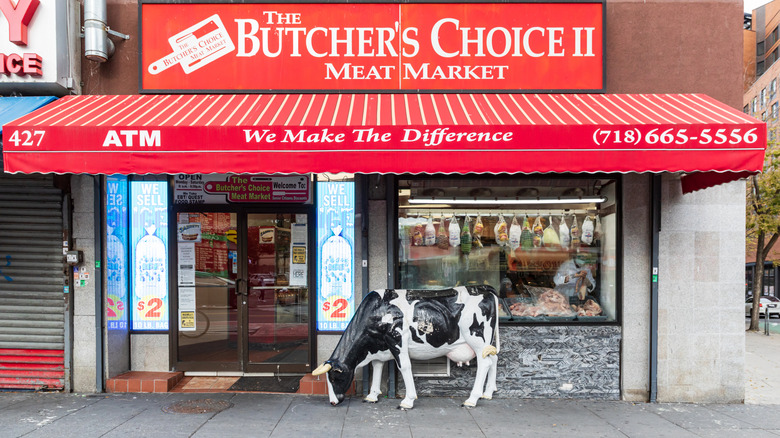
Gaining insider knowledge is rewarding, but it's also important to gauge the expertise of a particular meat cutter. Scott Thomas suggests getting to know them and mentioning things that only experts would generally know. "Ask them what a spinalis is, which is the cap muscle on the ribeye and the tastiest part of the entire cow," he explains. "At the strip loin end of the ribeye primal cut, the spinalis is the thinnest. At the chuck end, it's the thickest. Target ribeyes cut from the chuck end." If the meat cutter knows these kinds of facts, it's more likely they've had years of experience in the trade.
Another reason you should think twice about buying meat at a grocery store is that there are fewer opportunities for customization. That doesn't apply only to obtaining unique cuts of meat, but also to how they're cut. At a butcher shop, you can ask for your steak to be sliced thicker or thinner, trimmed differently, or sold in a smaller or larger portion depending on appetites or budgetary needs. Since the service is usually more personal, butcher-shop attendants are often happy to recommend cooking methods, portion sizes, or meal ideas when requested.
Standard grocery outlets could be easier on the pocketbook, due to bulk buying, cost-effective shared space, and potentially inferior meat. But that's not always the case. Buying meat at butcher shops could actually be more affordable due to daily specials, more flexibility, and a wider variety of meats that includes lesser known — and less expensive — cuts.
Butcher shops buy from small local farms
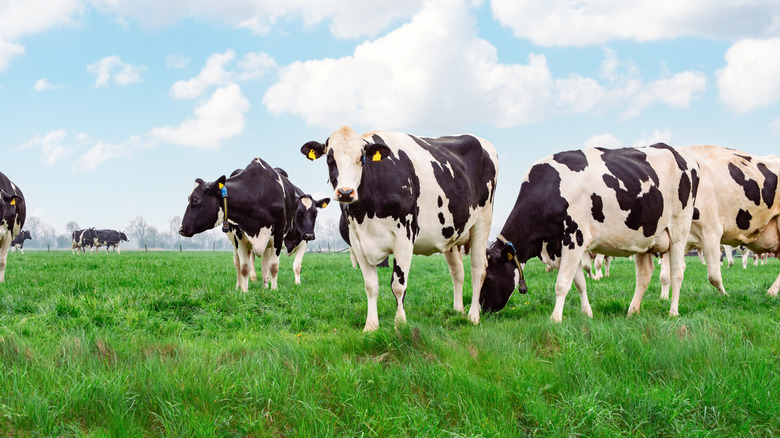
When shopping from a local butcher shop, there's a higher likelihood that ethical, sustainable, and localized practices are in place. Butchers often source from nearby farms, helping keep money in the community while also aligning with values like grass-fed or pasture-fed animals, or reduced environmental impacts dues to shorter transportation and other considerations. Another benefit could be fresher meats either cut or prepped to order, which tend to retain more flavor and nutrition than factory-processed meats shipped over long distances.
Since local shops have strong relationships with local farms, you may be able to arrange large purchases at discounted prices. That's a big plus for gatherings or even for stocking your freezer for long-term needs. This also helps guard against future inflationary beef prices. If you're buying a whole share of beef, you're also paying a single price across the board, which encompasses both high- and low-end cuts, therefore spreading the cost and potentially lowering per-pound prices.
To avoid overkill or a super-stuffed freezer, consider going in with friends, family members, or coworkers to buy shares of beef, allowing reduced costs per person. Each participant can then have their share custom cut by the butcher shop.