

10 Old School Kitchen Tools Boomers Love
Baby Boomers (born between 1946 and 1964) grew up in a time of rapid technological advancements and cultural change. This post-World War II generation witnessed the advent of landline telephones and transistor radios, and were amongst the first to have televisions in their homes during their youth. But beyond these historic milestones, there were countless household tools that defined the Boomer childhood — especially those used in the kitchen.
There was a surge of new gadgets and appliances released in the 1950s, which were designed to make cooking easier, quicker, and a little more fun. Kitchens gradually filled with an array of electric contraptions and nifty tools, and many were crucial to crafting specific meals and bakes that Boomers remember with fondness.
Now, while sleek air fryers and fancy coffee machines might be commonplace on our countertops in the 2020s, many Boomers still have a soft spot for the old school gadgets they grew up with — many of which can still be found in kitchens around the world today. Whether it's the retro items themselves or modern takes on the original inventions, here are 10 old school kitchen tools loved by Boomers.
Gelatin molds
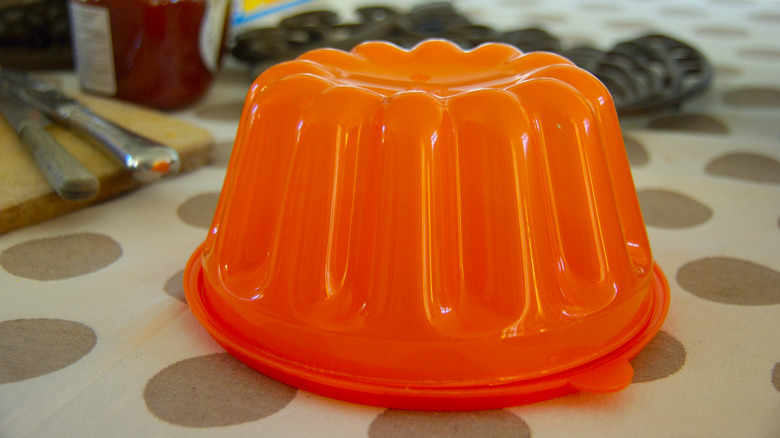
For many Baby Boomers, gelatin-based desserts — prepared in a specially-shaped mold — were once a staple on the dinner table. The wobbly delights could be crafted in all shapes and sizes, with rings, domes, and even animal-shaped molds being especially popular. Consequently, it's easy to see why Boomers would love Jell-O molds.
While powdered Jell-O mix was invented in the 1800s, the 1950s were when these vintage desserts really had their moment. This was a time when convenience cooking was all the rage, and Jell-O embodied this perfectly. Despite the gelatin mixture being incredibly easy to whip up, the final dish could look undeniably impressive, thanks to the striking shapes that the molds helped to create. It was a simple case of mixing the powder with boiling water and pouring this into the mold, and home cooks would often showcase their creativity by layering up various colors, or incorporating fruits, nuts, or creamy add-ins into the mixture. Once everything had set in the fridge, the mold was briefly dipped in hot water to loosen the Jell-O, then flipped onto the plate to reveal the striking creation within.
Gelatin-based show-stoppers might not be as popular as they once were, but many Boomers still hold fond memories of these retro classics. Vintage molds – especially the copper or aluminium varieties – have become sought-after collectables in the 21st century. Whether displayed as nostalgic decor or used to craft a treat, they make for a playful addition to any kitchen.
Electric knives
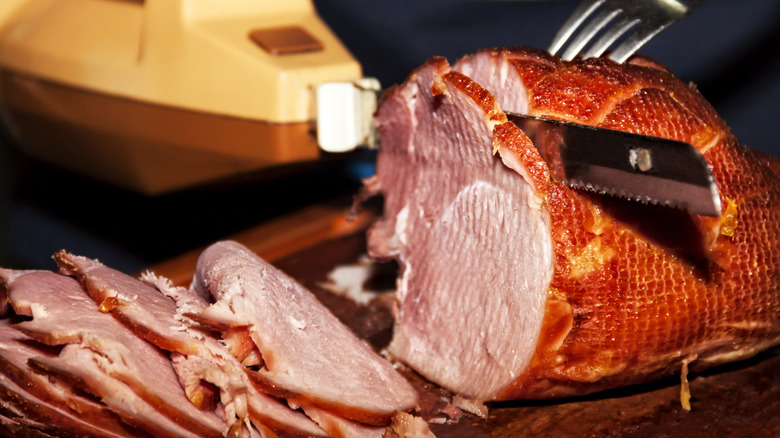
If you grew up in a Boomer household, you may remember the buzz of a high-tech electric knife carving its way through the Thanksgiving turkey. Introduced to home kitchens in the 1960s, these gadgets made slicing meat a breeze. Back then, they felt state-of-the-art, removing reliance on dull carving knives and allowing for perfectly even slices.
Electric knives typically feature a serrated blade that rapidly moves back and forth to create a sawing motion, allowing it to seamlessly glide through meat, crusty bread, or even firm vegetables. This reduced the amount of elbow grease, as well as the risk of tearing your food. Early products were made by brands like Black+Decker, which marketed the knives as must-have tools for the modern homemaker. Consumers could choose between corded and battery-operated versions, and the removable blades made cleaning the knife wonderfully simple.
It's unclear why the electric knife's popularity dipped so dramatically in later decades. In fact, we'd argue this tool is just as worthy of a place in our kitchens today. For many Boomers, the electric knife still sits proudly in the kitchen drawer, loved for its ability to reduce time and effort spent prepping and serving. Plus, if this trusty gadget has piqued your interest, you can find a variety of modern versions on the market today.
Fondue pots
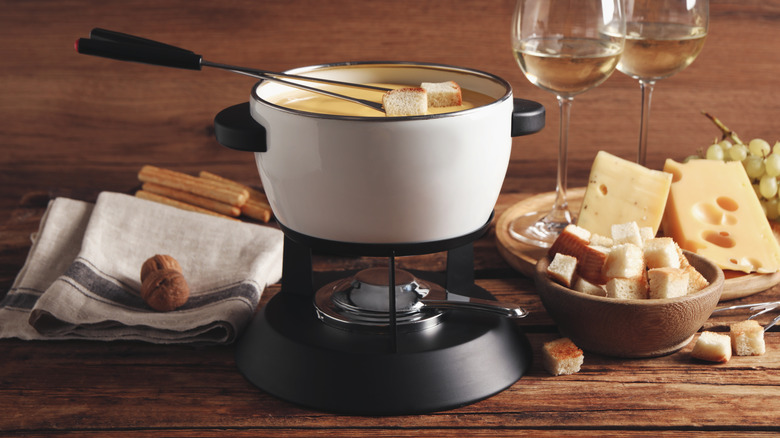
The star of many a 1970s party , the fondue pot brought a touch of sophistication to households (which partially explains why many Boomers still love them). This Swiss-inspired trend was synonymous with cozy get-togethers, and saw friends and families dipping chunks of bread, meat, or potatoes into bubbling pots of gooey melted cheese. Often brought out only for special occasions, these kitchen tools were especially popular during the holiday season, when their comforting vibe was most appreciated.
Fondue pots were often made of stainless steel or enamel, and sat atop a miniature burner that was either fuel-powered or electric. A selection of fondue forks was essential, too; these had wooden handles and long prongs that made them perfect for spearing and dipping. In true retro style, the sets also often came in bold colors and prints, and were as much of a decorative statement as they were a practical item. While Swiss Gruyere and Emmental were popular bases for a cheese fondue recipe, sweet versions made with chocolate were also a hit, with fruits and marshmallows dunked into the tempting potful.
By the 1980s, the fondue hype had largely died down, though the pots experienced a brief revival in the late '90s and early 2000s. While currently not topping the food trend charts, fondue never fully disappeared, and many Boomers are known to dust off their vintage sets for a holiday gathering. Plus, who knows when this retro favorite might come back into style?
Salad spinners
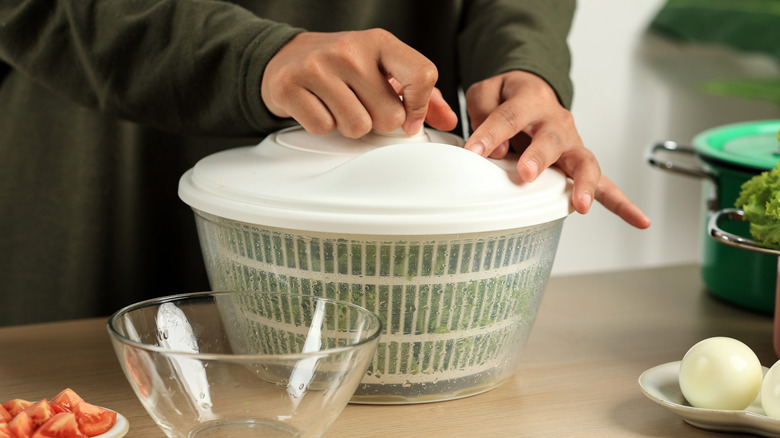
Before pre-washed greens became a grocery store standard, the salad spinner was a game changer for home cooks. Offering a simple but highly effective way to wash and dry veggies before tossing them into salads and sides, this gadget rose to fame in the 1970s, and remains beloved by Boomers.
There's nothing especially fancy about the salad spinner design. Generally made from plastic, the tool consists of an inner colander basket that sits inside a larger bowl, topped with a lid and spinning mechanism. You'd wash the greens, toss them into the basket, and pop the lid on, before using the lever to rapidly spin the basket. This would push any excess water on the leaves out through the holes in the basket, with the drips collecting in the bottom of the bowl. These handy spinners saved time by removing the need for patting down individual leaves, and helped salads say satisfyingly crisp, with no sogginess in sight.
Though perhaps a little sleeker in appearance, modern salad spinners remains largely unchanged from their retro counterparts, with the straightforward spinning mechanism still remaining just as effective. After its initial boom, the salad spinner's popularity waned. But many Boomers still deem it an essential kitchen tool, and one that brings plenty of nostalgia, too.
Electric egg cooker
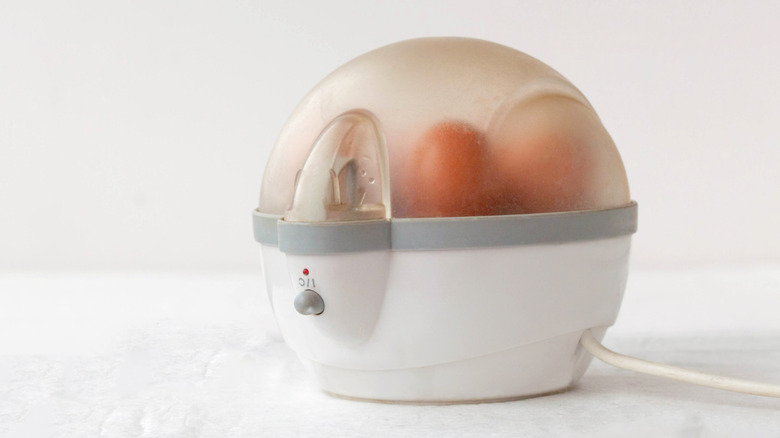
A go-to for those craving a hearty breakfast that didn't require standing over the stovetop, the electric egg cooker was a practical solution. These nifty tools promised perfectly-cooked eggs at the push of a button, with no need for guesswork around timings. Though first developed in the 1920s, electric egg cookers were incredible popular amongst home cooks throughout the 1950s, '60s, and '70s.
To use the appliance, you add a little water to the base, then pierce a tiny hole in the bottom of each egg using the built in pin (this prevents cracking during cooking). With the eggs placed in the rack and the lid closed, the machine would work its magic. The heating element turned the water into steam, and the timer ensured consistent results. You could also select different settings, depending if hard-boiled, soft-boiled, or something in between was your goal. Some models came with extra trays for poaching eggs, too.
While air fryers and Instant Pots might have stolen the spotlight in modern kitchens, the electric egg cooker remains a hidden gem — especially for Boomers who know just how reliable the old school kitchen tool can be. These products are still available to purchase, too, with some featuring variety of fancy attachments, or boasting two tiers to make cooking eggs in bulk a breeze.
Cookie press
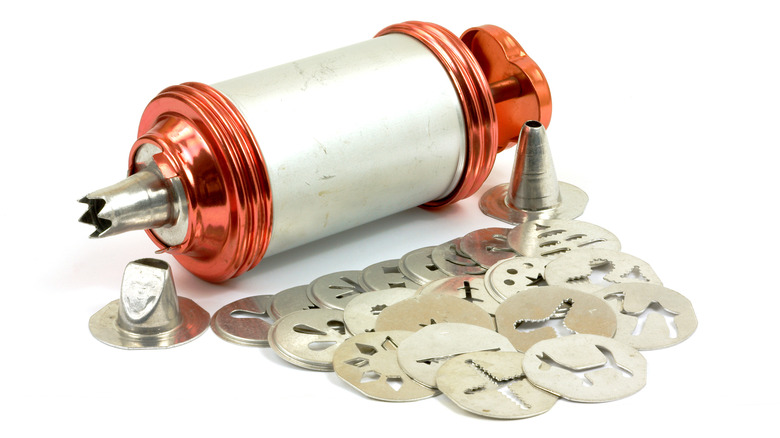
Many Boomers will recall fond memories of using a cookie press whilst baking with their parents. This simple device allowed you to churn out dozens of beautifully-shaped, uniform cookies, from swirls and flowers to those with a fun festive theme. It's a tool that's strongly tied to tradition, especially around the holidays, and these trusty vintages presses have become something of an heirloom in some families.
Cookie presses gained popularity in the 1930s and '40s, with brands like Mirro producing aluminum models with interchangeable discs. All you had to do was fill the cylinder with dough, choose your shape, and squeeze the handle to press the cookies onto your prepared baking sheet. Smooth, buttery doughs were ideal, as those laden with chunks of chocolate or nuts could get stuck in the press. Tinting the dough with food-coloring was a popular approach, which led to whimsical creations like vibrant green Christmas trees and pretty pink hearts.
Modern cookie presses tend to be made of plastic, and you'll find electric versions that make dispensing the cookies even easier, too. But there's something far more charming about the vintage models, which still serve as treasured tools in Boomer cookware collections to this day.
Whistling tea kettle
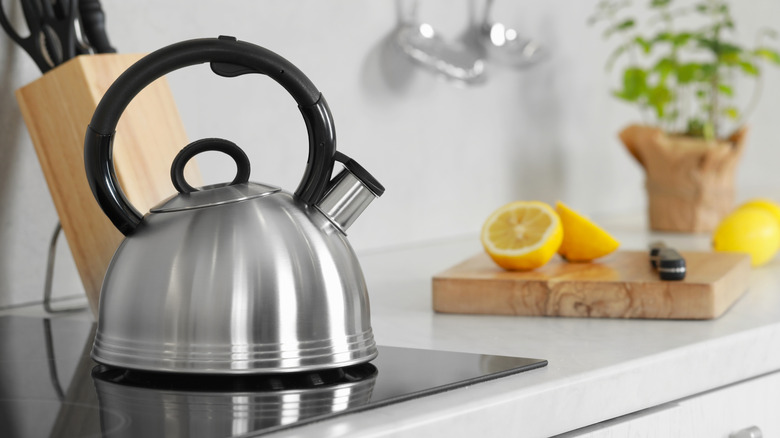
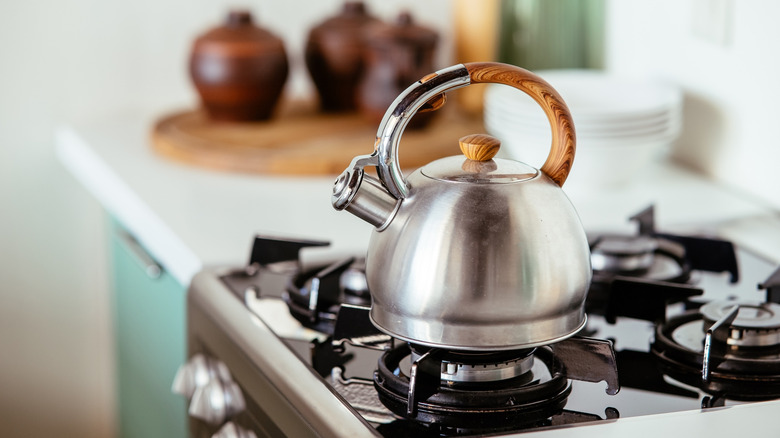
Despite the electric kettle being invented back in 1891, whistling kettles reigned supreme on kitchen stovetops throughout the mid-20th century. After all, electric versions were typically a little clunky, with large plugs and sockets, and didn't always offer an easy way to tell when the water was done boiling. The whistling kettle had a handy audible cue, however, making it far more user-friendly (hence Boomers' love of the kitchen tool).
A classic whistling kettle has a large, easy-to-grip handle and a covered narrow spout, which is opened with a simple push-button mechanism. Water is poured in through the lid, and the kettle is popped on the stove to heat up. Inside the kettle are two parallel metal plates with a small hole in the middle, where steam can pass through. Once the flow of steam through the hole reaches a certain speed, the air begins to vibrate rapidly, and that signature whistling sound is generated to signal the water is boiling.
In the late 20th century, sleeker, thermostatically-controlled electric kettles – which could automatically shut off once the water had boiled – began to hit the market. This meant the humble whistling kettle was pushed aside by many as demand for the new lightweight kettles grew. While whistling kettles are viewed as more of a novelty item by many, Boomers who grew up with these trusty appliances are particularly fond of their nostalgic charm.
Cherry pitter
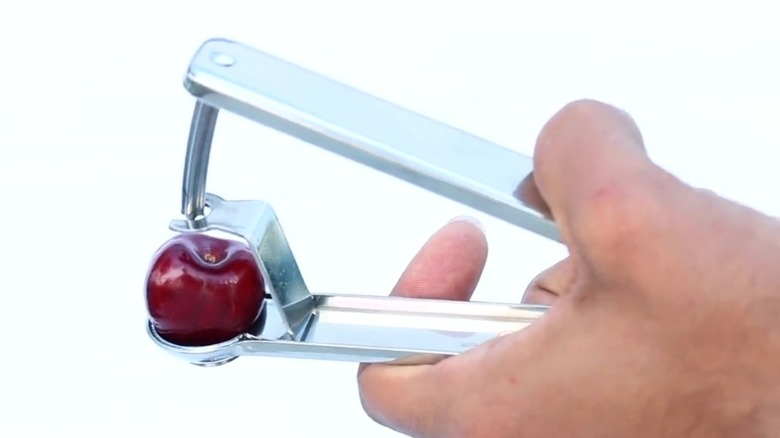
Synonymous with summertime, cherries are a favorite for pies, cakes, and jams, but they can be a little fiddly to prep. Each tiny fruit comes with a hard stone within to remove, and an array of devices have been designed over the years with the purpose of streamlining the cherry-pitting process. While cherry pitters were nothing new in the 1950s and '60s – they'd already been around for several decades, in fact — these gadgets were an integral part of the kitchen toolkit for many home bakers when Baby Boomers were growing up.
Among these were push-button pitters. These tools came with spring mechanisms that sat atop a mason jar; it forced the pits through a hole in the lid, while leaving the edible part of the cherry in tact. Handheld versions required a squeezing motion, with the fruits held over a bowl to catch the pits as they were released. Meanwhile, hand crank pitters that attached to the table were great for pitting multiple cherries at once.
Though some people now turn to less conventional tools to pit cherries — like piping tips or grilling skewers to prep these sweet-tart fruits — cherry pitters are still widely used today by Boomers. Plastic handheld models are especially popular due to their lightweight nature, and popular among Boomers, Millennials, and Gen-Xers alike.
Electric can opener
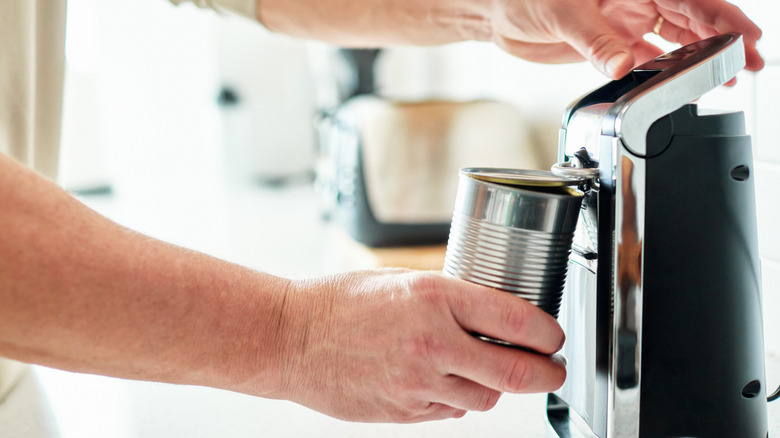
Another nifty appliance that found its way into mid-century kitchens was the electric can opener. This tool essentially did all the work for you, after all, removing the effort that came with using a basic hand-crank model to open cans. Introduced to consumers in the 1950s, this product fast became a staple in the kitchen, and many Boomers still love them to this day.
Electric can openers are freestanding devices that sit on a kitchen countertop. They feature a motor that rotates the can while a blade smoothly cuts through the lid, with the contents of the can being ready use in seconds. This product couldn't have been more apt for the time — when convenience cooking was all the rage, and efficiency was key. Plus, it likely saved countless fingertips from those sharp metal edges.
The freestanding electric can opener isn't something we often see in modern-day kitchens; this may be because of an increase in cans with pull-open tabs, or the advent of the more compact, handheld, battery-operated models. But Boomers can reminisce over the signature whir of this old-school favorite while still using it in the 21st century.
SodaStream
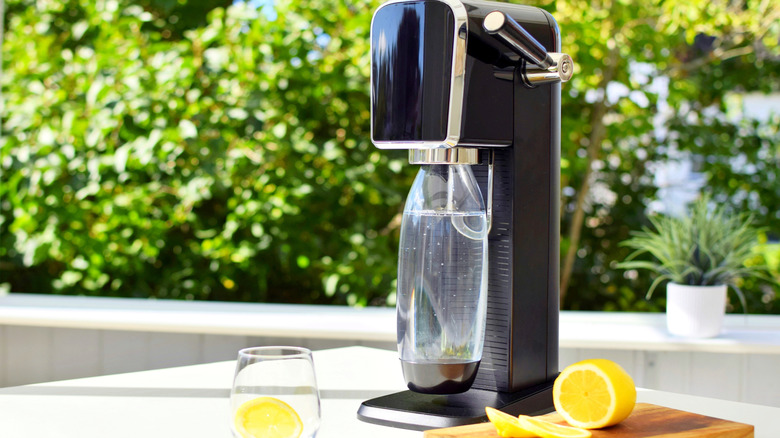
When Baby Boomers were hitting their teenage years in the 1970s and '80s, the SodaStream was the kitchen appliance of the moment. These countertop carbonators were a huge hit in the U.K. during those decades, and Americans soon followed suit. A SodaStream allows you to whip up carbonated soft drinks at home in seconds — with seemingly endless flavor options to choose from — and remains popular with Boomers as a result.
Of course, there's something rather fun about prepping the fizzy creations, and the process can feel a bit like a science experiment. You'd fill a bottle with water, attach it to the machine, and press a button to inject pressurized carbon dioxide into the liquid. Then, a glug of highly-concentrated flavored syrup could be poured into the bottle, before giving everything a gentle mix. Cola, orange, and lemonade were popular flavor choices, but the final product was endlessly customizable. This method served as a convenient and economical way to enjoy soda on demand, with no need to lug heavy bottles back from the grocery store.
Sales of the formerly trendy SodaStream have dwindled in the 21st century, in part due to consumers shifts towards healthier drink choices. Yet this playful product has brought joy into countless homes over the years, which is why Boomers love the kitchen tool.