

Avoid Soggy Green Bean Casserole Topping With This One Serving Tip
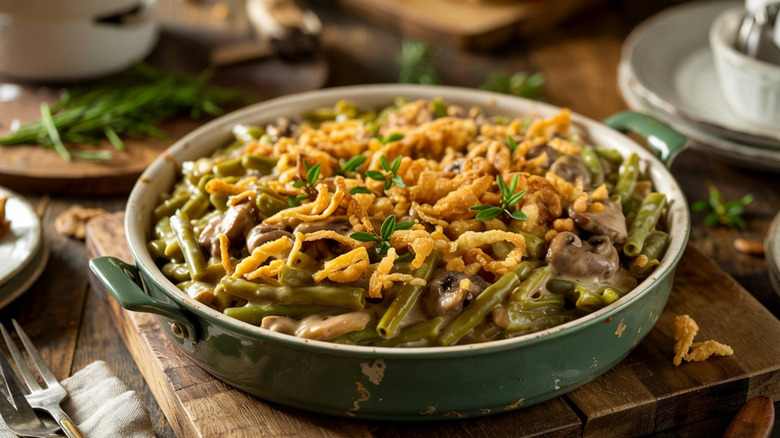
The origins of many recipes are lost, so food history can be tough to wrap your head around — but that's not the case with green bean casserole. Dorcas Reilly invented this Thanksgiving staple in the Campbell's Test Kitchen in 1955, and it's been a classic mainstay on the Thanksgiving table ever since. But if you're like many of us, you've had to deal with the scourge of a soggy casserole at dinner time. Limp beans, messy sauce, and crispy onions that have lost their crunch. Luckily, there's a simple solution.
If you find that your green bean casserole is texturally off note by the time you serve it, consider holding off on the crispy fried onions until it's time to eat. You can garnish the casserole at the table, or let diners sprinkle the onions on their own portions to preserve maximum crunch factor. This way, the textural contrast — which is a major reason the onions are included — will be enhanced, improving the overall flavor of the casserole. Don't forget to look into other ways to boost your casserole's flavor if you want a unique twist, too.
If you want to cook the onions with the casserole, add them in the last few minutes of baking to preserve their crunch. If possible, time it so that when the casserole is done the whole meal will be ready to serve. That way the onions won't have a chance to sit around and go soft.
Keeping things crunchy
There are a few other tips you can follow to prevent your green bean casserole from getting soggy before serving. First, if you're using frozen green beans, ensure they are fully thawed and drained before cooking. While they are considered the better choice of green bean for your casserole, cooking them from frozen can result in excess moisture in the sauce. Also note that frozen green beans are partially cooked, so you'll need to be wary of not over-cooking them.
You can use canned green beans in a green bean casserole, but, remember that, like frozen green beans, they're also already at least partially cooked. If baked according to directions, they may become overcooked and reduced to mush by the end. The timing will need to be adjusted. Fresh green beans are the least likely to come out mushy — just be sure to blanch them before adding them to the casserole to enhance color and preserve texture.
Another way to prevent a soggy casserole is to simply thicken the base. Adding cornstarch or a flour slurry to the sauce causes it to thicken while cooking. You should still have a moist casserole, but the liquid won't be as free-flowing and will be less likely to soak into the crunchy onions when you add them later. Either way, keep an eye on the clock and make sure you don't overcook the casserole, and follow a green bean casserole recipe that makes note of timing to ensure the beans retain their crunch. With all of these tips, you can ensure this year's casserole will have the crunch you want without sacrificing flavor.