

How Much Fiber You Should Actually Be Eating Every Day
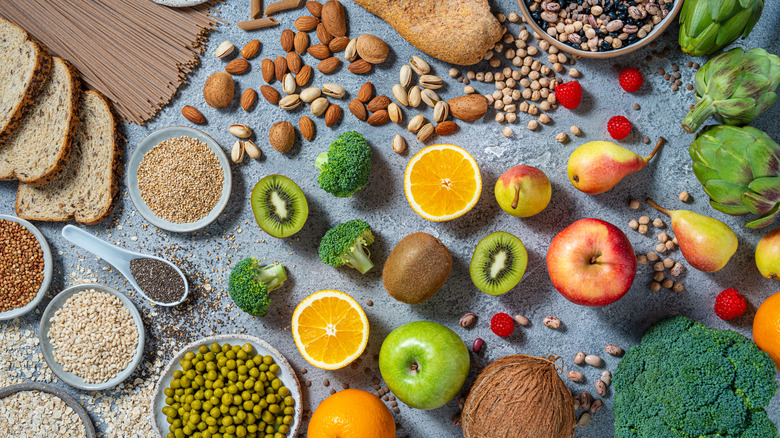
Here's the thing about fiber: it's decidedly unappealing. No Instagram-worthy acai bowl moment, no celebrity endorsement, just the humble workings of plant matter moving through your digestive tract doing its unglamorous but absolutely essential job. Which makes it all the more baffling that more than 90% of women and 97% of men in America still don't eat enough of it, per the 2020-2025 Dietary Guidelines for Americans.
The benefits are real, though. Mayo Clinic lists them as including heart protection, blood sugar stability, cancer risk reduction, better weight management, thriving gut bacteria, and digestive systems that function without complaint. Fiber delivers all of this while asking for almost nothing in return — just 25 grams daily for women under 50, 38 grams for men, and 21 to 30 grams for anyone over 50, according to Harvard Health.
Seems like some pretty easy targets, right? And yet here we are with a nationwide fiber deficit. The good news is that building a fiber-rich diet is more straightforward than you think. Let's break down how to actually do it.
Here's how to build a proper fiber-rich diet
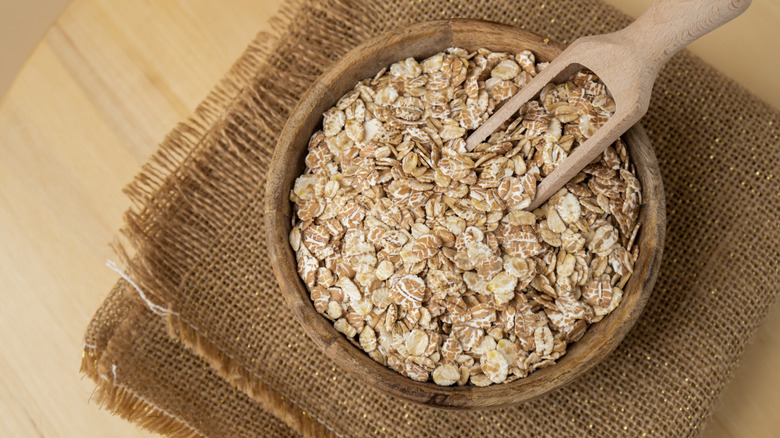
A fiber-rich diet can be started quite simply and in small choices by introducing high-fiber foods to your diet. Whole wheat bread. Brown rice. Apple with skin on instead of juice. Not revolutionary changes, but they slide into your existing routine without making you rethink your entire pantry. Try steel-cut oats for breakfast. In a smoothie, in a bowl, however you want it — a cup delivers four grams before you're even fully conscious (which is honestly the best time to accumulate fiber since you can't overthink it.) Consider adding more legumes like black beans or lentils, either of which can pack anywhere from 11 to 16 grams per cup, for lunch, and you're now halfway to your daily target without having to try all that hard.
But there are two non-negotiables to adding fiber that most ignore until it's too late. First, increase slowly. Ramp up fiber too fast, and your gut will revolt. Instead of going pedal-to-the-metal right away, you'll want to start slow by adding just five grams per week on top of what you're already eating to let your gut bacteria adapt without staging a protest. The other non-negotiable is water — lots of it. Fiber absorbs liquid as it moves through your digestive system, and without adequate hydration. It can cause the exact discomfort you're trying to prevent.