

The Versatile Pantry Staple You Should Stop Overlooking (It's Packed With Protein And Fiber)

Your pantry is likely hiding some affordable protein sources that you let languish in the dark corners of cabinets, like dried beans or cans of tuna. While many people would prefer a juicy steak or tender filet of fish as their main supply of protein for a meal, it's important to diversify your protein sources, both for the environmental as well as the health benefits, not to mention the strain that an entirely meat-based diet can add to your budget. Lentils, although often overlooked, are an inexpensive and easy way to incorporate both protein and essential fiber into your meal rotation.
A half cup of cooked lentils contains between 9 and 12 grams of protein, depending on the type of lentils, but also about 9 grams of fiber. Both protein and fiber contribute to feeling fuller for longer amounts of time. Additionally, one half cup of cooked lentils has 45% of the daily recommended amount of folate, as well as 365 grams of potassium, and is a good source of B vitamins, zinc, and iron.
Consuming lentils can also help reduce inflammation in the body, and they contain antioxidants to support cell health. Moreover, with their low glycemic index, lentils are great for those with diabetes. Lentils have also been linked to both improved heart health and lower blood pressure. Additionally, lentils are naturally gluten-free, making them a suitable addition to most diets and lifestyles.
Lentils' versatility knows no bounds
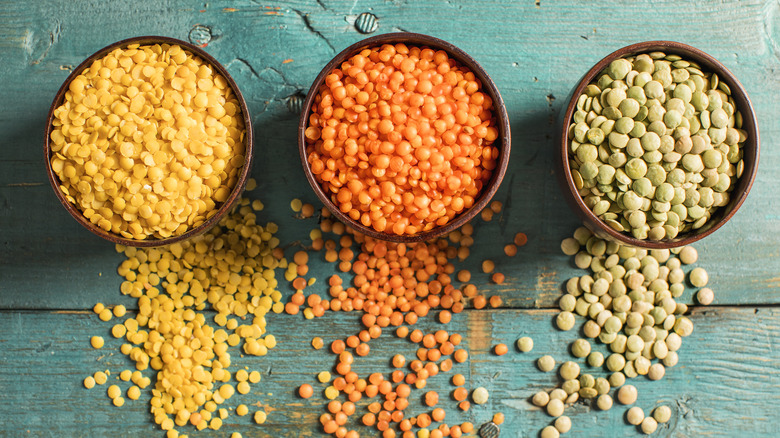
There are more than seven types of popular lentils commonly available; however, different types of lentils are better suited for certain applications, so it's important to know which types of lentils work best for various dishes. Puy, aka French lentils, and black lentils, also known as beluga, for example, are firmer and stand up well on their own in salads. These types of lentils can be compared to the "al dente" pasta texture, as they will still have some bite and toothsomeness left after they've been cooked.
Green and brown lentils are similar and can usually be used interchangeably in recipes, and both are considered to be medium in texture, neither getting too mushy nor staying rigidly firm, and they keep their shape when cooked. Red and yellow lentils, on the other hand, become very soft and tender when cooked and do not easily hold their shape. These softer lentils are best when used in soups, stews, and fragrant curries.
Although they are a breeze to make fresh, canned lentils are a quick and easy option if you're short on time, and there are so many ways to doctor up a can of lentils. Lentils make excellent meat substitutes in meatballs, as tacos, and burger patties, as the firm texture of brown and green lentils is a great swap for ground beef. If you're hesitant to completely swap meat for lentils, the legumes are also great to combine with meat like ground beef to help stretch out the quantity, perfect for chilis, meatloafs, or any other place you'd use ground beef.