

Should You Give Your Kitchen Countertops A Faux-Concrete Finish? What To Know
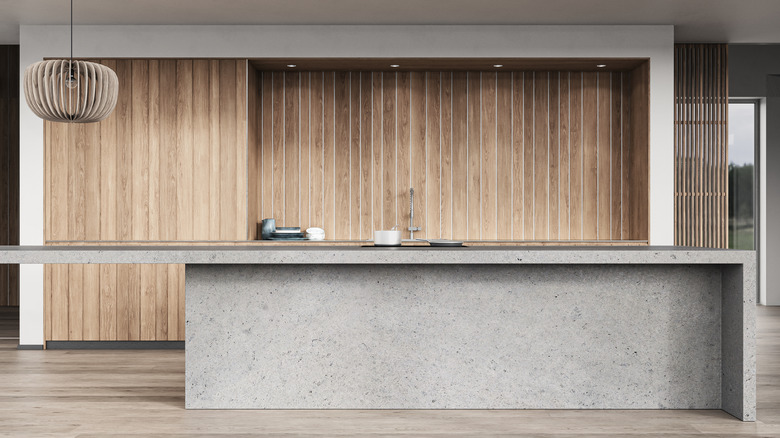
The whims of kitchen design are ever-changing, but the beautiful thing about having your own space is that you're free to change things up whenever you feel like it. Maybe it's a minute change, like swapping out your farmhouse decor for something more modern-feeling. Or maybe you're in the zone for a big change, such as ripping out your laminate countertops and replacing them with concrete ones. If you can't go right into heavy construction with tons of concrete, you can always try faux concrete countertops — but are these rugged-looking pieces worth the time and effort? We spoke to Carmine Argano, the owner of Creative Design Ceramic Tile & Bath, who weighed in on the debate.
"Faux-concrete countertops look good in photos," Argano explains, "and if you do it right, they can hold up okay, too." Concrete countertops, in general, have gone through waves of popularity over the last few decades, but they've risen yet again in standing. People prefer the concrete and faux-concrete look for its distinct, industrial aesthetic, one that translates well from kitchen islands to actual kitchen countertops. Since full concrete countertops can be pricey, whether utilizing the cast-in-place method or the precast concrete method, people often turn to a faux finish. Nevertheless, Argano warns that "nothing really beats the real thing."
The highs and lows of faux-concrete countertops
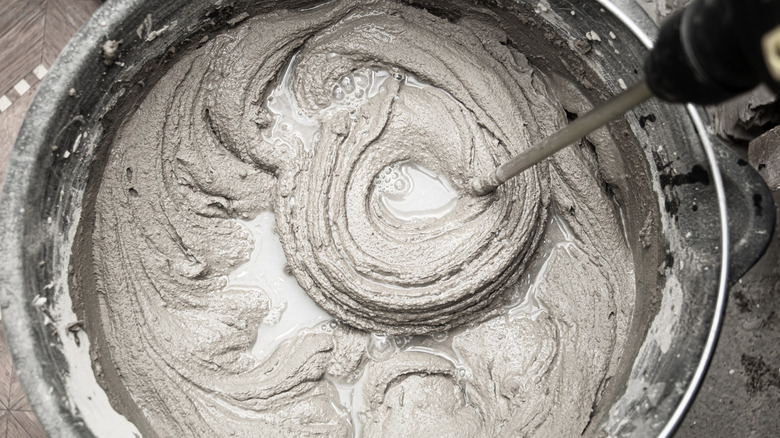
To create a faux-concrete look, you'll need a trip to your local hardware store, but the main star of the show is the feather finish, which is essentially a thin cement overlay that goes on top of your established countertop material. Part of the appeal of concrete countertops is the material's varied, unpolished nature — but this can come across as too unpolished when not done properly. "You can [also] do the faux look with skim coats or epoxy, but you have to prepare it well or it'll chip and peel," Argano explains, one of the many maintenance costs you need to consider before installing a concrete countertop.
Indeed, one of the biggest downfalls of both faux concrete and concrete countertops is not sealing the material properly, an issue that many run into during their DIY projects. "If you want a concrete look but don't want to deal with the weight and sealing, quartz is a great alternative," Argano adds. Quartz countertops are less likely to chip or crack and easier to clean than faux concrete countertops, offering a similarly earthy feel while adding a depth that concrete can't measure up to. If you have the extra money, there are plenty of manufacturers out there that make quartz countertops with a near-identical feel to faux concrete. As Argano points out, quartz "costs a little more but lasts really long." Even better, here's a backsplash option that'll complement your quartz countertops beautifully.