

Review: Carbone's New Italian Simmer Sauces Fail To Stand Out From The Crowd
We may receive a commission on purchases made from links.
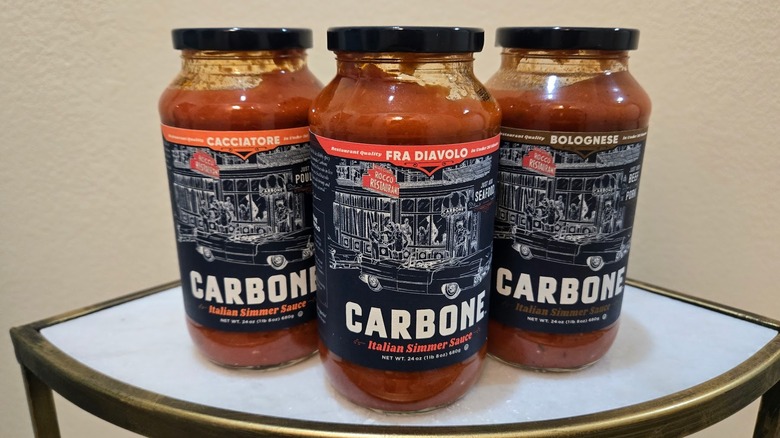
Enjoying a bowl of slow-cooked meat and vegetables that have simmered on the stove all day is one of life's comforting joys. Carbone Fine Food aims to make enjoying that satisfying meal easier with its recently released, pre-made, jarred Italian Simmer Sauces. The brand, known for its quality Italian pasta sauces, is recommending home cooks swap pasta for protein with its latest offerings.
A simmer sauce is best with protein, as it can help tenderize the meat, while slowly infusing it with rich flavor as the protein slowly simmers in the liquid. Ladling traditional marinara sauce over noodles will coat the pasta rather than permeate it with flavor. A simmer sauce can be a curry, masala, mole, or other flavor-packed slow-cooked sauce, including an Italian red sauce, as Carbone displays with its new options.
The line includes three full-flavored sauces designed to help consumers get dinner on the table in 30 minutes, while boosting the flavor of a protein of choice. Curious to see if the new sauces are worth adding to your shopping cart, I secured samples from Carbone to give them a try. After simmering the sauce according to the jar's instructions with the brand's suggested protein, I performed a taste test of each. I used my past knowledge of the brand, having previously reviewed each of Carbone Fine Food's marinara and Alfredo sauces, to aid my analysis. Here are the results.
Some recommendations are based on firsthand impressions of promotional materials and products provided by the producer.
What are Carbone Italian Simmer Sauces?
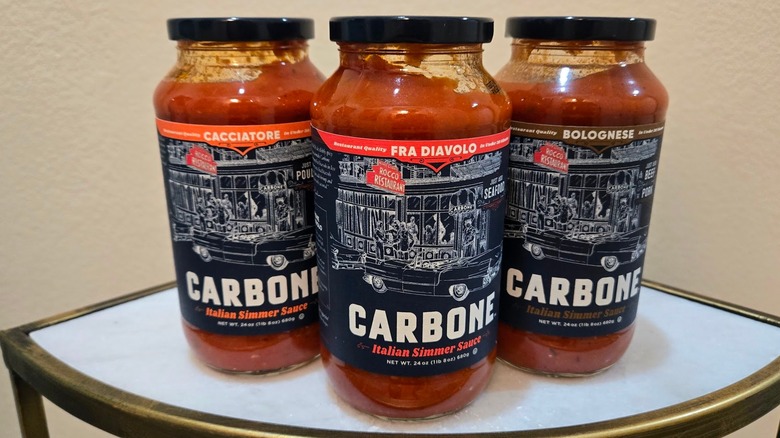
Carbone Fine Food launched in 2021, offering chef-driven products inspired by the dishes of Major Food Group's Carbone — one of the best Italian-American restaurants in New York City, known for its viral spicy rigatoni vodka dish. Carbone Fine Food is a part of Major Food Group, and Major Food Group's founders, Chef Mario Carbone, Chef Rich Torrisi, and Jeff Zalaznick, sit on the board of Carbone Fine Food. Chefs Carbone and Torrisi are directly involved in recipe development.
Carbone Fine Food recently launched its Italian Simmer Sauces, adding to its line of Italian sauces. Carbone suggests using the sauces with a protein rather than pasta or pizza. In a press release, Carbone says, "We see our simmer sauces as an entirely new tomato sauce segment that directly addresses the protein megatrend." The brand suggests retailers display the sauce in the meat and seafood departments, rather than in the traditional pasta aisle.
The launch includes three new sauces: Cacciatore, Fra Diavolo, and Bolognese. By cooking a protein of choice in the pre-made sauce, a home cook can quickly create rich, balanced flavor. The sauce should infuse a complexity that typically takes hours to achieve. Carbone's sauces use non-GMO ingredients, including Italian San Marzano tomatoes, olive oil, aromatic vegetables, and herbs, without added sugars or artificial ingredients. Nutritionally, each of the sauces has less fat and calories than Carbone's marinara and Alfredo sauces, with each containing 60 to 70 calories and 4.5 to 6 grams of fat per serving.
Price and availability
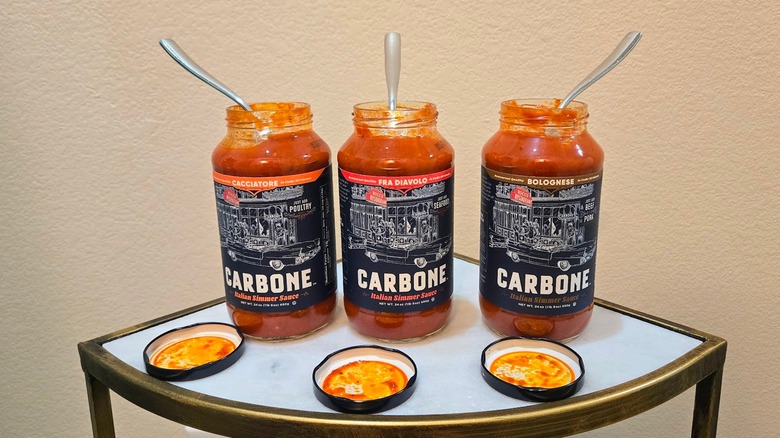
The official launch date for the new Italian Simmer Sauces was October 22, 2025. Carbone has limited the initial availability for the options to its website or by ordering through Amazon. Amazon offers free shipping for the sauces, which is helpful when watching your budget, as Carbone tacks on a minimum $15 flat rate shipping fee for purchases under $36 when ordering directly from its website. With availability initially only available online, customers are required to purchase multiple bottles.
The sauces are available either in a two-pack of 24-ounce jars of a single sauce, at $23.99, or you can opt to buy a single bottle three-pack that includes each of the new simmer sauces for $32.99. The 2-pack price is the same as you will pay when purchasing Carbone's marinara sauces online. However, the cost is a bit steeper than we see for the brand's marinara on local grocery store shelves, which is typically around $9 a jar. Carbone expects the new sauces to roll out nationwide in grocery stores in 2026.
Taste test: Bolognese
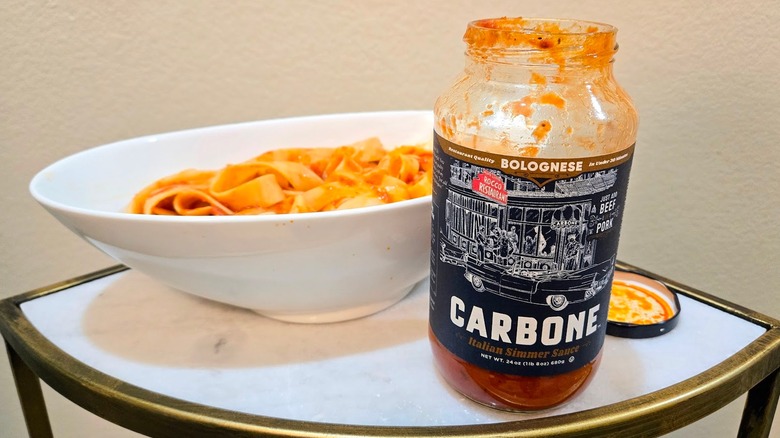
Lovers of a traditional ragu alla Bolognese understand that to achieve deep, rich, slow-roasted flavor, the sauce requires an all-day simmer. Carbone aims to give home cooks the ability to achieve this flavor in 30 minutes flat. Like Carbone's famous spicy vodka sauce, the Bolognese Italian Simmer Sauce omits dairy in the ingredients. You will need to purchase them separately if following Carbone's recipe instructions. Unlike some of Carbone's competitors, the Bolognese sauce also does not include beef or pork. Instead, the brand recommends browning 1 pound of ground meat, then adding ½ cup milk and 4 tablespoons of butter. After the meat has absorbed the fat and dairy, Carbone suggests adding its sauce to finish the dish.
In tasting the finished sauce, the flavor married meatiness with tomato-forward tang. However, I missed the complexity, depth, and full-bodied richness of a classic Bolognese made with a combination of meats, such as pork, pancetta, and beef. Many traditional Bolognese recipes also highlight the meat flavors by using no tomatoes or using them as a sweet accent. However, Carbone's sauce puts tomatoes in a leading role. The tomato-rich taste is not unappetizing, but it is not altogether an authentic, classic Bolognese rendition. Additionally, Carbone's sauce lacked the concentrated layers of flavor that come from a sauce that slowly cooks for hours. Although pairing the sauce with protein is the brand's focus, the Bolognese also begs to be poured over a hot bowl of noodles.
Taste test: Fra Diavolo
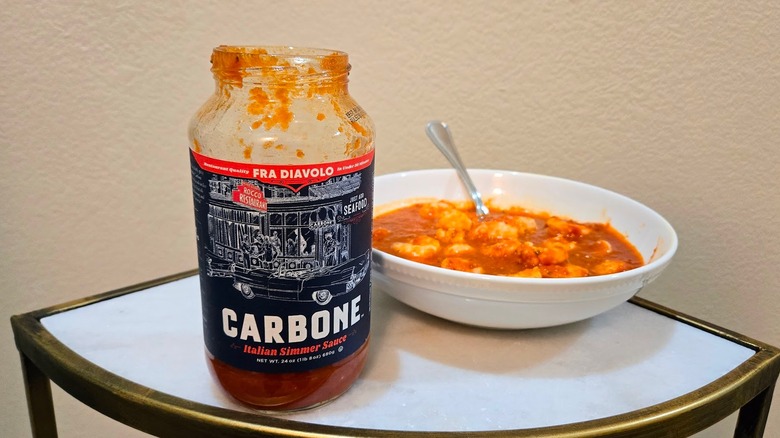
The best way to explain this pasta sauce is to liken fra diavolo to a lighter, thinner arrabiata sauce. Chefs traditionally serve fra diavolo with shellfish. The recipe typically includes tomatoes, fragrant herbs, vegetables, and spices, including the sauce's essential ingredient, spicy red pepper flakes. Meaning "brother devil" in Italian, the name implies this sauce will have devilishly spicy flavor, packing some heat.
Carbone's version includes the classic ingredients, olive oil, and cooking wine. Using cooking wine in sauces adds depth, enhancing the overall taste. The brand suggests adding the sauce to 1 pound of sauteed shrimp, then simmering for a brief four minutes before serving. After preparing, I spooned the shrimp and sauce into a bowl with mouth-watering anticipation.
Knowing that a classic fra diavolo sauce should have ample spice, I was eagerly awaiting the pop of heat on the front palate and the warmth that chili spice brings to the back palate. Unfortunately, the dish left me wanting more. The heat was a two or three out of 10. Understandably, Carbone's sauce will likely appeal to a broader audience that isn't necessarily fond of spicy foods. However, if that is the case, the name shouldn't be fra diavolo.
Aside from the lack of peppery heat, the sauce was flavorsome. There was fresh, fruity, slightly jammy, San Marzano tomato sweetness. Still, additional spice would have created a welcome contrast with the shrimp's delicate sweetness, helping to lift the palate while creating a harmonious, balanced dish.
Taste test: Cacciatore
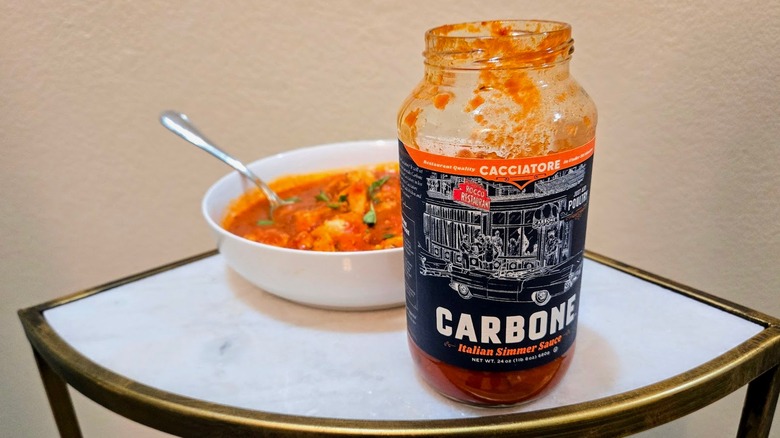
Chicken cacciatore is a hearty, braised Italian stew that features a mix of herbs and vegetables, slowly simmered with chicken. In a traditional version of the dish, the cut of meat you'll want to avoid is chicken breast. The lean breast meat will likely become tough, dry, and overcooked as the sauce slowly simmers. Fattier cuts of bone-in, skin-on chicken, such as thighs or legs, are preferable. However, Carbone suggests using chicken breast with its Cacciatore Italian Simmer Sauce, as the recipe takes a quick 25-30 minutes. Theoretically, this is just enough time to ensure the breast meat is thoroughly cooked without becoming rubbery. However, the chicken in my dish was slightly dry, even while sitting in a pool of sauce.
Carbone mixes Italian tomatoes, mushrooms, red bell peppers, rosemary, sage, aromatic vegetables, and olive oil to create the sauce. Chicken breast has a relatively neutral taste, making it a suitable vehicle for delivering the sauce's savory, tomato-forward tastes. There was a slow-roasted flavor, resembling the most homemade style of the new sauces. However, I was searching for the earthy, woodsy, umami flavors mushrooms and herbs should provide.
Traditional recipes often also recommend dusting the chicken with flour before browning it, helping to lock in the chicken's moisture while creating a light crust. Although Carbone did not recommend this, the technique may help the lean poultry stay juicy, while adding texture to the dish. Another cut of chicken may have also added more richness to the dish.
Should you add Carbone's Italian Simmer Sauces to your shopping list?
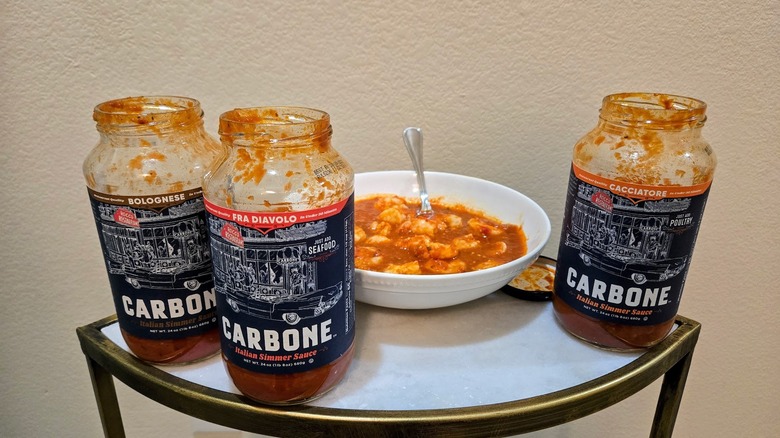
Carbone Fine Food promises to bring restaurant-quality sauces to home cooks, drawing inspiration from its Carbone restaurants, with recipe development from Carbone's founders. Carbone's new Italian Simmer Sauces achieves its goal of helping busy families prepare a homemade meal in 30 minutes. It does this while providing a portfolio of sauces made with fresh, all-natural ingredients, with savory flavors that many home cooks who do not have hours to slowly simmer a sauce will enjoy. As a whole, the new sauces are flavorful options for enhancing your weeknight meals.
However, comparing each sauce to an authentic homemade or restaurant-quality version, with the expectation that brings, Carbone fell short. While I could have changed Carbone's recommended recipe preparations — adding different cuts of meat or additional spices — by following the brand's guidance, I was left wanting more. In addition to the expensive online price, each lacked the complexity and richness of a homemade, slowly-simmered sauce, making them similar to many less costly, readily available, jarred options from other brands.
Knowing what I know now, perhaps I'll try them again when single jars become available at my local grocery store. If so, I will know how to doctor each accordingly. However, based on my taste test, new sauces are ones to skip for now. Instead, I will take the time to craft a homemade, slow-cooked Bolognese, cacciatore, or fra diavolo when the craving hits.