

Forget Green Beans, This Veggie Used To Be A Staple On Thanksgiving Tables For Decades
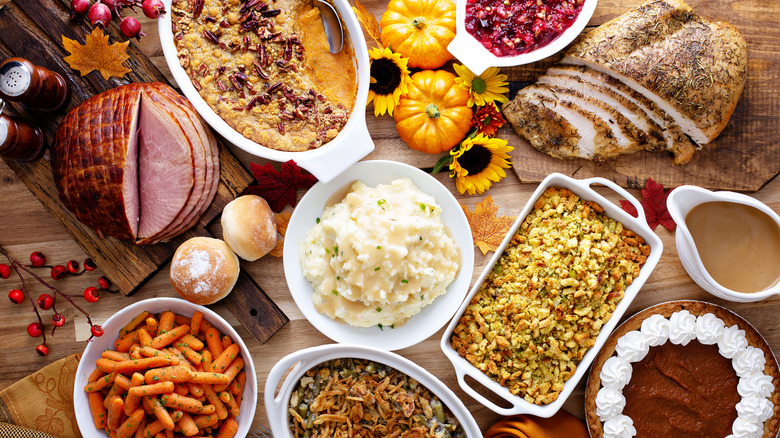
When the time comes to battle grocery store crowds for ingredients to cook your favorite Thanksgiving staples, you might picture items like cranberries, sweet potatoes, corn, and, of course, turkey. Everyone has their own spin on the holiday tradition, but generally, the menu is a rotation of the same few dishes every year. Even though it seems wrong to picture a Thanksgiving meal without stuffing or pumpkin pie, there was a time when it was more commonplace to spot dishes starring celery as the main ingredient, rather than today's go-tos of green beans or macaroni and cheese.
In a deep dive into Thanksgiving dinner traditions that were forgotten over time, we discovered that celery was once a beloved choice featured in the holiday meal, gaining popularity in the late 1800s and early 1900s. Celery isn't native to the Americas, so when word began to spread about an exotic, new vegetable from Europe being grown in the States, people were interested. At first, celery was a symbol of wealth and status, often arranged in special celery vases and plates. However, when it became more readily available nationwide, thanks to developments in transportation like trains, the vegetable started popping up in popular housekeeping magazines and (evidently) on Thanksgiving menus across the country due to the autumnal season in which it peaks.
Celery was all the rage – until it wasn't
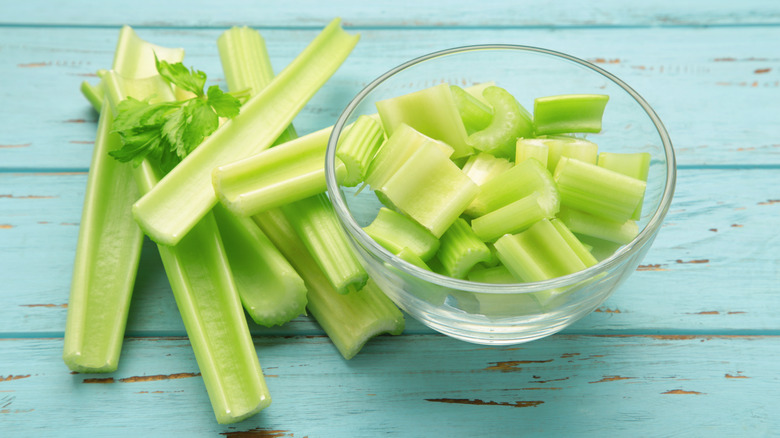
Celery was repeatedly the main feature in many a cookbook and magazine for Thanksgiving during this time, which is partly why you should start giving celery the respect it deserves. In 1895, the New York Times recommended making "mayonnaise of celery" for the holiday, which involved dicing the vegetable, mixing it with mayonnaise, and garnishing with more celery. In 1900, Good Housekeeping gave instructions on making celery soup for Thanksgiving, advising to blend the vegetable with mashed potatoes and serve it with peanut butter and brown bread alongside other dishes. In 1947, it was still popular enough that President Harry S. Truman enjoyed braised celery as part of the White House's Thanksgiving dinner. Even as late as 1972, Weight Watchers recommended celery as part of its "healthy" holiday meal plan.
As culinary fads often do, the celery craze eventually dried up, and it became more likely to spot pumpkin pie and seasoned cauliflower on a Thanksgiving dinner table than celery-focused dishes. The probable cause for this celery separation? Commonality. Celery was no longer the rare or exotic vegetable it once was, and something else swooped in to take its place just shy of the crunchy, green veggie's 200th anniversary on the Thanksgiving tabletop. You'll still spot plenty of celery in modern-day Thanksgiving recipes, but you're more likely to see it in a supporting role (such as in this autumn country bread stuffing recipe) than as the main star of the show.