

This Is What Happens When You Add Vinegar To Your Banana Bread Recipe
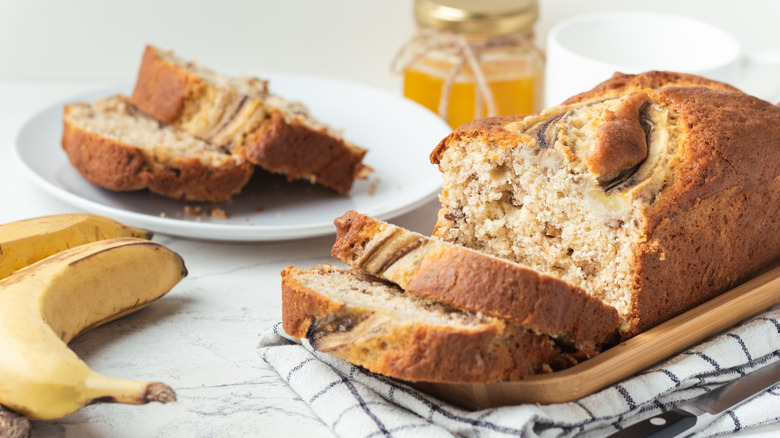
We've all been there before. Those bananas we bought at the store appear to be slowly meeting their demise on the kitchen counter, begging to be used before they reach the point of no return. The natural solution? Banana bread. But while you might typically reach for butter, sugar, and eggs, there's one ingredient you probably haven't considered: vinegar.
Although you may associate vinegar with tasty salad dressings or tangy potato chips, there are benefits to including it in your baked goods. We sat down with John Kanell — baker, cookbook author, and founder of Preppy Kitchen — for an exclusive interview at the 2025 New York City Wine and Food Festival, where he explained why a splash of vinegar could be the key to making the best banana bread.
"Whenever you use an acid (it could be a weak acid like buttermilk or a strong acid like vinegar), you're impeding the gluten proteins in the flour from forming bonds," Kanell told us. The result? A "more tender, cakey baked good." He adds that vinegar isn't the only acid that gives this effect, as buttermilk and lemon juice can do the same. And flour isn't the only ingredient that vinegar reacts with, either. Once your banana bread hits the oven, the acidity of the vinegar combined with the basic nature of baking soda forms tiny air bubbles that allow your loaf to rise and remain moist. Any trace of vinegar flavor bakes right out, leaving you with soft, fluffy banana bread each and every time.
Banana bread mistakes to avoid
While vinegar (and other acids) can be the key to a moister banana bread, too much of a good thing can actually be a bad thing. Kanell cautions that bakers should be careful of adding "too much [acid] because then things can fall apart." So make sure to use a light hand or else you might end up with a crumbly mess.
Vinegar mishaps aren't the only thing to watch out for. Kanell also warns against overmixing your banana bread batter (which is a disaster waiting to happen). "When you overmix, it's going to be gummy and dense instead of melt-in-your-mouth and really tasty." To avoid the fate of a gummy loaf, the Preppy Kitchen founder suggests folding your ingredients until you have a nice, cohesive batter. "If you're adding chocolate chips or nuts, fold it together until there's streaks of flour. Then add the mix-ins and then just do a couple more [folds]," he recommends.
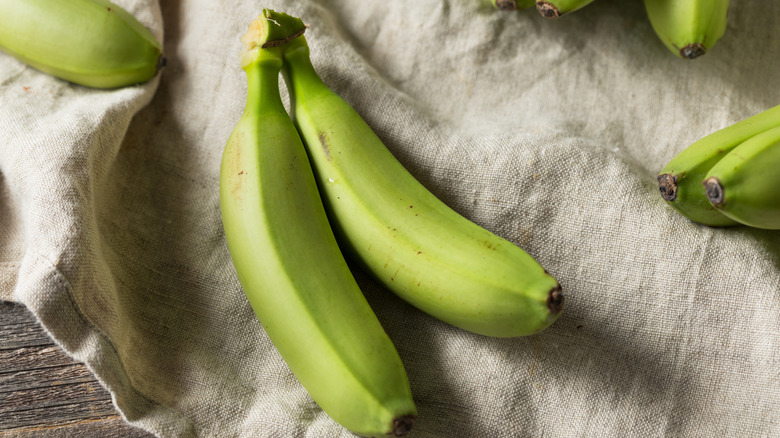
Another major factor is the bananas themselves. You'll want to make sure you use ripe ones for sweetness and moisture. But if you don't have any on hand, have no fear — Kanell's got just the hack. "Pop them in the oven on a baking sheet at 350 for up to around 10 minutes," he suggests. "It could be less or more depending on how unripe they are, and that'll ripen them up and get them to a nice pudding consistency." If you don't want to use an oven, you can always ripen a banana fast using an egg yolk (which you'll need to add to your banana bread anyway).