

Why You Shouldn't Be Shaking Fruit Containers At The Grocery Store Before Buying
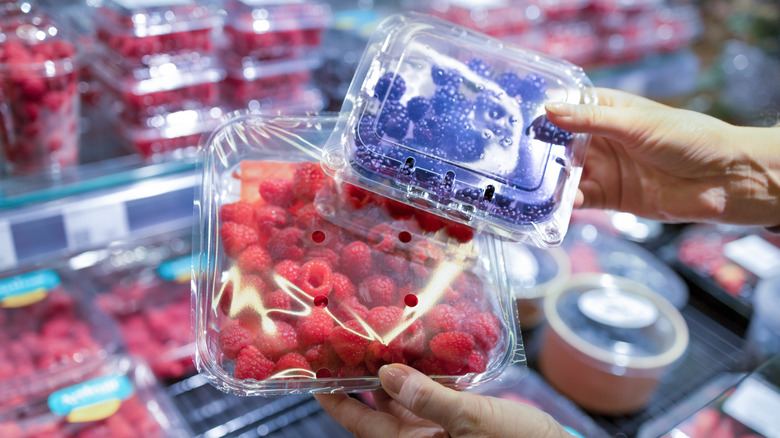
Hunting for perfectly ripe fruit can come across as a little strange to the untrained grocery shopper, but berry and melon addicts will do whatever it takes to find what they deem the "perfect" fruit. Whether that's knocking on watermelons or testing the stickiness of cantaloupes, nothing is outside the realm of possibilities as long as it helps shoppers score a good fruit. Some fruit lovers will shake fruit containers to test for ripeness, but according to Nick Moless, produce senior team leader at Whole Foods Market and Amazon Worldwide Grocery, this may be a "risky move."
While Moless admits that shaking a container properly can "reveal hidden damage," he also warns that "too much shaking can damage the fruit ... especially raspberries or blackberries." In the grand scheme of fruits, berries are incredibly delicate. Melons have their tough rinds to protect them, citruses have a fleshy outer layer to protect the fragile interior (here's why you shouldn't throw out those citrus peels), but berries have no such protection. "The berries will get beaten up fast," Moless says about using what many refer to as the "shake test." Beyond the fact that this antiquated ripeness test could damage the fruit, Moless says it "doesn't reveal everything — you still need to use your eyes and nose to detect ripeness."
Why shoppers shake fruits – and what to do instead
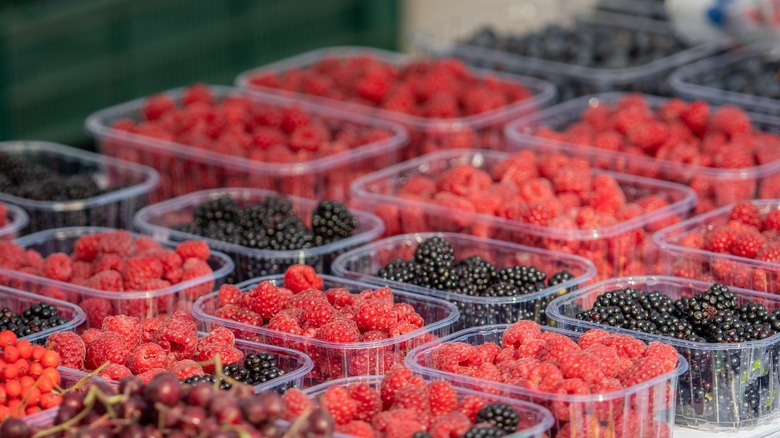
When it comes to the explanation behind why people perform the "shake test," Moless says he "believe[s] they are trying to be berry detectives — making sure the fruit is not overripe." How could one possibly tell when berries are overripe simply by the sound they make? It's less to do with the berries tinkling or jingling, more to do with the fact that mushy, wet-sounding berries mean your package is approaching spoilage levels. "Wet fruit that is degrading tends to stick together," Moless warns, adding that if it sounds "like one big clump, that is usually the sign of trouble, regardless of the berry type." Ideally, if shoppers are giving the container a "shake test" (against Moless's best advice), they'll want to hear "loose, rustling fruit."
Instead of jostling the poor fruits around like they're on the worst rollercoaster of their lives, Moless says shoppers can achieve similar results by "tilting, not shaking, the container — same visibility, but less trauma to the delicate berries," a method we discuss in detail with this two-second freshness check you need to try before buying berries. When the fruits are gently tipped upside down, you can also use visual cues to look for squished or watery fruits, among 16 other simple tricks to pick the best fresh fruit every time. Lastly, Moless recommends asking your grocer for a sample, as "this is the best way to ensure you're buying fruit you are happy with," no vigorous shaking required.