

6 Vintage Coffee Brands That Don't Exist Anymore
We may receive a commission on purchases made from links.
Guzzling coffee is not a new habit. In fact, Americans have loved coffeehouses since the 19th century. The 1940s was a particularly good time for coffee, with Americans drinking more than 46 gallons each every year (per the USDA). Consumption has dropped since then, but the truth remains that most Americans can't get through the day without a cup of coffee.
That's not an exaggeration — it's backed up by data. According to the National Coffee Association, two-thirds of adults in the U.S. drink coffee every single day. And most people don't just have one cup, but three, notes the organization.
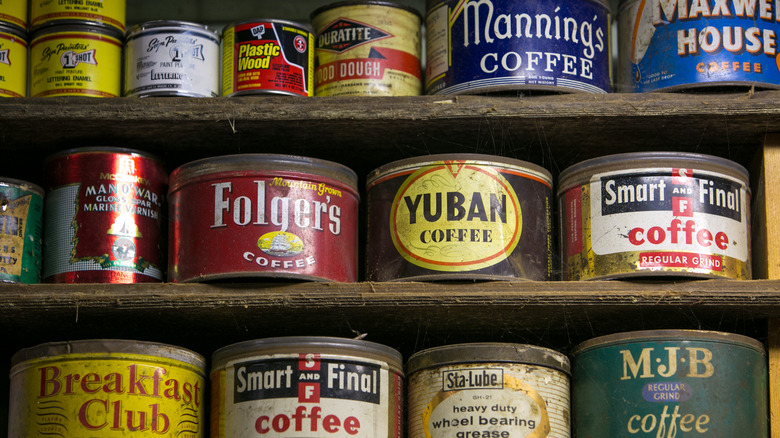
Today, Starbucks dominates the U.S. coffee market, but it hasn't always been this way. Over the years, many coffee brands have come and gone. Below, we take a look at some of the vintage coffee brands that no longer exist anymore. From Manning's to Maryland Club to the iconic decaf brand High Point and its beloved commercials.
1. Gold Shield
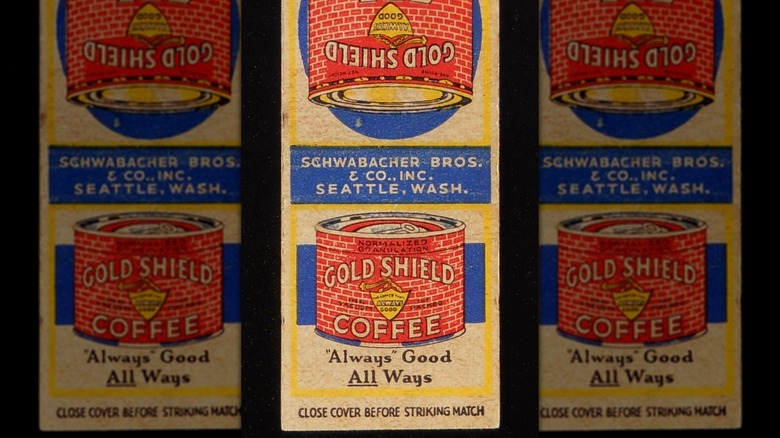
When you think of Seattle-based coffee brands, it's hard not to immediately think of the obvious. We are, of course, referring to the global coffee giant, Starbucks, which got its start at Pike Place Market back in the early 1970s. But Starbucks isn't alone. Several other coffee companies started in Seattle, and one of them was the now defunct Gold Shield Coffee.
Gold Shield Coffee was roasted by the Schwabacher Bros. & Company, a Seattle-based store that sold, well, everything. Okay, not quite everything, but it was the city's one stop shop for everything from hardware to clothing to groceries. The store was founded in the 1860s, and by the 1890s, it was roasting its own coffee, which it sold under the name Gold Shield. The coffee was a major hit at the time, and it was even sold in other Seattle retailers beyond Schwabacher Bros. & Company.
Unfortunately, though, while Gold Shield had a promising start, it wasn't destined to last. The brand was eventually sold to another Seattle business, the Crescent Manufacturing Company, which specialized in importing spices, maple flavoring, nuts, and coffee. But the company decided to stop making Gold Shield at some point in the early 1970s. If you remember the brand, though, you can still take a trip down memory lane — old Gold Shield posters and matchbooks are currently listed on eBay.
2. Manning's Coffee
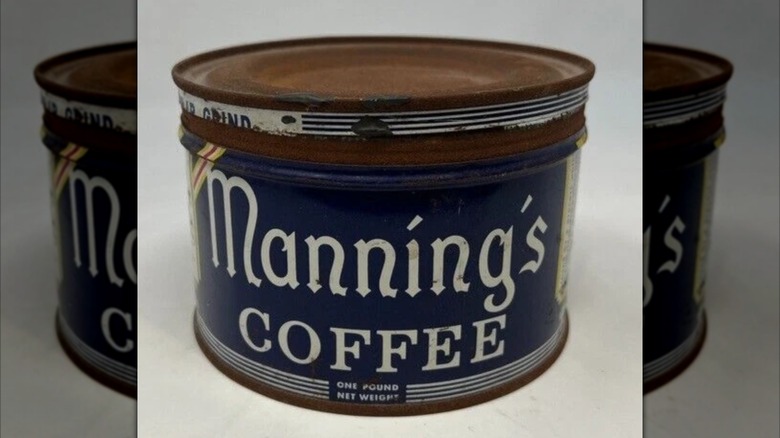
Gold Shield isn't the only Seattle coffee brand that failed to stay the course and live up to Starbucks' lofty heights. Another local brand, called Manning's Coffee, was founded more than 60 years before the coffee giant, in 1908. And like Starbucks, its first coffee shop was in Pike Place Market. With its cheap home-roasted blends, Manning's became another local hit, and it ended up expanding its coffee shops all along the West Coast.
By the 1950s, however, the brand decided it was time to start exiting the coffee business, and closed up several of its coffee shops. Its coffee stayed in grocery stores for a while though, but by the 1970s, it was no longer on the shelves. Still, despite this, Manning's is still credited as a pioneer of the U.S. coffee shop industry, and is often given the title of the first coffee empire to come out of Seattle. Sorry, Starbies.
3. Maryland Club Coffee
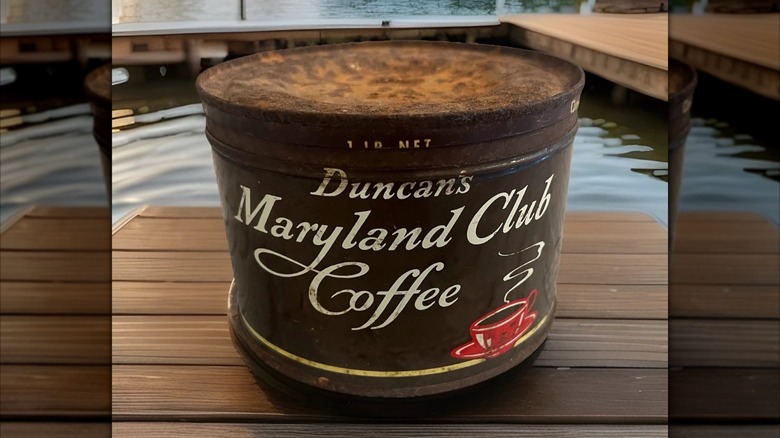
We're leaving Seattle behind now, and heading south to Houston, Texas, where Maryland Club Coffee was born (and sadly demised). This particular brand of coffee was a product of the Duncan Coffee Company, which, founded in 1918, was one of the first coffee roasters in Texas.
The Duncan Coffee Company was behind a few different brands, including Admiration Coffee, for example, but Maryland Club was one of its most premium blends. Named after a fancy club in Baltimore, it was cultivated specifically for restaurants, and, for a time, it was hugely popular in the local hospitality industry. This popularity spurred the Duncan Coffee Company on to sell the blend in retailers, which was a hugely successful move.
After the 1950s though, the Duncan Coffee Company entered a major period of instability. It was acquired multiple times, and in the 1960s, it was sold to Coca-Cola. Maryland Club Coffee ultimately faded into the background, but its legacy continues. Now, the descendants of the Maryland Club Coffee team run a very similar brand, called Bright & Early.
4. High Point Instant Coffee
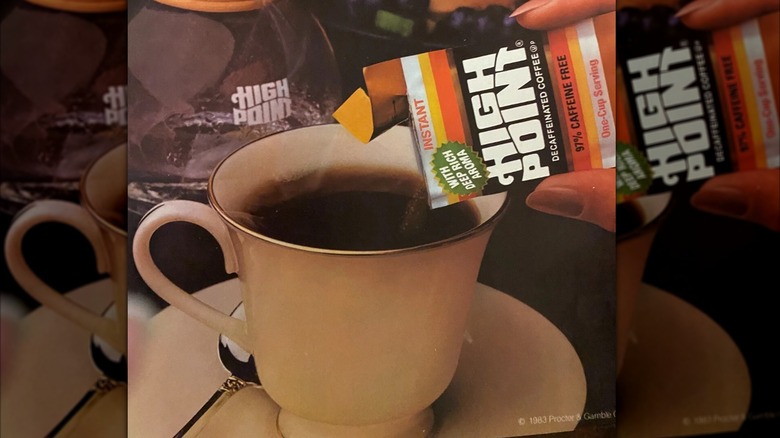
Chances are, you've probably heard a reference to High Point at some point. The instant decaffeinated coffee brand, sold by The Procter & Gamble Company, has become quite a legend in pop culture, all thanks to its beloved campy commercials featuring Lauren Bacall.
Those commercials, originally released in the 1980s, have been viewed thousands of times on YouTube (at the time of writing, one clip has more than 200,000 views on the app), and been referenced in movies like 2011's "Crazy, Stupid, Love" and on "Saturday Night Live." In the commercials, Bacall would enthusiastically rave about the flavor of the coffee, as well as its lack of caffeine content, in her famous gravelly tone and transatlantic accent, all while looking glamorous on set.
Sadly, it seems that the actual coffee, which hit the market in the mid-1970s, wasn't as loved as those commercials, though. In 1993, rumors started swirling that The Procter & Gamble Company was going to discontinue the blend, and today, it's no longer on the shelves.
5. Brim Decaf Coffee
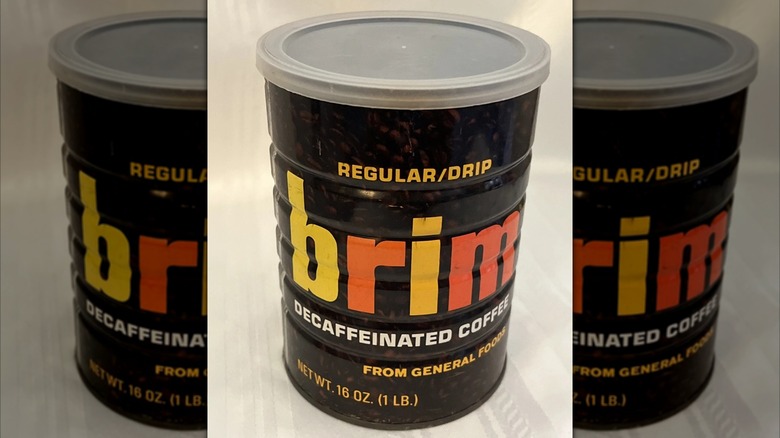
High Point wasn't the only memorable decaf coffee brand in the 1980s. It also had competition from Brim, which had its own memorable commercials, thanks to its catchy slogan "fill it to the rim, with Brim." Produced by General Foods, Brim first hit the market in the 1960s, but like High Point, it didn't stand the test of time. The product simply wasn't popular enough, and had disappeared from grocery stores by the 1990s.
But the Brim dream isn't totally dead. Despite having no more products on the shelves, the brand managed to live on. In 2008, it was acquired by River West, a Chicago company that specialized in taking on retired brands, purely for their potential. But its official return came in 2014, when it was acquired by Sensio. The company decided to use the Brim name and beloved tagline to sell coffee products. The canned decaf coffee is long gone, but now, the iconic Brim name lives on, attached to products like espresso makers, pour over coffee kits, kettles, grinders, and more.
6. Savarin Coffee
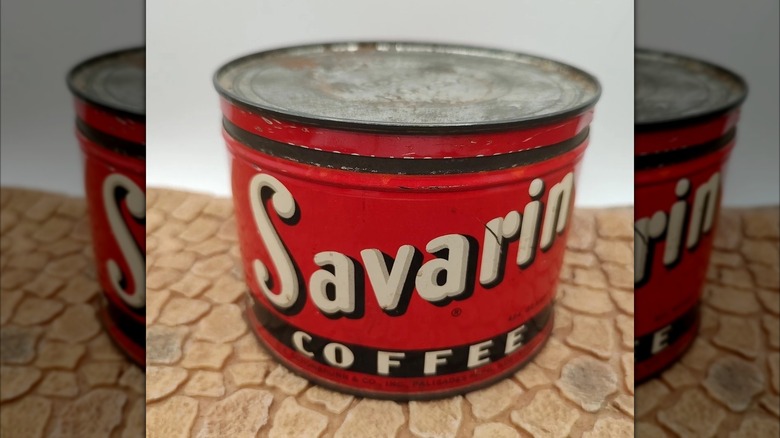
Speaking of iconic commercials, another vintage coffee brand that nailed a memorable advertising campaign was Savarin. Its 1980s commercials featured a character called El Exigente, a coffee picker played by the Mexican actor Carlos Montalbán. Many remember the commercials with fondness, which showed El Exigente raving about the fine quality of the beans that he chose himself for Savarin's instant coffee. The commercials helped to make Savarin more recognizable, but the instant coffee brand had been around for a long time before they hit the television. In fact, it was actually founded just before the turn of the 20th century.
As loved as they were, the commercials were not enough to keep Savarin around. There is little information available about exactly what happened, but at some point in the last few decades, the coffee brand faded away, likely due to corporate buyouts. But you can still buy a little bit of Savarin, thanks to all the vintage cans listed on eBay.