

Why Self-Rising Flour Should Be Your Go-To For Fluffy Homemade Biscuits

The perfect scratch-made biscuits have a delicate balance of airy, fluffy goodness but are hearty enough to stand up to toppings like gravy or a healthy slathering of butter. But how is this soft yet tender bite achieved when making biscuits in your own kitchen? We like to turn to the experts to find out. "Self-rising flour is your shortcut to biscuit success," Joy Wilson, the pro baker and cookbook author behind Joy The Baker, told Tasting Table. According to Wilson, since self-rising flour is typically made of soft wheat flour that already contains leavening agents (usually baking powder) and salt, it gives your biscuits what she describes as a "tender crumb, consistent rise, [and] fewer measuring cups."
Chemical leavening agents such as baking soda or powder are key to getting a puffed buttermilk biscuit with a tender inside, but the type of flour you use makes a difference, too. Soft wheat flour in most self-rising flours is composed of about 8.5% protein, which is less than hard wheat flours (usually 10 to 14% protein), best for bread-baking and developing structural integrity via gluten and yeast. When used in more delicate bakes like biscuits or cakes, a softer wheat plus leavening gives you the fluffy, light texture you need, without being too heavy or dense.
More convenient tips for baking the best biscuits
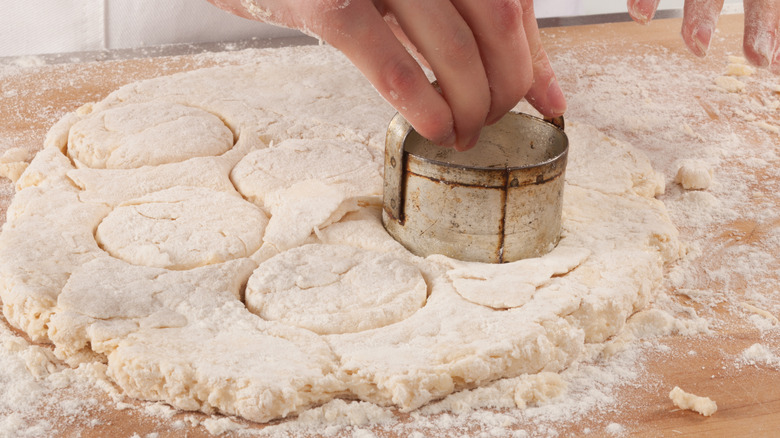
A classic fluffy Southern biscuit recipe might call for adding in leavening agents and salt in addition to all-purpose flour, but many are designed with self-rising flour, so you don't have to measure out all three ingredients separately. Wilson notes this is "especially handy when you're still on your first cup of coffee and want biscuits yesterday" — and we couldn't agree more. The right combination of soft self-rising flour and leavening salt, combined with forming the dough and incorporating liquid dairy and small, cold pieces of butter, will help make sure your biscuits come out nice and flaky and tender.
If you don't have self-rising flour, you can make your own blend with flour, baking powder, and salt, and keep it on hand for moments when you want to throw together a quick drop biscuit dough with just three ingredients. Just note, if you're using all-purpose flour you have in the pantry, it usually contains a middle ground between soft and hard wheat around 11% protein (which is part of what makes the flour so versatile in a variety of baking applications). So, you'll probably need to add extra milk or water to the mix, since all-purpose flour has a higher protein content than self-rising, and absorbs water at a greater rate.