

Why Marinara Must Be Cooked Differently From Other Pasta Sauces, According To A Chef
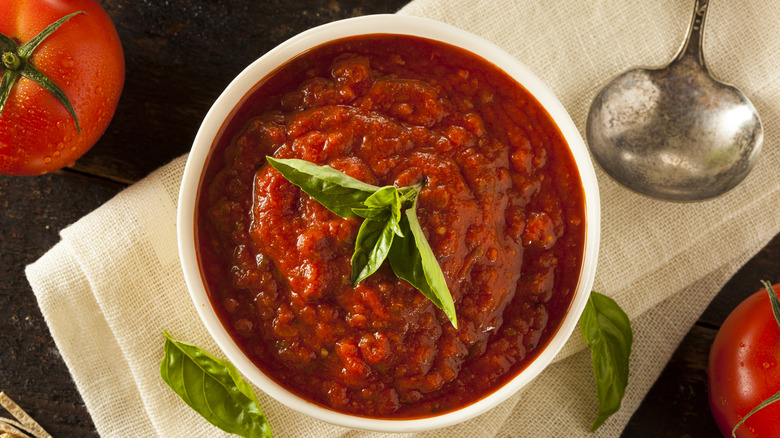
Jarred marinara is certainly convenient, and some are better than others, but nothing beats the fresh flavors of a homemade marinara sauce. High-quality ingredients are essential for the best-tasting sauce, but one of the biggest mistakes you might be making with marinara is overcooking it. We asked Angelo Caruso, chef and owner of Angelo's Ristorante in Stoneham, Massachusetts, for tips on making the best marinara at home.
"Marinara sauce is meant to be a quick, fresh-tasting sauce made from plum tomatoes, garlic, olive oil, and basil," Caruso said. "When it's overcooked, you lose that bright, clean tomato flavor. It starts to taste heavier, more like tomato paste, and can even turn slightly bitter." Another sign that marinara has cooked too long is its color, which fades from a vibrant red to a dull brick or rust shade.
The length of time the sauce cooks is the main difference between marinara and tomato sauce or an Italian Sunday sauce, which, as Caruso explained, "...includes meat, bones, and sausages that need hours of slow simmering to release flavor, fat, and gelatin." Since a traditional marinara sauce is made with only a few ingredients, you'll only need to simmer it for 30 minutes until it's slightly thickened.
Fresh simple ingredients make the best marinara
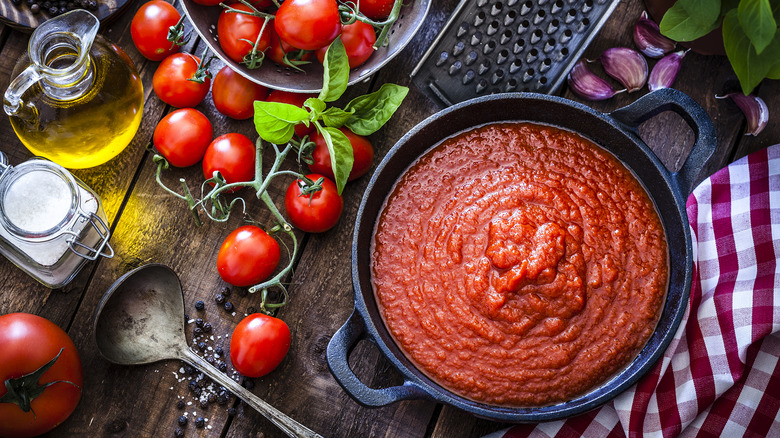
Marinara should taste light and tomato-forward, and Caruso recommends that you "use high-quality plum tomatoes and avoid over-seasoning," so the tomato flavor shines. Roma tomatoes and San Marzano tomatoes are often used for tomato-based pasta sauces, but because San Marzano tomatoes have lower acidity and fewer seeds, they make the best sauce.
Fresh basil is another essential component of a marinara sauce. "Add fresh basil at the end rather than during cooking to keep its aroma bright," Caruso explained. Sometimes, though, a marinara may turn out a bit bland. One of which is to drizzle some good olive oil over the sauce just before serving. It "can bring back some of the tomato's natural sweetness and add a silky finish," he added.
You'll probably have plenty of leftover marinara, which you can then use to make another dish, or you could freeze the sauce for later use. Marinara sauce freezes very well and can be kept frozen for up to six months, so by making a big batch, you can have the freshest-tasting marinara at hand for a speedy weeknight dinner.