

The Three Countries That Supply The Most Sugar In The World
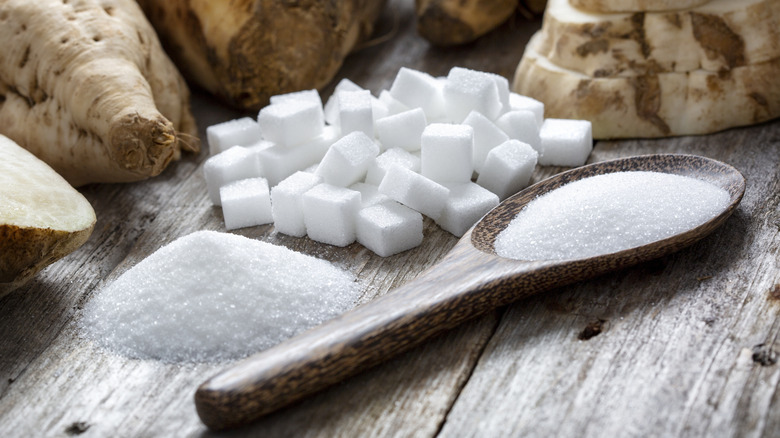
Sugar is one of the most fundamental food products in the world, and the countries that supply the most sugar are unsurprisingly spread out all over the globe. Sugar, of course, comes from all different kinds of crops, but when it comes to the commercial production of the different types of sugar we use in cooking and baking, two dominate. There's the classic sugar cane that most people think of when they think of white sugar, and there are also sugar beets. Both crops grow in different climates, which means sugar is produced everywhere from Russia to the tropics, but the countries that most dominate sugar production tend to be sugar cane producers from the hotter regions of the world.
The top three sugar suppliers all fit that bill, with Brazil, India, and China being the world's largest single countries that produce sugar, although the European Union as a whole actually produces more than China. Brazil and India are the true dominant forces in sugar, with Brazil producing 24% of the world's supply, and India 14%. China ends up at only 6%, which is barely ahead of fourth-place Thailand, and the United States in fifth place (per U.S. Department of Agriculture), which produces both sugar cane in Southern states like Louisiana, and sugar beets in Northern ones like Minnesota. But while climate plays a big part in who the top producers of sugar are, a larger part than you might think comes from government programs, and not just for sweet sugar meant for eating.
Good climate and government program have made Brazil the world's top sugar producer
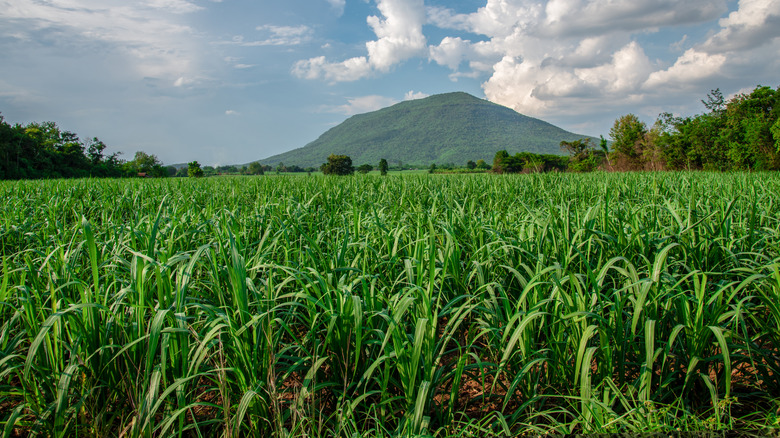
The sugarcane used to produce most sugar is a tropical grass, and it requires a large amount of water to grow. It can only survive in climates where the average year-round temperature is above 75 degrees Fahrenheit, so it must be grown in tropical locations that are both hot and moist. With massive amounts of tropical land and a modern economy with a more developed infrastructure, Brazil is basically perfect.
Sugarcane production in Brazil dates back to the 16th century, when the Portuguese brought it over during the early colonization period. In that era, sugar was as valuable as gold, and sugarcane plantations were used as an economic incentive to get people to settle in Brazil. The eventual success of sugar plantations brought prosperity to the colonies and made sugarcane an important part of Brazilian cooking, but also led to the importation of African slaves, as coerced labor was the only option in the brutal working conditions of tropical plantations.
Brazil gradually lost its position as a leading sugar producer until the late 20th century. Then, in 1970, the Brazilian government established a program to subsidize the production of ethanol, which is made with sugarcane in Brazil. After the 1973 oil crisis, ethanol production soared, and having this financial safeguard also helped sugar production from sugarcane skyrocket again. Combined with the climate, this government program is the key to Brazil's place as a sugar powerhouse.
India has challenged Brazil as the leading sugar producer for decades
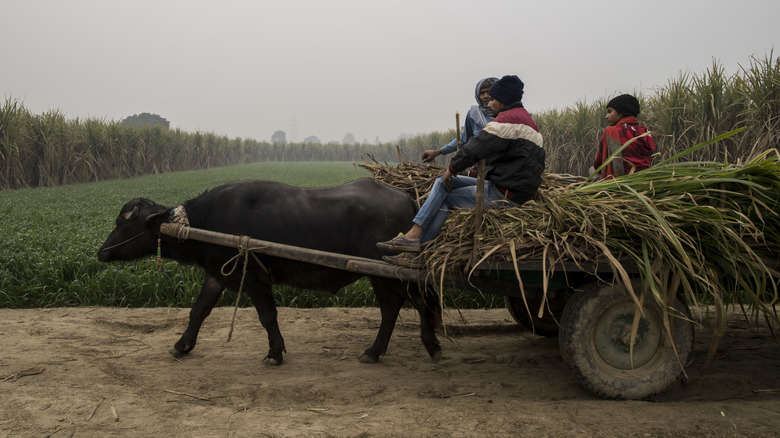
India has been producing sugar for longer than Brazil, with evidence of sugar refining dating back as early as the 4th century, but it was only in the 20th century that modern industrial production of sugar emerged. Industrial production took off in the 1930s with government protections in place, and in the 1950s, sugar mills became an integral part of the government's plans to develop rural areas of the country.
Like Brazil, sugar-producing regions of India are warm and get high rainfall thanks to the monsoon. However the climate conditions are more seasonal and less predictable, so India's sugar growers are less productive than other countries, and infrastructure like irrigation is needed to ensure the crop gets the required water year-round. Because of this, India's production of sugar surges and drops by year. It was actually the world's largest sugar producer as recently as 2022, but drought then caused a cutback in production (per Investopedia).
India has one other big factor supporting its sugar industry. While it doesn't consume the most sugar in the world per person, the country is the largest consumer of sugar overall. India uses a variety of sweeteners, including unrefined products made from cane sugar like jaggery and khan sari. With such a large domestic market, India's sugar consumption often outweighs its production, although with increasing productivity, India is still hoping to overtake Brazil permanently as the world's top sugar producer.
China has developed its sugar industry to meet high demand
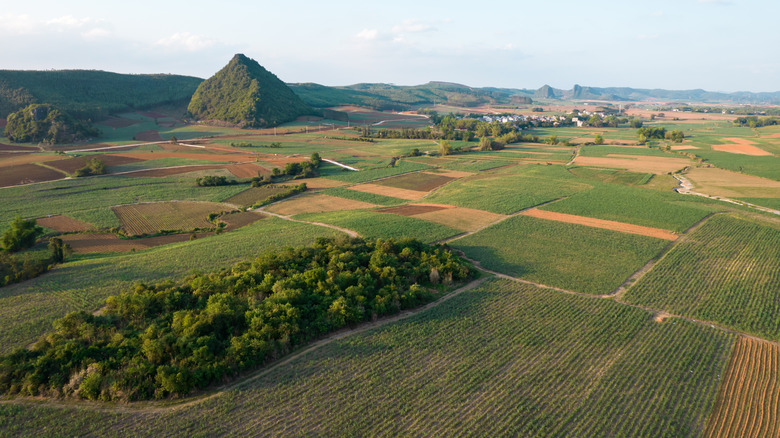
Like India, China has a long history of growing sugar cane. Wild varieties of the plant grow throughout the south of the country, and sugar syrup has been processed since the 4th century B.C. Sugar beets are also grown in the north, but sugar cane in the south is the dominant source of sugar, accounting for 90% of Chinese production. Sugar cane plantations are heavily concentrated in the hot and humid provinces in the far south, with Guangxi, which is west of Hong Kong and borders Vietnam, providing over 65% of all Chinese sugar (per Sugarcane – Technology and Research). China has been the third largest producer for years; however, Thailand has been challenging it, and in the most recent measurements, it was only about 10% behind China's (per U.S. Department of Agriculture).
China is not a huge consumer of sugar on a per capita basis, consuming only half of what people in India do and less than one-sixth of Americans, the largest consumers of sugar in the world. However, rising incomes mean sugar consumption has been increasing, and the size of the country still makes it a huge market for sugar. The Chinese government has set up programs to encourage the production of sugarcane, but domestic supply hasn't kept up with demand. Its neighbor, Thailand, is a major exporter and source of sugar in China, and the manual labor required to produce sugar in China has become more expensive. So, despite its large output of sugar, China remains a major importer.