

Store-Bought Sourdough Isn't Always As Healthy As You Think
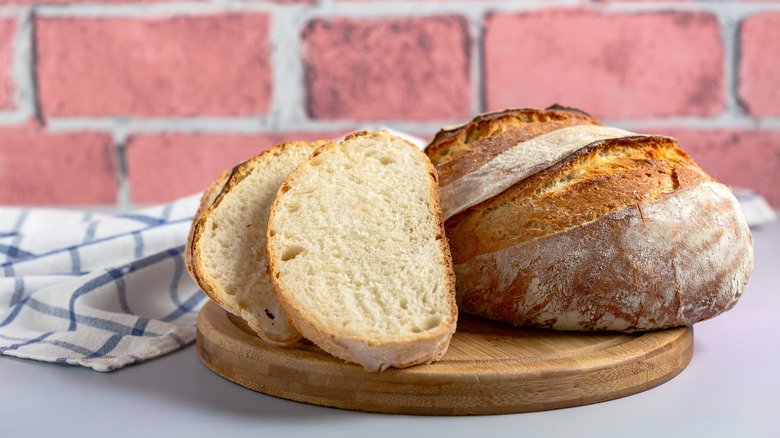
Sourdough bread isn't just delicious, although that is definitely a big selling point. It's considered one of the healthier breads that you can eat. Sourdough has more protein than the average white bread and more probiotics than typical breads. The fermentation process in sourdough starter breaks down gluten, making the bread easier to digest than other types, too. That doesn't mean it's gluten-free, mind you, but it may be a little easier on your stomach. All that makes sourdough sound like a real winner, right? Sort of. The catch is that not all sourdough is the same. Store-bought versions may cut some corners.
Your fresh-baked sourdough at home is made with flour, water, salt, and your starter. The starter itself begins as just flour and water that have fermented. Starter becomes a living thing as it ferments. There's no commercial yeast in true sourdough bread. But store-bought sourdough can't always make that claim. Instead of allowing the bread to rise through fermentation, supplemental yeast may be added, essentially making it normal white bread again. That's why a lot of store-bought sourdough just isn't as good as homemade.
These store-bought sourdough loaves likely use a starter, but there's less of it. The yeast makes up the difference, so the bread rises like a non-fermented loaf. The end result may look like sourdough with a crispy crust, but the taste won't be as sharp and the texture won't be as chewy. More significantly, the perceived health benefits of sourdough are diminished.
How to ensure that you're getting real, healthy sourdough
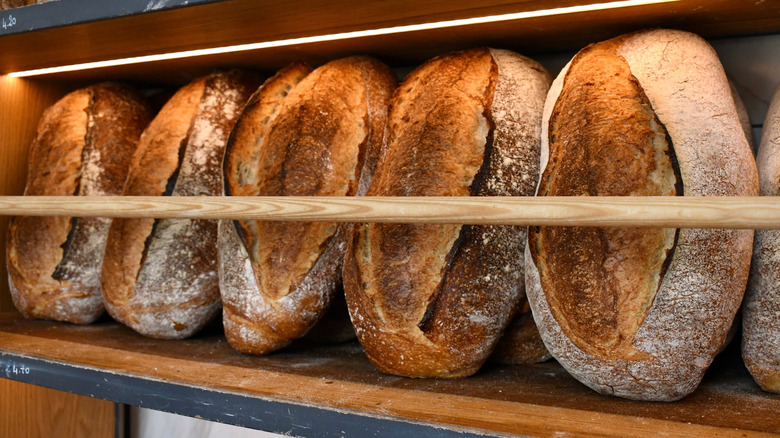
Negative reviews of Walmart's sourdough bread sometimes mention that the bread has no flavor and tastes just like average white bread. The label confirms the addition of yeast and a host of other ingredients. The Marketside sliced sourdough boule is the same despite the description claiming it's naturally leavened and slow-fermented. This is an acknowledged problem in the baking industry. Many manufacturers label products as sourdough if they contain even a small amount of sourdough starter, regardless of whether the bread has fermented enough to develop the benefits you'd want. Using labels like "naturally leavened" and "slow-fermented" doesn't violate FDA guidelines because they are not regulated terms and, strictly speaking, they aren't untrue.
If you want to enjoy sourdough bread not just for the taste but for any potential health benefits, make sure you read your labels carefully. The fewer ingredients, the better. And if you see yeast, know that it's going to be much closer to regular white bread than sourdough.