

Why Pasta Tastes So Much Better At Restaurants
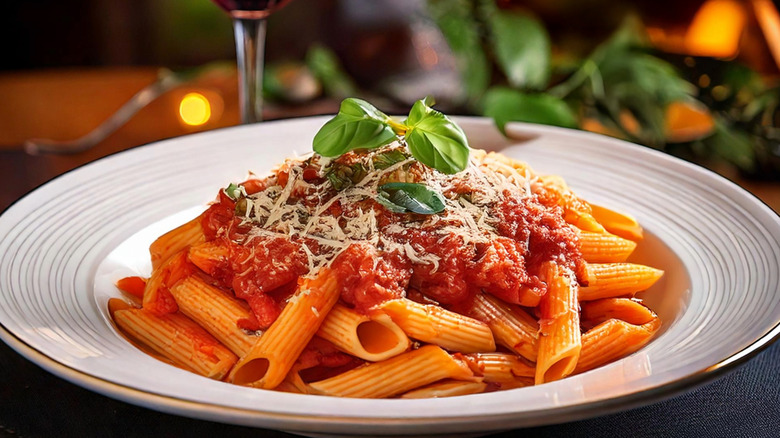
Ever had a plate of pasta at a restaurant and wondered why it tastes so different from the dish you make at home? Even something as simple as aglio e olio, a classic Neapolitan dish made with olive oil and garlic, can have a completely different impact on your taste buds in a restaurant. You might not realize it on a conscious level, but the main thing chefs do better than home cooks is nailing the texture. In restaurants, pasta isn't cooked to al dente perfection in the pot; instead, it's slightly undercooked, then finished in a skillet together with the sauce.
This small change in the prep method makes a huge difference. Most of the pasta we make at home is overcooked because we dutifully cook it in the pot until al dente, then toss it in the sauce where it continues to cook! The extra two or three minutes spent inside the skillet are just enough to ruin the texture we aimed so hard to achieve in the pot. Unless, of course, the pasta makes it into the pan just a tad undercooked — ideally, two minutes before it's ready. You're definitely going to need some practice before you find the sweet spot, but don't let that discourage you; another reason chain restaurant pasta dishes are so delicious is that the chefs have made them hundreds of times.
Restaurant pasta dishes are defined by the perfect texture
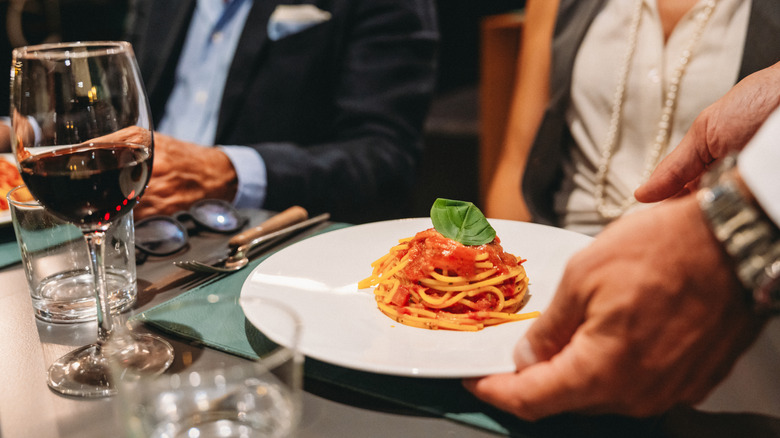
The way the sauce sticks to the pasta is an important element of texture. Once combined with the macaroni, the home sauces are often too watery (when made from scratch) or too thick (when plopped into the pan straight from the jar). Restaurant pasta doesn't have this hiccup because the pro chefs use pasta water to create the ideal consistency of the sauce. You've surely heard this tip a thousand times without taking it too seriously, but it really does matter. The water that cooked your pasta is full of starch and salt. When you add a couple of spoonfuls to the sauce, the starch acts as a binding agent, and the salt enhances the flavor.
It would be remiss not to mention the psychological factors at play when we dine out, though. For example, a 2014 study published in the Journal of Sensory Studies showed that pricing can affect how people feel about their meal. In the study, those who paid more for the meal generally enjoyed it more than those who paid less. Other research has shown that food tastes better when the restaurant is pretty. As such, the pasta you make at home might never reach the exact flavor experience you get when dining out, but as long as you follow the texture tips, it's going to come pretty darn close.