

The Old-School Barbecue Meat That's Due For A Comeback
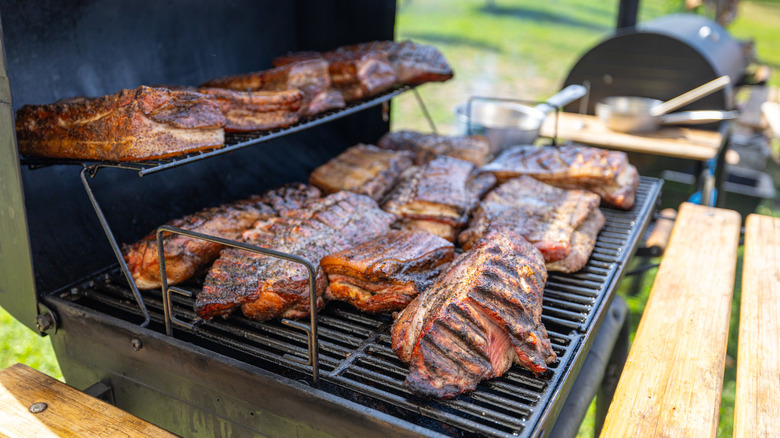
A big part of barbecue culture in the U.S. involves talking about tradition, but even the most history-conscious scenes sometimes see old-school dishes disappear. Tastes change, new ingredients get introduced, and meats get cheaper or more expensive. That's why we don't see things like frogs legs on barbecue menus as much anymore. However, sometimes traditions that get displaced have qualities that still make them worth recommending. One old-school barbecue meat that deserves a comeback in the U.S. is goat. It's not only highly flavorful, but also has rich historically roots.
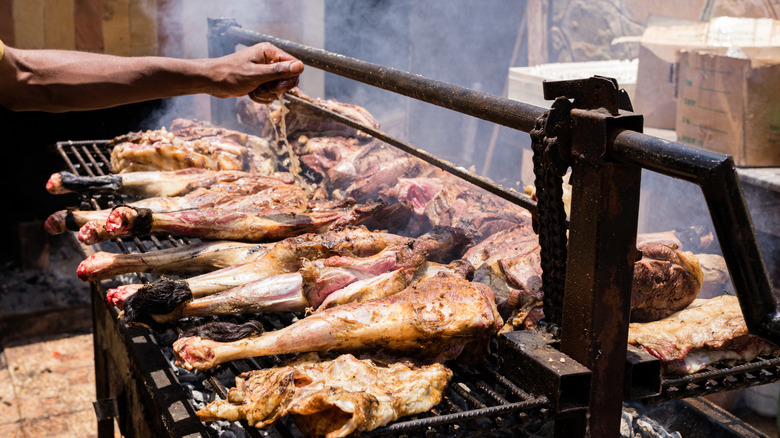
To understand how goat meat gained popularity in the first place, we have to go back several centuries. Barbecue traditions came from a few different sources in the United States, and one of the big contributors were the diverse early residents of Texas. That area of the country is so big that Lone Star State has its own regional barbecue cultures. One of the first came in the form of Spanish-American cowboys in the 1600s when shepherds from Northern Mexico started herding in South Texas and the Rio Grande Valley. The local indigenous people already had their own traditions of smoking meat over and open fire, but the Spanish brought key innovations. One was a tradition of spit-roasting. Another was old-world livestock, which during that era that meant sheep and goat. It was an influence that lasted in the barbecue of Texas and the Western United States until relatively recently.
Goat was an early barbecue meat in Texas and is still popular in Mexico
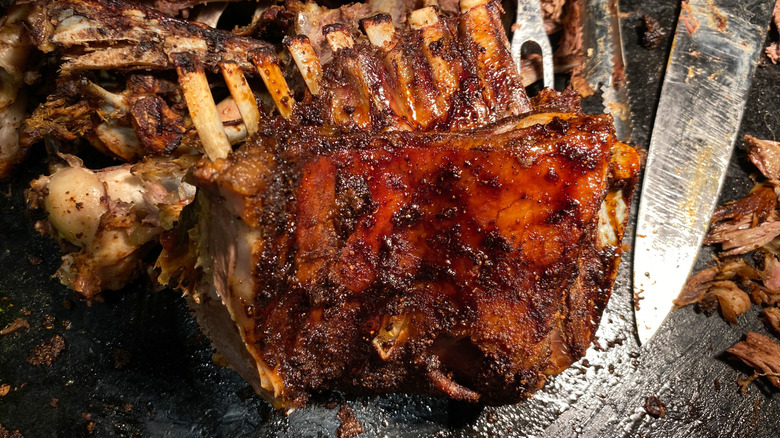
The Spanish brought pigs and cattle and other animals along with goats and sheep, all of which found their way into barbecue. However, goats and sheep were used in West Texas and Northern Mexico because of the climate. Compared to cows and swine, goats do well in dry environments, where they can survive on the kind of brush other animals can't. That made them an ideal early food source for colonists and natives in the arid Southwest.
Those early versions of goat barbecue were spit-roasted and also barbacoa. Not the shredded beef as Americans might know it today, but a whole style of pit barbecue. It referred to different forms of cooking, but in the Southwest it became associated with cooking meat in earthen holes, where it would be wrapped in maguey leaves and left overnight. This early form of the "low and slow" cooking that barbecue would become known for was ideal for goat meat because it tends to be lean and tough.
Goat lost its place on American barbecue menus as people came to prefer the pork and beef barbecue we know today, which uses milder, less gamey meat. But goat is still popular in Mexico, and in regions like Hidalgo goat barbecue in the barbacoa style is a communal tradition. In fact slow-cooked goat is often used for birria tacos.
Goat is a boldly flavored meat that is perfect for the smoky cooking styles of barbecue
Not everyone in the U.S. has forgotten what people in Mexico know, which is that goat is a uniquely delicious meat to barbecue. The Hill Country of Texas is one of the top goat producing regions in the country and still embraces goat barbecue. It's home to several goat-focused barbecue competitions, including the popular World's Championship Bar-B-Que Goat Cook-off in Brady.
While not always as gamey as some people might worry, goats' deeper flavor is a big part of its appeal. It's distinctly earthy and sweet, which is a great combo to pair with smoke, and the more bold flavor doesn't get overwhelmed by spices or sauces. If barbecue is all about highlighting the natural taste of meat, we shouldn't be ignoring what might be the single most flavorful kind you can get. Goat ribs are a particularly great option to try as they will get meltingly tender when slow cooked in a smoker or oven, and only need a simple salt and pepper or spice rub.
The only thing holding goat back as an underrated meat for grilling is price, as most production in the U.S. is done on a smaller scale, which leads to high costs. However demand for goat meat is on the rise, and there is strong potential for goats to be raised as a more sustainable alternative to cattle in arid areas. So c'mon pitmasters, get on it.