

How Long Butternut Squash Lasts – And The Best Way To Store It For Max Freshness
Fall wouldn't feel complete without butternut squash. In a squash popularity contest, it squashes the competition (groan). The versatility of this bulbous, pear-shaped fall fruit stretches far beyond the requisite bowl of butternut squash soup. Though this creamy go-to bisque is undoubtedly delicious, butternut squash can also play a starring role in a hearty harvest salad, alongside pumpkin and pomegranate seeds, or a supporting one as a simple, spiced, baked side dish. In fact, there are many creative ways to use butternut squash that aren't soup. But, if you want to get the most out of this adaptable gourd, it's good to know how long they last and the best way to store them for optimum freshness.
Whole, unpeeled butternut squash typically last about three months, however, ensuring the longest shelf-life for your squash begins with knowing how to pick them. Always buy in season, from late summer through early winter (peak ripeness is from September through November). They should be hard all around — no mushy spots and free of any deep cuts or gashes (light scuffs are fine). A ripe butternut squash should have a good weight for its size. Knocking on it should produce a hollow sound when it's ready for use. Its color should be in the realm of tan or beige, without any green. Avoid glossiness, opting for a dull finish. Finally, the stem should be as intact as possible and dark brown.
How to store butternut squash
The butternut squash season is only three months, so you may want to buy multiple gourds, store them whole, and use them throughout autumn and into winter. But there are some things to keep in mind. Like potatoes, butternut squash should be stored in a dry, well-ventilated, cool environment, out of direct sunlight (a pantry with good air-circulation, a root cellar, or basement are best). Be sure to keep them away from foods high in ethylene gases like apples, onions, and avocados that can accelerate degradation. Don't allow squash to touch each other. Main Street Farms in New York, recommends storing butternuts on wire racks or wrapping them loosely in paper, in a shallow, open-top container, checking them once a month for signs of rot, and turning them regularly to prevent bruising.
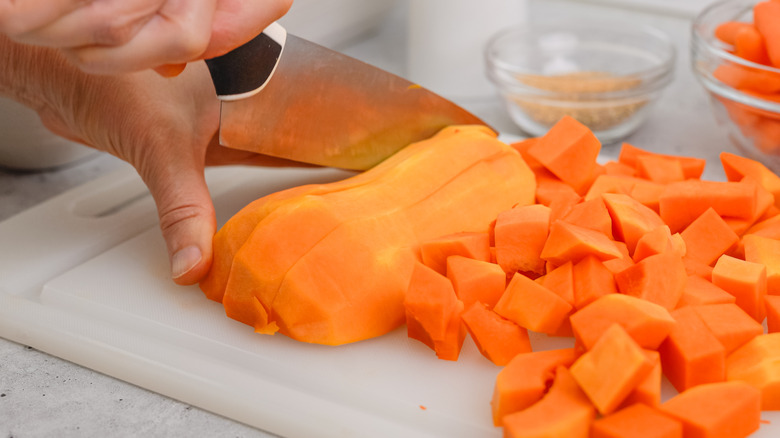
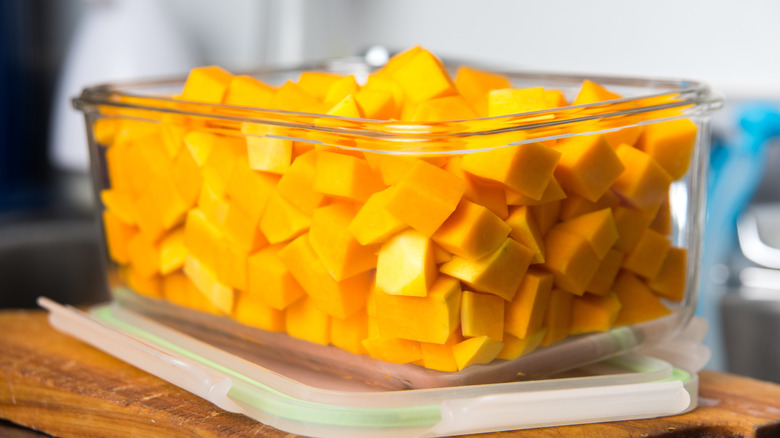
Once you cut into your butternut squash, you'll need to refrigerate or freeze it, depending on how soon you're planning to use it. If it's short-term, cubed butternut squash (uncooked or roasted) can last in an airtight container or sealed plastic bag (with the air pushed out) in the fridge for three to five days. Longer than that will require freezing, where it can last up to a year, though consuming it within six to eight months is recommended for optimum freshness. To freeze butternut squash, simply chop it into cubes and place them on a sheet pan in the freezer (use parchment paper). Once frozen, transfer to a freezer bag or other freezer-approved storage container.