

This 1960s Mall Restaurant Chain Was Part Of Woolworth's, But Didn't Include A Lunch Counter
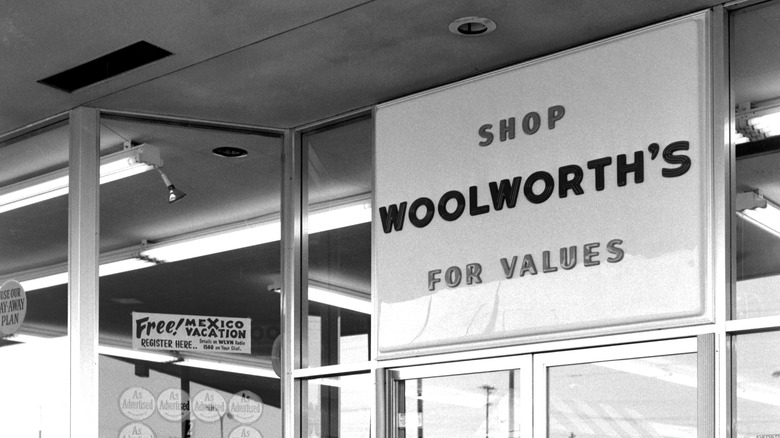
You know that $1.50 Costco hot dog everyone loves so much? That little morsel of value is an icon, a holdover from a bygone era of shopping and dining that dates back more than a century. Department store restaurants were mainstays for decades, drawing shoppers to enjoy refreshments and socialize since the turn of the last century. In the 1960s, Harvest House cafeterias tried to differentiate themselves from standard quick-service lunch counters by offering sit-down dining for the whole family, all a stone's throw from the local Woolworth's.
When department store restaurants first opened in the late 1800s, places like Chicago's Walnut Room were considered elegant and high-class. Think crystal chandeliers and delicate finger sandwiches. By the 1960s, however, the hustle and bustle of modern life had given rise to the spread of quick-service lunch counters – particularly in five-and-dime stores, drug stores, and diners. Many of those counters began to close in the 1970s and 1980s, which explains the nostalgia for them today.
Woolworth's, which ran Harvest House, was known for having luncheonettes, or lunch counters. But, the cafeterias that appeared in the 1960s offered a different experience – not a competing one. Woolworth's locations already had options for a quick bite, so the cafeterias were something a little more refined. Diners could sit in a formal dining area rather than on stools and enjoy meals with the whole family. Ads promised a relaxing atmosphere, kids' meals, and daily meal specials.
The Harvest House Cafeteria experience
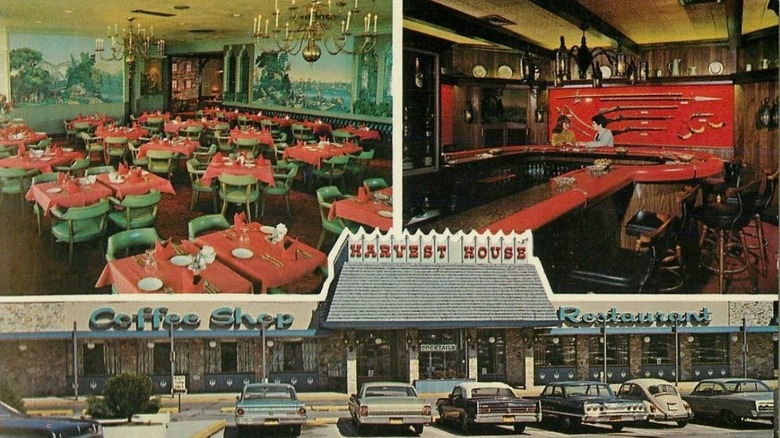
A 1967 Harvest House ad promoted a turkey dinner with baked celery dressing, mashed potatoes, gravy, vegetables, and cranberry sauce for 99 cents. Other ads called the décor tasteful and inviting — a clear attempt to reassure diners that this was not the typical lunch counter they were used to. A magazine spread from 1963 devoted most of its space not to the menu but to the interior design of the Harvest House.
It's clear that store management made a concerted effort to promote the restaurant's concept and visual appeal even more than its food. The entire floor plan and flow of the space were laid out in images and text — and there was definitely no lunch counter. After the Second World War, the trend toward family dining began to rise, and it really hit its stride in the 1960s. This new style of dining, which could be considered an early form of fast casual, became increasingly popular.
Although no ads explicitly stated "no lunch counters," the surviving photos and advertisements make it clear that Harvest House aimed to create a distinct dining experience for shoppers. By the 1980s, ads were more focused on the food, but that makes sense as there was no longer a need to draw attention to the experience as a different style of dining anymore. The restaurants remained in business until Woolworth's shut its U.S. doors in 1997.