

Don't Toss That Rice Water — Your Plants Will Love It
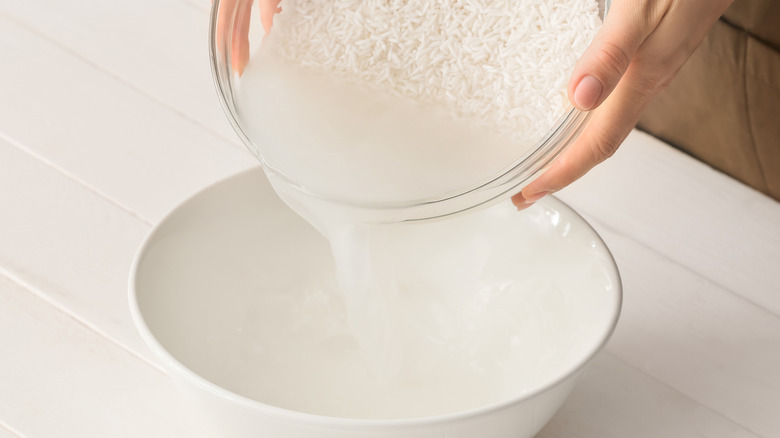
There is plenty of debate among home cooks as to whether or not you need to rinse rice before cooking, but one thing is for sure: If you are on team rinse, don't throw out the water. Instead, save it to fertilize your plants.
Rinsing is done to remove excess starch that can lead to gloopy rice when cooked, but it's this starch that can boost plant growth. In this water you'll also find plenty of nutrients that are used in commercial fertilizers, in particular nitrogen, phosphorous, and potassium.
Next time you cook rice, rinse the grains in a container rather than a mesh sieve. Pour off the cloudy water as you go, setting this aside as your fertilizer. Continue to add fresh water and rinse until clear. This water can be applied directly to plants, but no more than once a month. A buildup of starch in the soil can attract pests as well as lead to bacterial growth or mold.
Starchy rice water can be beneficial for most indoor plants including ferns, spider plants, and pothos, but be aware of the risk of overwatering when using it on succulents. In a kitchen garden, rice water can increase fruit growth for edible plants such as tomatoes, peppers, and eggplants.
While some plants benefit more than others from saving rice water, the only instance where it should really not be used is when growing with any kind of aquaponic or hydroponic system. As well as promoting bacterial growth, the starch may also cause malfunctions in the system.
Other methods for making rice water fertilizer
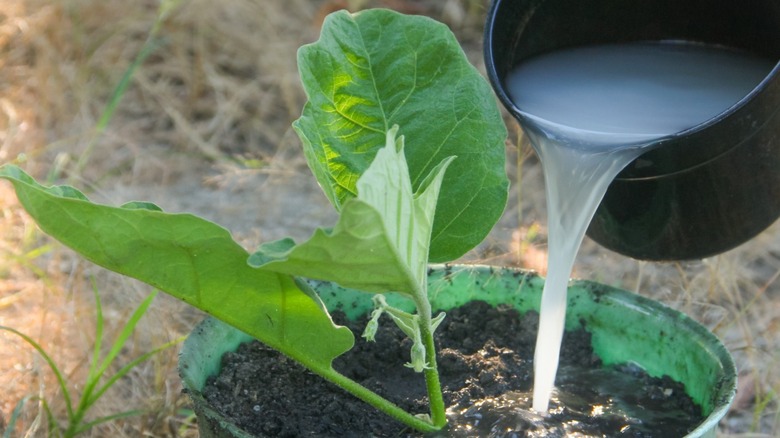
The water from rinsing your rice is the easiest and quickest fertilizer to make and has the benefit of using something that would otherwise go to waste — perfect for gardening on a budget. But if you find the application of rice water is benefiting your plants, you might want to consider upgrading.
The first option is to take the rinsing water and ferment it. Fermenting rice water not only increases the levels of nutrients, but also helps promote microbial activity for healthier soil. This entails taking the rinsing water and leaving it to sit on the counter, loosely covered, for anywhere from 3 to 9 days or until it smells sour. Fermented rice water needs to be diluted 1:1 with water before use.
Another option is boiled rice water. Although this is much quicker to make than fermented rice water, it requires you to consider how you cook your rice. You can either add extra water when making your rice as usual, to be strained off and saved after cooking. Or you can boil a small amount of rice in plenty of water for the sole purpose of making fertilizer. Unlike fermenting, this method increases both the starch and the nutrient content compared to what's found in rinsing water, so be aware that overuse can lead to mold or soil hardening.