

The 2 Mistakes That Make Soup Taste Bland Every Time
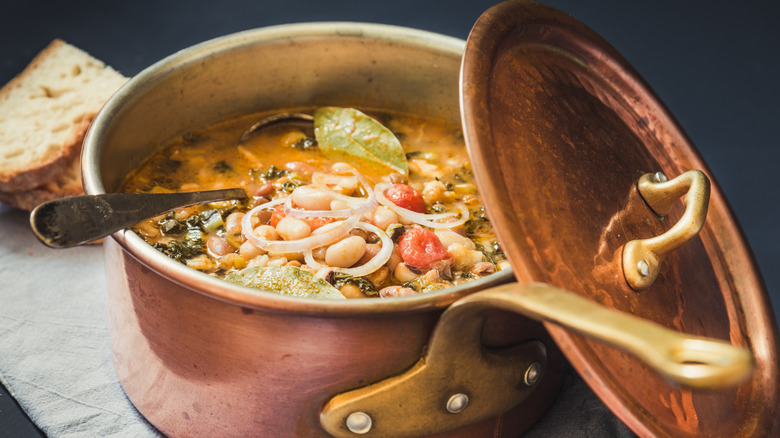
There's nothing like a hearty homemade soup, but some common mistakes everyone makes threaten to yield a bland batch. If you want a stellar soup, there are two crucial no-nos you'll want to avoid. First, water makes an underwhelming base and should not be used. Second, it's vital to stagger adding your ingredients to the soup pot rather than throwing everything in at the same time. This will only create mushy and flavorless food.
Even for a soup that isn't intended to be thick or creamy, starting with a flavorful broth is the way to go. You don't want to water down your ingredients with a plain base. A flavorful soup stock doesn't have to be complicated, whether you opt to prepare a homemade bone broth or simply add aromatics to a packaged version. A simple bundle of fresh green herbs or sautéed minced garlic and onion will go a long way to amp up your soup.
It's also worth noting that different soup ingredients will require a different pace of cooking. Making the time for a low and slow simmer starts by letting vegetables such as carrots, onions, and celery tenderize and caramelize to release more flavor and infuse the soup with their natural goodness. Remember that a good soup can't be rushed, and setting aside the time to do it right from the start will make for a memorable meal.
Tips for a flavorful soup
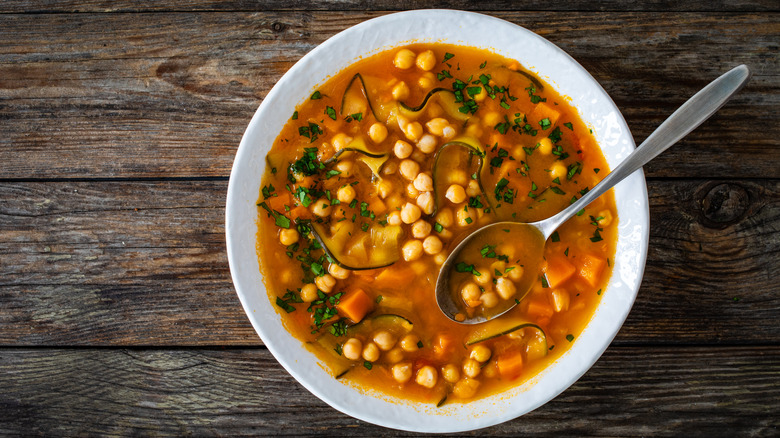
Avoid cooking up a bland soup by considering our seasoning tips, many of which center around beginning with a flavorful foundation. A homemade stock is ideal, but you can find a number of store-bought broths that will also do the trick. Remember to spice and season the broth and to also use appropriate thickening agents, should your soup recipe require it. If you do plan to prepare a made-from-scratch broth, roast the bones first for an especially tasty soup base.
When it comes to ingredients, remember that timing and proper order are key. For example, in a beef and vegetable soup, it's imperative that you properly sear and brown your meat on all sides first before removing it from the pot. Add your aromatics to cook in the residual fat before tossing your vegetables in and allowing them to sufficiently sauté. From there, it's a matter of making a roux if you choose; and then pouring in your broth, seasonings, and re-introducing the meat to the pot.
More tender ingredients like peas, potatoes, and mushrooms should be added in the final stages of your soup's simmering, around the last five minutes. This will help keep the vegetables from getting mushy and provide a balance of taste and texture to the overall flavors of your soup. Time, patience, and tasting as you go will all amount to a delightful batch of soup that could never be considered bland.