

Gordon Ramsay's Effortless Trick For The Crispiest Fish And Chips

You'd be hard-pressed to find a more iconic British dish than fish and chips. If you're looking for the best possible version, why not check in with one of Britain's best-known chefs, Gordon Ramsay? Ramsay is known for a number of dishes, but fish and chips is definitely one of his signatures. He even has his own fish and chips restaurant (aptly named, Gordon Ramsay Fish & Chips, with locations including Las Vegas, New York City, and Florida), so it's safe to assume he knows how to make a great version. While the famed chef has several tricks up his sleeve to ensure the crispiest, tastiest fish, one of his best starts right at the beginning. Ramsay makes his beer batter the night before so it can rest in the fridge overnight.
In Ramsay's fish and chip recipe demo share on YouTube, he simply says that you'll get crispier fish if you let the batter sit overnight, but he doesn't really get into why. He's not wrong, however. Every kind of dough and batter benefits from resting. That's why you let bread, pie crust, cookie dough, and even pancake batter rest for at least a few minutes. But if you can let it rest overnight, even better.
When you let the batter rest, you're letting the flour get fully hydrated while also allowing the gluten to relax. You start this process by mixing your dry and wet ingredients together, but the more you mix, the more you work the proteins to create a chewier product. So, by just working your batter until it's mixed and then letting it sit, you end up with a lighter, crisper, and more even coating. The longer it rests, the better it becomes.
How Gordon Ramsay ensures the crispiest fish and chips
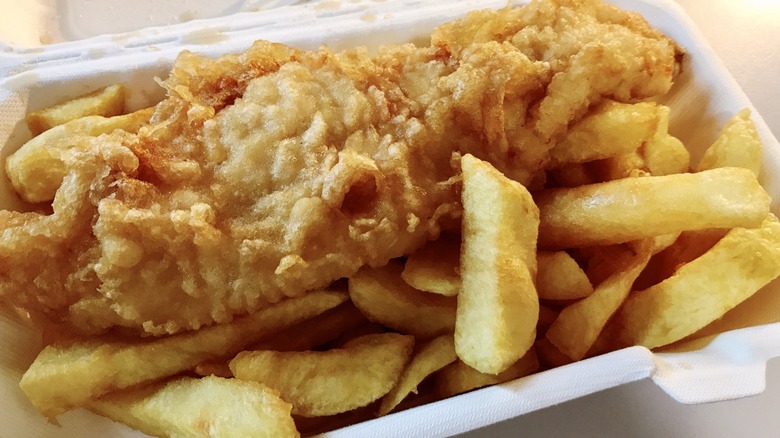
As per the video, Gordon Ramsay's batter is made from one cup of 00 flour and one cup of rice flour. The rice flour helps make the coating crispier because it's low in gluten and absorbs less oil, preventing your fish from being soggy after it's fried.
Other quick tips Ramsay offers for ensuring crispy fish include seasoning the raw fillets with salt to draw out excess moisture. Wiping the salt away and patting them dry before giving them a flour dredge achieving an equal coating all around. After a thorough dredge, dusting the fish off will make sure that there are no clumps, making it easier for the batter to envelop it evenly. Ramsay recommends letting the fish just sink in the batter and even shaking the bowl to make sure it's fully immersed.
Another extra step is to baste the battered fish with oil after dropping it in, helping it cook evenly on both sides. When it's done frying, shake off the excess and place it on a wire rack to cool so it can crisp up evenly all around. If it rests on a flat surface, it might get soggy. While there are plenty of other essential tips for frying fish, it's hard to deny that Ramsay's first step is a simple and effective one. All it takes is time, and you'll notice the benefits when you take that first bite.