

When Making Marinara Sauce, Use This Type Of Salt If You Seek Savory Flavor
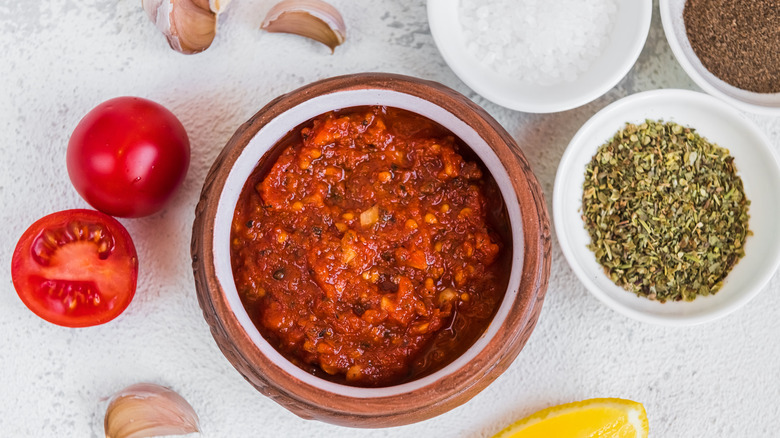
Nailing your marinara sauce recipe unlocks a bevy of delicious meal options. This simple yet bursting-with-flavor sauce boosts everything from pasta, pizza, and mozzarella sticks to all manner of meat and vegetable dishes. You just have to find the flavor profile you love. There are many ways to instantly improve bland marinara sauce, but we wanted to start by examining the options available within an essential marinara sauce recipe. Salt has a major impact on any dish's flavor profile, and there are different kinds of salt. Which do you use if you really want to dial up a marinara sauce's savoriness? We asked an expert.
"Using sea salt does a few things for marinara sauce, including adding acidity, deepening the flavors, and enhancing the flavor in every bite," says Jake Peterson, chef and co-owner at Dēliz Italian Steakhouse in Chicago. While there are different kinds of sea salt depending on where it's sourced, it packs a more intense punch than table salt and even kosher salt. If you use table salt's tiny, uniform grains, you'll likely get the least salty flavor. If you use kosher salt, you'll get a nice saltiness from its sizable, coarse grains. But sea salt's own large grains, rich with minerals it retains from the ocean, dial up everything salt promises, from bolstering aromas to quieting bitterness. Sea salt gives marinara sauce its own rich saltiness, while also highlighting its savory, umami notes, bright acidity, and the flavors of any herbs and vegetables you incorporate.
The right amount of sea salt and other savory adds for marinara
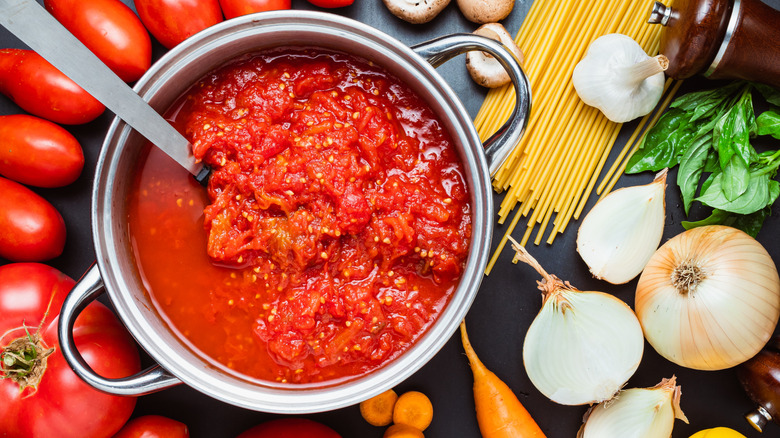
Due to sea salt's more intense salty quality, you may want to rethink the amount of salt in your usual marinara recipe. "Sea salt tends to be saltier than kosher or iodized salt, so you need to monitor how much you use," Peterson advises. If you normally use 1½ teaspoons of table or kosher salt, try ¾ of sea salt and work your way up if you want more. You want just enough to make the sauce's acidity and umami balance sing, but you don't want your meatballs to taste like they're covered in aggressively salty seawater.
Peterson himself prefers kosher salt, splitting the difference between table salt's arguably blander profile and sea salt's bold punch. If you can't land on the right amount of sea salt to make your ideal marinara, stick to the slightly less intense kosher salt and seek other sources of savoriness. Onions aren't part of traditional marinara sauce recipes, but if you want to get creative, they're a popular addition for some pungent, umami depth and sweet heat. Black olives are a bold marinara upgrade with their own briney saltiness, earthy savoriness, and acidity. Ina Garten's marinara secret is red wine, for its robust complexity. Remember, the most common mistake in making marinara sauce is not using high-quality ingredients, so start with the best tomatoes, garlic, and olive oil, plus sea or kosher salt, for a winning foundation you can add to or not.