

The 'Cocktail' Your Grandparents Probably Used To Serve Before Dinner
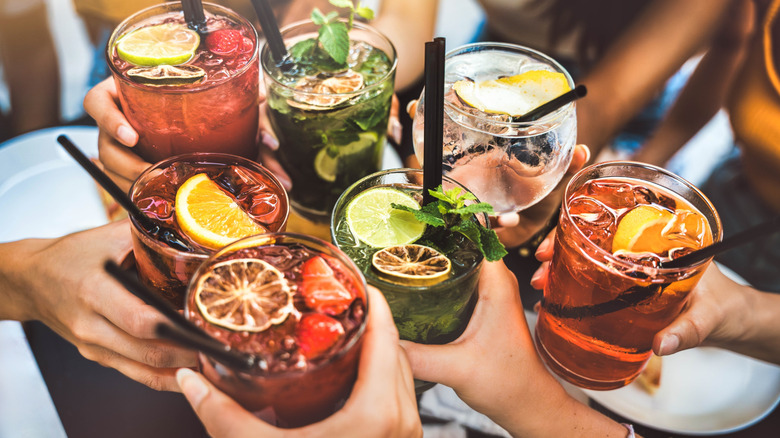
Are our grandparents the original mocktail influencers? Martinis take center stage when we see a 1950s-era dinner party on television, but there was a much more wholesome trend that's lesser known today: the fruit juice cocktail. The "cocktail" simply refers to the mixture of different juices or actual fruits, and not to alcohol. The thinking at the time was that this was an innocent, healthy-ish way to refresh people and get their appetites fired up, kind of like a booze-less version of the Italian aperitivo happy hour with appetite-stimulating spritzes. Plus, people were pretty newly excited about juice, so while it might be hard to imagine now, serving a fruit juice cocktail would have shown guests you were up on the latest and greatest culinary trends.
In fact, both fruit cocktail and fruit juices were novel in the mid-20th century. The name "fruit cocktail" comes from early fruit salad recipes that mixed various fruits with dessert wines or sweet liqueurs. When industrialized canning evolved, revolutionizing affordable, accessible food preservation, companies like Del Monte that canned fruit cocktail kept the name even when the Prohibition made adding alcohol impossible and the liquid switched to the sugar syrup we know today. Juice, while always available naturally and then in cans, only really took off with Americans after scientists devised a way to freeze orange juice concentrate for World War II soldiers. Suddenly, fruit cocktail, fruit juices, and vegetable juices were all the rage, and pre-dinner party recipes using them proliferated.
Types of fruit juice cocktails popular at mid-century dinner parties
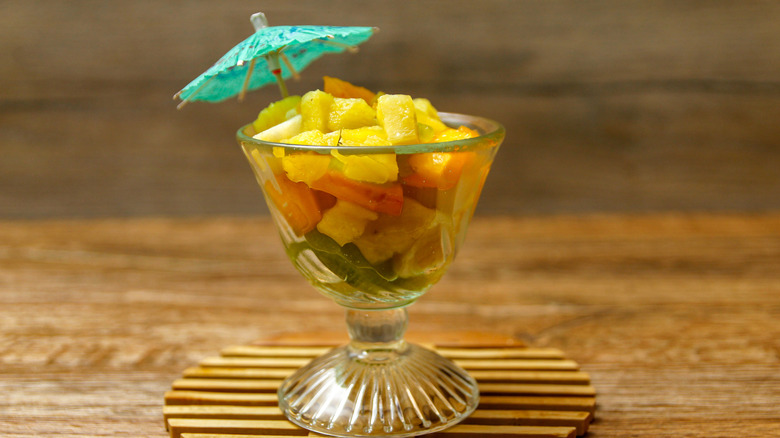
The U.S. Department of Agriculture, or USDA, actually determined what five fruits constitute "fruit cocktail." You need peaches, pears, pineapples, cherries, and grapes. Mid-century dinner party guests often did include actual fruit in their pre-meal "cocktails," technically making this one of the most popular appetizers in the 1950s. These cocktails may have also included elements like fruity sherbet. At their simplest, they mixed together a few different juices and could be sweet with fruit or slightly more savory with vegetables.
A 1950 cookbook from Betty Crocker advises that, "vegetable or fruit juices are at their best when two or three tart flavors are chilled and served ice cold in appropriate glassware." This page then lists recipes for tomato-sauerkraut juice; a vegetable cocktail with tomatoes, celery, onions, peppers, horseradish, salt, vinegar, and sugar; and a cranberry cocktail with lemon juice, pineapple juice, and ginger ale. The cookbook then gives the reader carte blanche with fruit cocktails, decreeing that they simply needed two or three flavors "to taste," like grape, lime, and pineapple.
With the popularity of mocktails today and plenty of fresh, natural juices better for us than frozen concentrate, now is a great time to try some 1950s-inspired recipes — well, maybe not the tomato-sauerkraut juice, but to each their own.