

The Absolute Best Rye Whiskeys, According To Experts
When it comes to whiskey, there are so many options that one can become dizzy trying to decide. Would you like to taste some straight American whiskey? What about a nice, sweet bourbon? Or maybe you'd like to take your taste buds on an international trip and sip some Scotch or Irish whisky. If you prefer a little more spice, there's always rye whiskey — before you even start, you should learn the difference between bourbon and rye – but with hundreds of bottles available, how in the world is one supposed to choose? You go to the professionals, of course. People who work with whiskey every day always have a recommendation when you just don't know which brand to pick. So, that's what we did.
This time, we decided to help out those who prefer that extra touch of spice in their whiskey, and those who tend to reach for the green labels sitting on the liquor shelves. This time, the focus is on rye whiskey, and which brands are the absolute best. Sure, some labels may be a little harder to find, or they might be a little more expensive than you're used to, but these 11 bottles are the ones that came highly recommended and are definitely worth discovering if rye happens to be your whiskey of choice.
Balcones Texas Rye
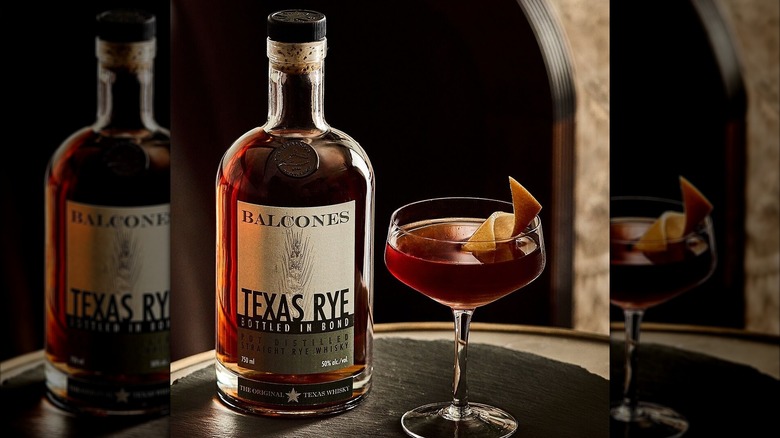
Kentucky may be known as the whiskey state, but that doesn't mean it's the only state distilling the spirit. These days it seems you can make whiskey anywhere and Andrew Forrester, The Last Refuge's general manager, believes whiskey drinkers should definitely check out Texas. "Texas whiskey, in general, is having a moment," declares Forrester, "and Balcones is one of the standout producers."
Located in Waco, the boutique distillery started in an old welding shop in 2008 and released its first expression in 2009: Baby Blue Straight Corn Whisky made with roasted blue corn from the Lone Star State. After releasing a couple more whisky expressions, Balcones decided to add rye to its docket in 2023.
Normally, whiskeys are made using a unique combination of grains. But the distillers did something a little different when they created this rye. They chose to use a combination of Texas Elbon rye, German Cara rye, and chocolate and roasted rye to create a mash bill that is 100% rye. Not another grain is used which means that when Balcones released its rye, it was the only whisky on the market with a 100% rye mash bill. Forrester describes it as "bold with a strong, earthy spice, but also a layer of rich, caramel sweetness." He says, "It's distinctive — definitely something that makes a statement on the palate. Plus, with Balcones being such a boutique operation, you're getting something pretty rare."
New Riff Malted Rye
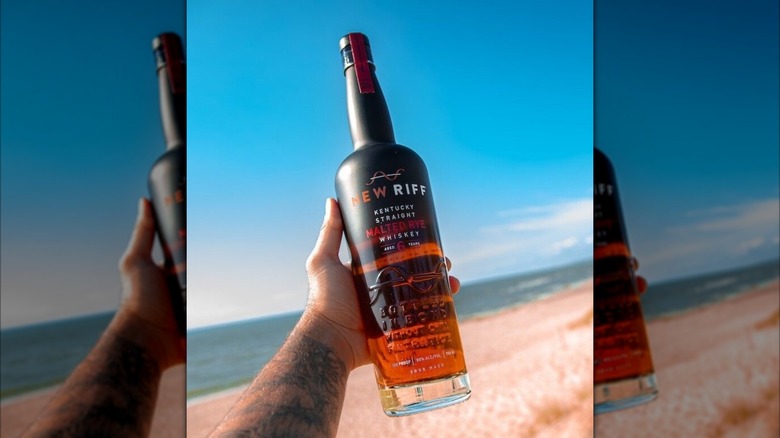
"I'm naturally skeptical of new whiskey brands," explains Elizabeth Kitzenberg, the owner of Picnic Linden Hills in Minneapolis. "There are so many pretty labels slapped on [Midwest Grain Products] juice these days." Luckily, that skepticism was cast aside when she tasted New Riff, a relative newcomer to the whiskey industry only founded 11 years ago by Ken Lewis. "New Riff truly stands out from the pack," she declares.
Located in Newport, Kentucky, Kitzenberg believes that New Riff "is genuinely innovative and forward-thinking." Production follows the 1897 Bottled-in-Bond Act, and, according to Kitzenberg, this means it applies real standards in an industry that prefers easier solutions. Since New Riff is owned and run by one family, it has the ability to create the spirits with no outside suggestions or pressure. So, New Riff can put whatever type of spin it wants on its whiskeys including a wholly unique 100% malted rye whiskey. A rye that Kitzenberg describes as having "distinctive sweetness and zip," adding that she gets "honeycrisp apple notes that make it clean as a single malt Scotch, but sweeter."
Made with 100% malted rye, New Riff's Malted Rye is the oldest whiskey on the distillery's docket and a whiskey that Kitzenberg finds "fascinating" especially when compared with New Riff's straight rye. She says you can really taste the difference between the two spirits, and it's that type of ingenuity that makes this brand and this spirit a standout.
Jack Daniel's Bonded Rye
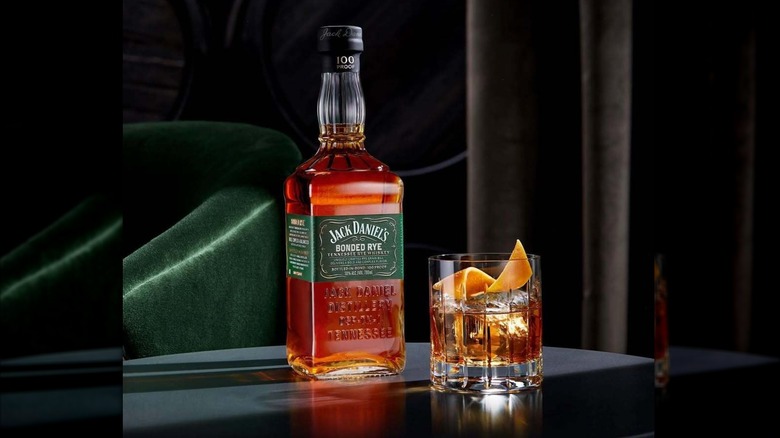
There are plenty of recognizable names in the whiskey world. But one of the most recognizable is Jack Daniel's. A Tennessee whiskey that's been around since 1866, this square bottle with can be spotted immediately on any shelf. A brand with such reputation is guaranteed to have more than one expression, and Jack has over 20. But it's the Bonded Rye that Master of Bourbon Bethne Stewart, a bartender at The Portrait Bar in New York City, recommends "for its accessibility and how smooth, rich, and flavorful it is."
Unique expressions of Jack Daniel's aren't anything new. The brand started releasing different styles in the '80s, while the first flavored whiskey was introduced in 2011. It wasn't until May 2022 that the famous producer decided to create a series of whiskeys dedicated to the Bottle-in-Bond-Act. Although the Bonded Rye is the youngest member of the Bonded Series that was released in 2023, it follows the same rules as any other Bottled in Bond whiskey: it's bottled at 100 proof, made from a single distiller in a single season, and aged in a federally bonded barrel house for at least four years.
Michter's US*1 Single Barrel Rye
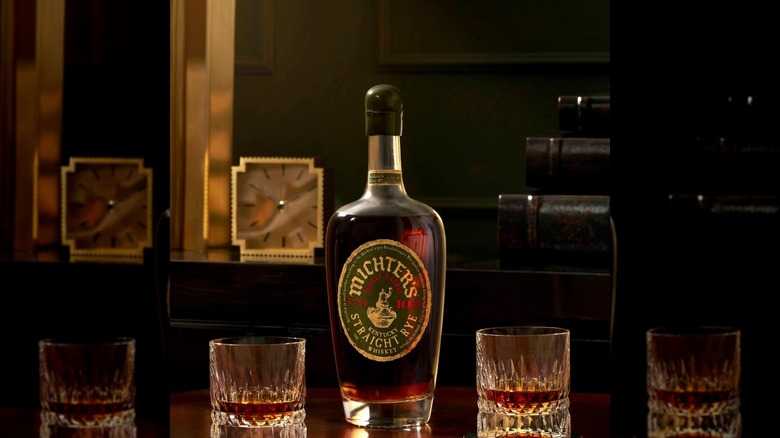
Michter's is one of those brands that has a long history but has changed names a few times. It may be currently known as Michter's, but it wasn't always like this. Originally founded in 1753 by John Shenk, the distillery was later renamed Bomberger's Distillery in the 1800s, and then finally became Michter's Distillery in the mid-1900s. Since taking on the Michter's moniker, the brand has released numerous whiskeys ranging from bourbons to straight American whiskeys. But it's the US*1 Single Barrel Rye that Andrew Forrester says is worth taking the time to discover even though it "flies under the radar compared to big names."
Given the US*1 name as an homage to America's first whiskey, the single barrel rye is distilled from specially selected American rye. And just as the label states, each and every bottle comes from a single barrel, creating a flavor that Forrester says "is smooth, but with the complexity you'd expect from a well-aged rye," adding that this label is "a little sweeter than some other ryes but still delivers that signature spice." Since every bottle comes from one barrel, each will taste a little different, something The Last Refuge's general manager says "adds a layer of intrigue for people who want something a bit different each time they pour."
Willett Family Estate Rye
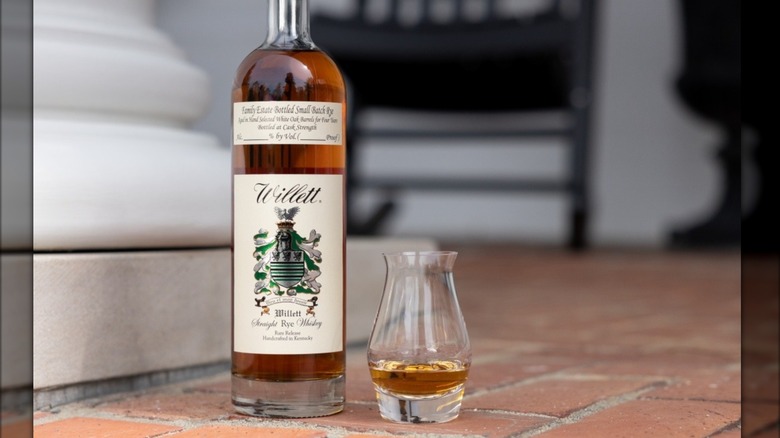
Bill Thomas, the owner of Washington D.C's Jack Rose Dining Saloon, believes that "this extremely affordable expression is a gateway into possibly the best rye distillery in the country." The distillery Thomas is referring to is none other than the Willett Distillery in Bardstown, Kentucky, and the whiskey is the Willett Family Estate Rye. Thomas isn't the only one who feels this way about Willett, Elizabeth Kitzenberg tells us that "Willett represents everything I value in whiskey – it's family-owned, consistently excellent, and ethically made in a market that's absolutely saturated with mediocre options."
The distillery uses a combination of two mash bills to create this label. The high rye mash bill is 11% corn, 74% rye, and 15% barley, while the low rye bill features 34% corn, 51% rye, and 13% barley. Kitzenberg says that double mash bill "delivers a spice and consistency that works beautifully both as a sipper and in cocktails." In fact, she uses it in her restaurant's Perfect Manhattan.
Thomas and Kitzenberg appreciate that this bottle is now easily accessible, which wasn't the case in the past. The owner of Picnic Linden Hills admits "I used to hoard this stuff because it was so hard to find." She even buried a bottle before her wedding hoping it will bring good fortune. But now that you can get it anywhere, Thompson guarantees that once you taste it "it will have you searching for [Willett's] single barrel store picks coast to coast."
Great Jones Rye
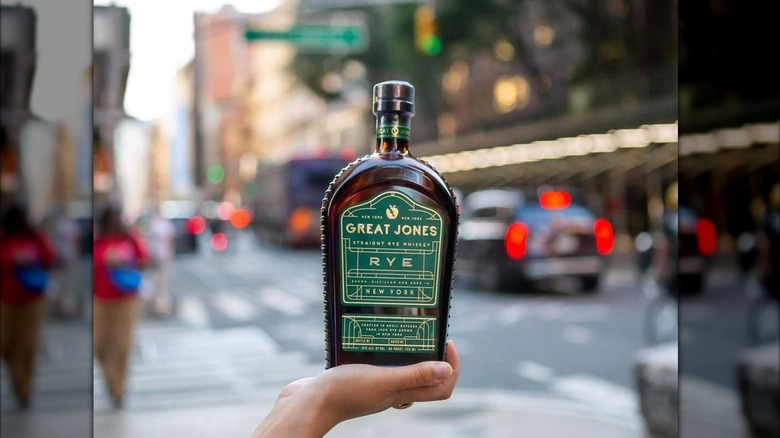
Following the trend of distilling whiskey in states other than Kentucky is Great Jones — the first distillery to open its doors on Manhattan since Prohibition. Everything about this whiskey is pure New York from the grains used in each one of its spirits to the name above the door. See, when the creators first started turning the building at 686 Broadway into a distillery, they found a false wall which they immediately tore down. Hiding behind it was a tunnel that they believed was used to run liquor from the building to Great Jones Street during Prohibition, hence the spirit's name.
But that's not the only link the whiskey has to New York. The grains used to create Great Jones Rye (and all the spirits under the Great Jones moniker) are sourced from the Black Dirt region of Warwick Valley, New York. Those grains are then mixed with water from the Catskill Mountains to create a spirit that Bethne Stewart says is "a great example of New York terroir [with a] bright minty spice."
Kentucky Peerless Double Oak Rye
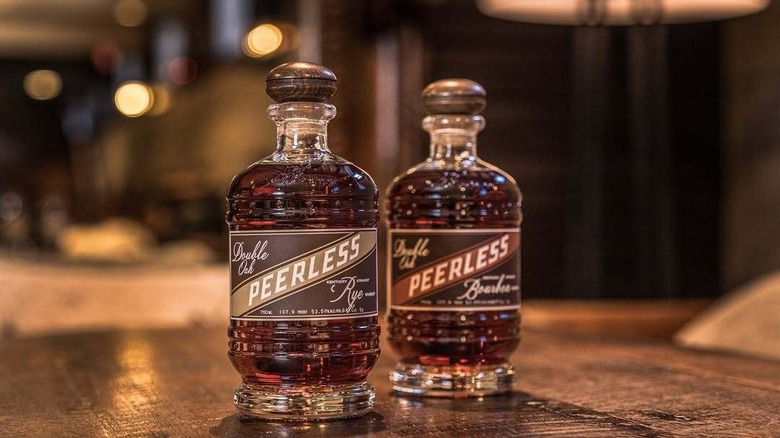
Two different Peerless labels made our list. The first is Double Oak Rye, a whiskey that has been aged in two different barrels — similar process is used in the production of double barrel bourbons. It's a common twist on a classic spirit that tends to accentuate those luscious caramel and butterscotch flavors. As a brand that likes to push the envelope, besides rye, Kentucky Peerless also has Double Oak Bourbon on its docket, a label that was first introduced in 2021. A year later, in November 2022, Peerless expanded its portfolio and tried the same experiment with rye. The result was an expression that Bill Thomas says is "balanced and complex."
Although Peerless has been crafting whiskey since the 1880s, it wasn't until May of 2017 that Peerless released its first bottle of rye, which was exactly 100 years after the original distillery was closed. Since then, Peerless has come out with various expressions of single barrel, small batch, and barrel finished bourbons and ryes, even including a rye variety that's been aged in absinthe barrels. While there are 14 different Peerless expressions available, it's the Double Oak Rye that Thomas admits he "just can't seem to stop drinking."
Clyde May's Straight Rye
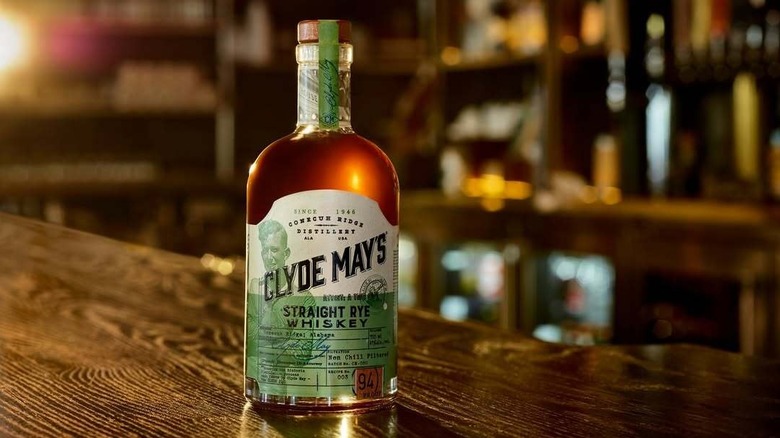
Beginning as a side hustle in the back woods of Bullock County, Alabama, in 1946, has turned into a line of top-notch whiskeys all created with the same attention to detail as that first bottle of moonshine. There was just one problem with this little side hustle of Clyde May's: It wasn't exactly legal. May didn't care, he continued making his white lightning but with a few changes. The distiller started aging his whiskey in charred oak barrels and even adding dried apple slices for flavor. Of course, all that moonshining landed him in prison for eight months in the early '70s. But that brief stint in the pen didn't stop May, once he was released, he kept right on moonshining and eventually his whiskey became legal in 2001.
With four whiskeys on Clyde May's docket, it's the straight rye that Andrew Forrester says "is a sleeper hit." This award-winning whiskey comes in at healthy 94 proof and has been aged for four years. That combination gives this rye "a unique balance of fruitiness and rye spice, with a touch of toasted oak that's different from a lot of traditional ryes," explains Forrester. "It's a great choice for anyone looking to try something with a bit of a different flavor profile."
Wilderness Trail Rye
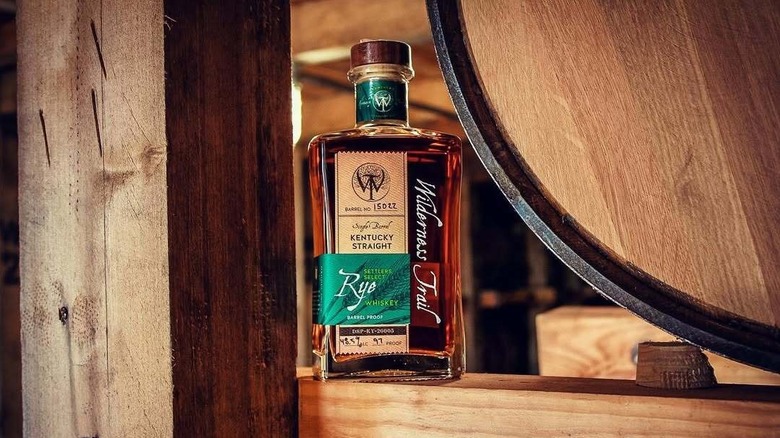
When Shane Baker and Pat Heist, the two men behind Wilderness Trail, picked Danville for their distillery, they wanted to pay homage to its history. Danville just happens to be part of the Wilderness Trace district, an area where Daniel Boone, an early American explorer, forged a trail in the 1700s. The place seemed like the perfect spot for a new American whiskey. It's true that Kentucky has been producing whiskey for centuries, but Wilderness Trail was the first legal distillery to set up in Danville since Prohibition.
This rye is unique for its historical location and the mash bill. In order to classify as rye whiskey, the spirit must be made of at least 51% rye. While a lot of rye mash bills have at least 70% rye, Wilderness Trail only uses 56%. The rest of the mash bill is rounded with 33% corn and 11% malted barley, creating a rye that has spice but is more balanced than some of those other rye whiskeys out there. This is why Bill Thomas considers this rye to be "one of the most dynamic ryes of the last decade" and why he believes it "shows well young or old."
Peerless Toasted Rye
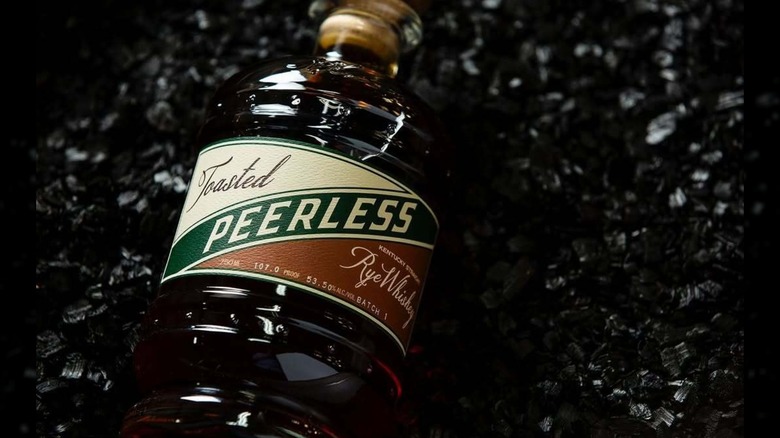
The second Kentucky Peerless rye to make our list is this Toasted Rye. Similar to Double Oak, this rye whiskey is also finished in a second barrel. But what separates the two is that while the Double Oak uses a charred new American oak barrel for its second aging, the Toasted uses a toasted oak barrel for its finishing. What's the difference between charred and toasted oak barrel? Time and heat. Changing the amount of time and the heat intensity used to prepare these barrels can really change the flavor.
The first barrel used in Peerless Toasted Rye has a level 3 char which means it was burned with a very intense fire for only about 30 seconds. But John Wadell, the head taster at Kentucky Peerless, wanted a medium toast for the second barrel so it was toasted for an hour but with less intense heat. That toasting really amplifies the flavors of vanilla, chocolate, and spice in this special bottle. Flavors that Bethne Stewart tells us are the reason she grabs it when she "really wants to splurge." She says she really enjoys "its smooth warmth and giftability."
Kings County Distillery Straight Empire Rye
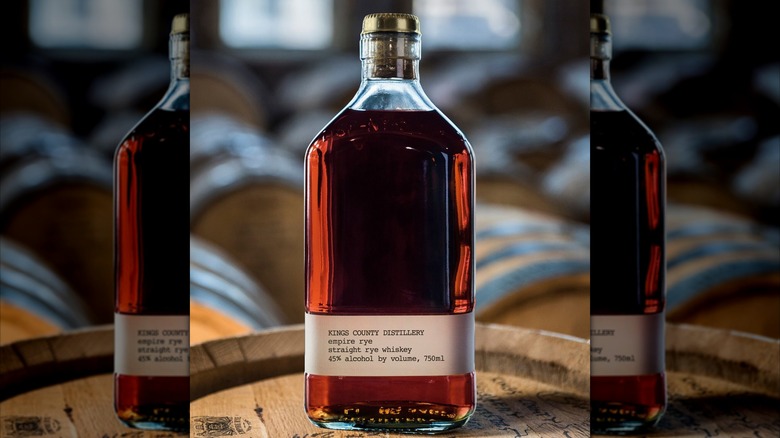
"A small-batch distillery in Brooklyn, Kings County is doing some really exciting things with their rye," declares Andrew Forrester. This rye is the freshest release on our list, and it's definitely worth a sip. The general manager of Louisville's The Last Refuge believes this "straight rye expression has a bold, peppery character but is tempered with a surprising sweetness and richness." A richness that comes from its unique mash bill.
As we mentioned earlier, in order to be an American rye whiskey, the mash bill must have at least 51% rye. But Kings County's Empire Rye isn't just American rye whiskey. It's an Empire Rye whiskey, and in order to receive that distinguished certification, this particular whiskey must be made from at least 75% rye. But not just any rye — it has to be grown in the state of New York. The mash bill isn't the only thing that makes this rye an Empire Rye. The spirit must also be mashed, fermented, distilled, and aged for at least two years in charred oak barrels in the state of New York. That attention to detail creates a spirit that Forrester says has "a lot of character in each sip, and it's got that unique charm that comes from being a true craft spirit."