

The Affordable Tip For Freezing Soup Without Buying Fancy Containers Or Ziplock Bags
We may receive a commission on purchases made from links.
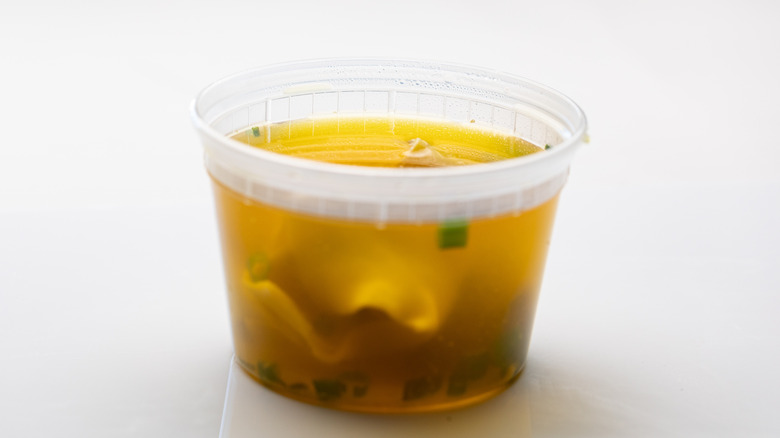
If you order takeout food, you've probably noticed that it comes in useful-looking plastic containers that seem like a shame to toss. Maybe you've even been accumulating them for some to-be-determined purpose. Storing leftover soup is the use they have been waiting for.
Most takeout containers are made of freezer-grade polypropylene, the same material as many "meal-prep" sets sold at retail. In most professional kitchens, they're called "deli" containers, stacked by the hundreds and used for storage and mise en place ingredients. They fit together, seal tightly, and, if you've already paid for dinner, you've already paid for the containers. Because they're usually clear, you can tell what's in them at a glance. If you somehow run out of takeout containers, you can buy them in bulk for next to nothing on Amazon.
Pouring hot soup into plastic can warp the container and leach chemicals or microplastics, so to freeze soup safely, let it cool completely first. Leave a little headspace for expansion, since frozen liquid swells and can pop the lid. Stack containers by portion size, single meals, larger batches, or bases for future stews. Never microwave soup in these containers, because the repeated heat breaks down the plastic, and the flavor of melted polymer is not one to savor. Instead, defrost overnight in the fridge or loosen the frozen block in a bowl of cool water before transferring it to a pot to reheat.
Cryonics for leftovers
These containers are also great for batch cooking, meal prepping, and storing pretty much any kind of food that can be kept cold. If you used half an onion for the mirepoix, chop the rest and stash it in a deli for next time. You're already crying, so you might as well get two meals' prep done. The same goes for carrots or celery. When you make stock, don't stop at a single pot. Simmer a big batch, strain it, and freeze it in deli containers so you can pop out a portion whenever you need liquid gold.
These containers also hold sauces, beans, cooked grains, or washed herbs, pretty much anything you'd want to see at eye level when you open the fridge instead of mouldering in a half-forgotten bag. For raw vegetables that brown or wilt easily, like potatoes or artichokes, submerge them in cold water before refrigerating to slow oxidation and keep them crisp until you're ready to use them.
Label everything. Painter's tape and a Sharpie are the best tools for the job because they stick even when cold and peel off cleanly. Write the contents and date clearly, and your future self will thank you. We're rapidly losing the battle against the global accumulation of single-use waste, and this isn't a huge step, but it is a good, personally useful one, so why not? You don't need matching glassware or fancy vacuum sealers to live resourcefully, just a bit of imagination and the willingness to see utility where others see trash.