

Never Store Spinach With This One Kitchen Staple Or You're In For Wilted Leaves
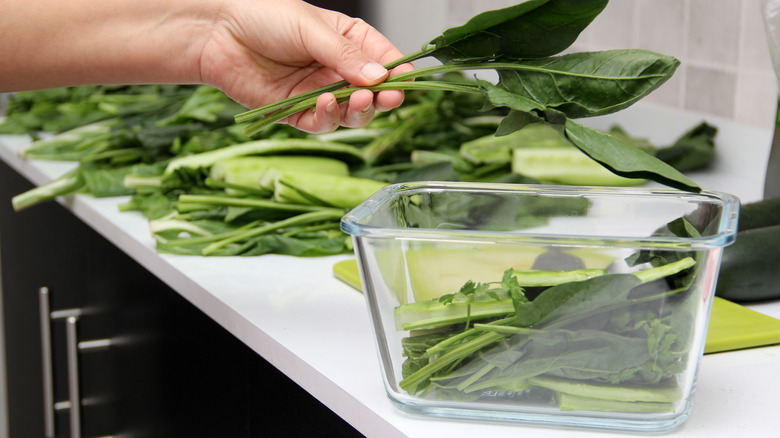
You're not alone if your spinach never seems to last as long as you hope — but it's not you or your fridge's fault. As unbelievable as it sounds, it's possible that tomatoes are what's responsible for those sad bundles of wilted spinach you keep pulling out of your refrigerator. The two may pair marvelously together Jennine Rye's spinach and tomato-stuffed chicken breast recipe, but shove the two of them together into the same crisper drawer, and you won't like the outcome.
Tomatoes and spinach are just one of the 15 foods that you should never store together, largely due to a gaseous compound known as ethylene. When present in large amounts, ethylene can start the ripening stage and significantly speed it up. However, not all types of produce react to ethylene gas the same way – some are ethylene-producing and others are ethylene-sensitive; with tomatoes belonging to the first category and spinach the second.
Stored too close to each other in the same space, the ripe tomatoes and their substantial production of ethylene gas overload the spinach's ripening process and accelerate it straight to wilting, even spoiling in some cases. As a result, you might notice your spinach shriveling, getting mushy, and, particularly, turning yellow from a loss of chlorophyll – the green pigment in most plants and leafy greens – in a matter of days.
Spinach and tomatoes belong in entirely different storage areas
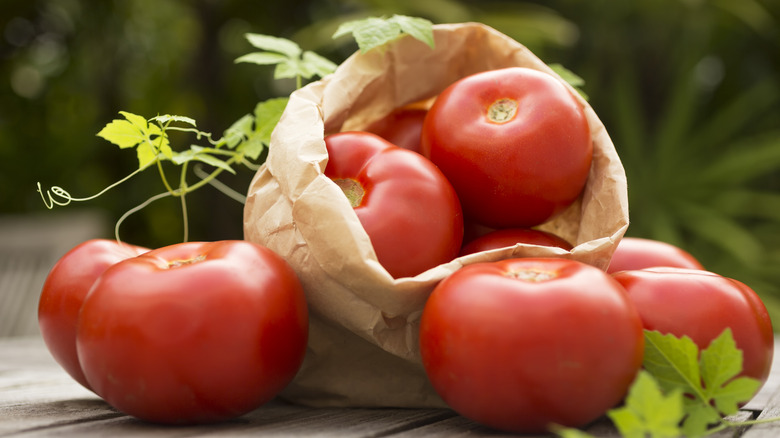
The solution to this is rather obvious: store spinach and tomatoes in separate spaces. Refrigerator storage is still one of the absolute best ways to keep spinach fresh, especially since cooler temperatures — ranging between 34 and 40 degrees Farenheit – slow down ethylene activity. Loosely wrap the leafy greens in paper towels to absorb all the excess moisture, another common cause for wilting. Then, store them in airtight containers or bags and place them in the crisper drawer. Make sure the surrounding area is cleared of heavy items that could bruise the leaves, as well as steering away from other ethylene-producing fruits like apples, avocados, pears, peppers, peaches, and kiwis. Stored this way, your spinach will keep fresh for up to 10 days.
Tomatoes, meanwhile, are much better stored at room temperature because they cannot withstand cold temperatures. When you take them fresh from the farmer's market or the garden where they've never been refrigerated, it's best to simply remove the stems and store them upside down on the kitchen counter, away from direct sunlight. Leave a little room in between the individual fruits for air circulation instead of piling them up. It's best to eat tomatoes immediately after they're ripe, and the fridge should be the absolute last resort when you want to keep them a few days longer. They will lose some flavor and texture, but you can at least save your spinach by keeping the two separate.