

10 Tasty Ways To Cook With Used Coffee Grounds
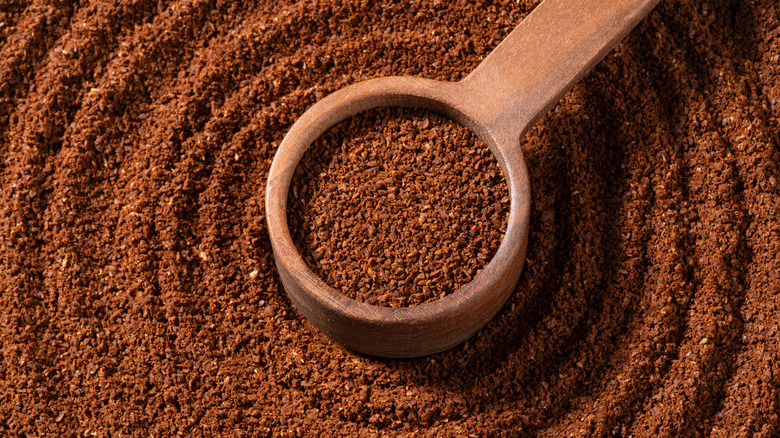
If you brew your own coffee every morning, you're probably going through a lot of coffee grounds throughout the week. There is nothing necessarily wrong with this. It may not be as bad for the environment as using single-use coffee pods every day. However, there is something extremely satisfying about repurposing an ingredient for something new instead of throwing it straight into the trash. There are many different ways that you can reuse coffee grounds, from adding them to fertilizer and using them as insect repellent to turning them into a skin exfoliant. However, there are also plenty of ways that you can incorporate them into your cooking and baking as well.
Before we get into these options, however, let's discuss how to best store this thrifty ingredient. Unless you're planning to use your leftover coffee grounds right away, you'll want to dehydrate them. That way, you can simply keep them in a jar in your pantry alongside other ingredients like spices and cocoa powder and use them whenever inspiration strikes you. If you don't have a dehydrator, you can just put them in the oven for a few hours at around 200 F to remove the residual moisture.
You can use any type of coffee grounds for these recipes, whether you grind them yourself in your own grinder or buy them pre-ground, and no matter if they're a light roast or dark. So, without further ado, here are the best ways to use them.
Make a rub

One of the first things to understand when exploring how to repurpose used coffee grounds is that they do not have to be the main flavor. Sometimes, they are just one of many flavorful elements that conspire to create a dish. Case in point: the idea of eating a steak that tastes like a latte probably isn't all that appealing, but adding coffee grounds to a marinade can vastly enhance the outcome.
Though many of us associate coffee with sweet drinks (even if you aren't a fan of pumpkin spice lattes), coffee is not inherently sweet. In fact, it's as bitter as it is sweet, and often has a hint of acidity, too. It enhances the flavor of a meat marinade, adding a depth that isn't as distinguishable as coffee, but still adds a certain je ne sais quoi that will take it to the next level. You can choose which marinade recipe you add it to, but its powerful flavor pairs particularly well with earthy and spicy ingredients, such as smoked chiles.
Add it to stews and chilis
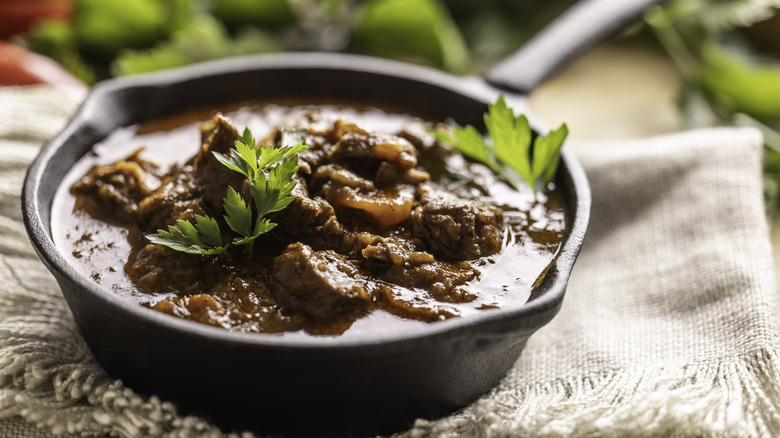
Just as coffee can deepen the earthy taste of grilled steak or pork tenderloin, so too can it deepen the taste of a hearty stew or chili. It has a depth of flavor that can be the unsung hero weaving through the more attention-grabbing tastes of chili powder, garlic, tomato paste, or whatever other ingredients your particular recipe calls for. If you do choose to add it, keep in mind that even when there are a lot of other powerful ingredients involved, it is possible to add too much coffee.
Start with a ½ teaspoon and see how it goes. Home cooking is all about tailoring recipes to suit your tastes, so you can add more if it isn't enough. The finer the grind, the less likely you are to notice any grittiness. The closer you can get to cocoa powder than cornmeal, the better.
While adding coffee grounds to stew might seem a little crazy at face value, if you think about it, there are plenty of chili recipes that contain such seemingly incongruous ingredients as stout (our venison stew with Guinness is a great example), brown sugar, and cocoa powder. You'll find those latter two in our classic Cincinnati chili. What all these ingredients have in common is an understated earthiness that can make all the difference in a dish.
Create mouthwatering granola

Making granola is satisfying for so many reasons, but perhaps the greatest of all of them is customisation, and that's where coffee comes in. You would struggle to find granola at most stores that contains coffee grounds, which is a shame, because coffee has proven to be a delicious flavor in all kinds of sweet treats. The bitter earthiness of the ingredient is a match made in heaven with sugary flavors, especially ones that have their own hints of nuttiness. Do keep in mind, however, that you won't be adding your coffee grounds to granola that is already made: You'll need to start this recipe from scratch.
What you have to do is take your favorite granola recipe (our homemade granola recipe is a great jumping off point) and mix in a tablespoon or two of coffee grounds depending on the size of the batch. That's it. The granola will have a hint of coffee flavor, but it won't detract from the other ingredients.
Just make sure that you're using complementary flavors. If you're making a batch of granola that is on the fruitier side, the coffee might taste out of place. However, it makes a delicious addition to recipes that have warmer, earthier ingredients like cinnamon, roasted nuts, maple syrup, brown sugar, coconut, and chocolate. For an even stronger coffee flavor, you can also add some leftover brewed coffee, though you might want to avoid eating it in the evening.
Incorporate them into cake and brownie recipes
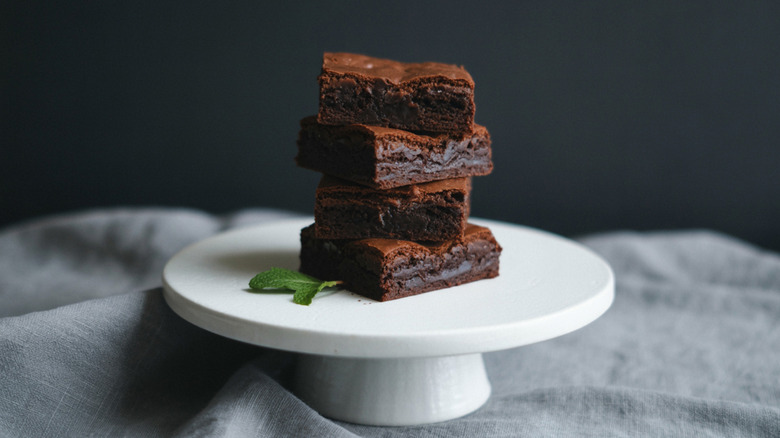
If the idea of adding coffee to savory dishes just isn't appealing to you, fear not. There are plenty of ways to incorporate your used grounds into sweet recipes, too. It's particularly simple with chocolate cake and brownie recipes. Coffee and chocolate are remarkably similar in several ways. They grow in similar equatorial climates and undergo similar fermentation and roasting processes, which gives them similar flavors. Although both ingredients can vary wildly in taste depending on where they're grown and how they're processed, they contain many of the same flavor compounds.
Adding some ground coffee to your brownies or cake can help enhance the chocolate flavor. Even if you aren't making a chocolate dessert, though, coffee grounds may still be a great addition. For example, you can add them to a standard coffee cake (the kind that doesn't usually have coffee in it) –just make sure they're as finely ground as possible. For an even stronger flavor, add brewed coffee to the glaze. Running them through your grinder (if you have one) on the espresso setting will offer the best results.
Use them to roast beets and carrots

Roast vegetable recipes are often pretty simple. Thanks to their built-in flavor, carrots and beets are often paired with nothing more than salt, pepper, and some oil. However, there are plenty of ways to enhance the taste of these sugary root vegetables, and believe it or not, coffee grounds are one of them. You won't simply be sprinkling a teaspoon or two of grounds on the veggies, you'll be burying the veggies in the grounds as if they were being planted for a second time.
Start by scattering a layer of coffee grounds in a baking dish and then adding whole beets and carrots on top, without cutting them or tossing them in oil. Then, cover them with more coffee grounds under they are buried. Roast the veggies at the temperature you normally would, then wash them in the sink to remove the grounds. Don't worry, the flavor won't be washed away with them. What you're left with are fragrant roasted vegetables with extra hints of earthiness and smokinessthat your dinner guests will be trying and failing to identify.
This option is particularly handy if you want to use up a lot of coffee grounds. It's all well and good to throw a teaspoon or two into a stew, but if you actually want to get rid of the leftover grounds generated by even a single cup of coffee, you'll need to find another solution. This will do the trick.
Treat them as a dessert garnish

Coffee plays a special role in many desserts, whether it's adding its signature intensity to a chocolatey, boozy tiramisu or dousing vanilla ice cream to make a mouthwatering affogato. There's no reason to stop there, though, and there are easier ways to incorporate this delightfully bitter ingredient into your desserts beyond cakes, brownies, and recipes that already call for it. Although grit is rarely a good thing, coffee grounds can be an exception. When you add just a hint of them to whipped cream, icing, or sweetened whipped ricotta, they'll offer a light espresso flavor and some textural variation.
If you want to create something extra special, you can get crafty and combine the coffee grounds with other ingredients to make a flavorful garnish. Blending the grounds with dark chocolate cookies or cocoa powder, sugar, nuts, flour, and butter will provide a sweet, crumb-like garnish that you can sprinkle over ice cream, under cakes, or on top of milkshakes.
Pair them with your roasted nuts
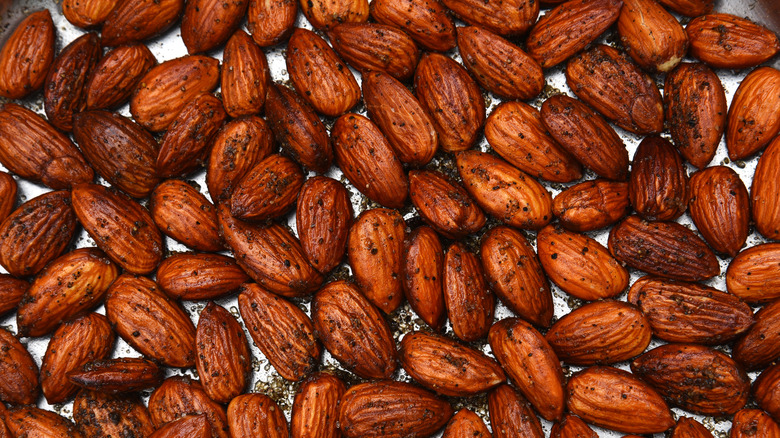
Nuts can be flavored with all kinds of ingredients. You can make them so sweet they practically count as candy or savory enough to accompany a dinner table spread. Cover them with sugar and spices and they're perfect for fall, or coat them in curry powder and salt for a nutritious, irresistible snack.
Adding coffee grounds is yet another option in that very long list of potential pairings. Since coffee already has a nutty, earthy flavor, it pairs well with roasted nuts. All you have to do is coat the nuts with them before putting them in the oven. Adding sugar in one form or another, whether with granulated sugar, honey, or corn syrup, will make the nuts have a coffee-flavored dessert taste rather than a strangely bitter, savory coffee flavor.
It's worth checking out our tips for roasting nuts before you start, especially the one about using egg whites. There's no point creating the perfect seasoning mix only to have it fall off like dust off a rock the minute you scoop the nuts out of the tray. Coating the nuts in egg whites before roasting them will help that seasoning stick and save you from disappointment.
Whip up some coffee butter
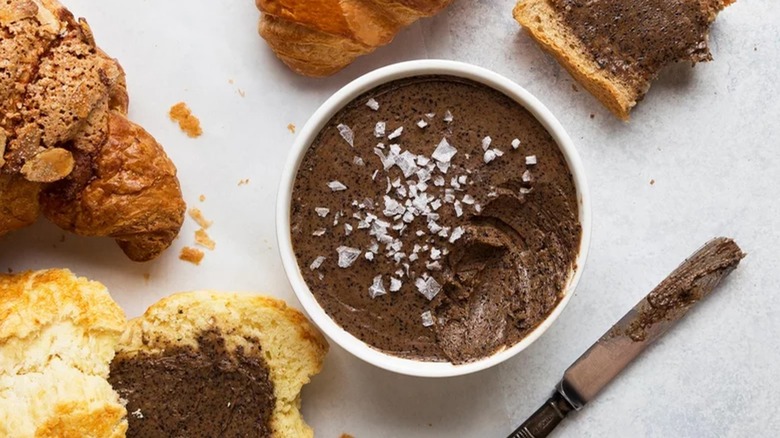
You've heard of peanut butter and apple butter, but have you ever tried coffee butter? Unlike the aforementioned peanut and apple, this type of spread is actually made with real dairy-based butter. Or, to put it more accurately, the recipe calls for making butter from scratch (it's a lot easier than you might think) and adding the coffee during the process. The result is sweet, creamy, and full of coffee flavor –- it's the breakfast spread you never knew you needed. Slather it onto toast, try it on bananas, and maybe even add an extra hit of coffee by using it as the butter in bulletproof coffee. Seriously, once you have a batch of this stuff, you'll be making up all kinds of excuses to eat it.
As if the flavor wasn't enticing enough, coffee butter also happens to be extremely easy to make. All you need is 15 minutes (plus chilling time) and a handful of pantry and dairy staples. Once you've let the cream steep with the coffee grounds overnight, you'll strain the liquid and add it to a food processor with sugar and salt. Blend it until the solids separate from liquid, then let it chill again. If you want to be extra fancy, you can shape it into long cylinders and cut them into coins to serve.
Upgrade your chocolatey pie and tart crusts
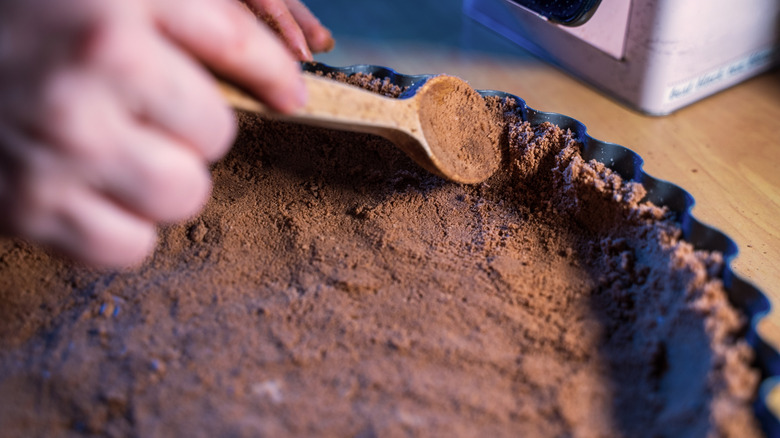
Pie and tart crusts are some of the best places to add flavor to a dessert. If you're making a meringue or custard pie, you don't want to tamper with the ingredient ratios in the filling unless you're very confident that the chemical reactions involved will not be compromised. The crust is a different story. If the recipe calls for Oreos, you can probably sub them out for graham crackers. If it calls for hazelnuts, you can probably sub them out for almonds. The same is true of the ingredients that add bursts of flavor, like coffee.
Coffee grounds are an easy addition to this part of a dessert, especially ones that involve strong chocolatey notes. Since crusts are usually thin compared to the rest of the pie or tart, you can afford to pack it with intensity. That said, when adding coffee grounds to crust recipes, treat them like a spice. They might have the consistency of flour or cookie crumbs, but if you use them to form the bulk of the dough, you're going to end up with pretty bitter results. Start with a couple of teaspoons and work your way up based on your tastes.
Level up your coffee ice cream

A lot of coffee ice cream recipes call for espresso powder, a substance which may look like finely-ground coffee beans but which is, in fact, brewed coffee that has been dehydrated. The result is water soluble, which means it will dissolve into liquid rather than leave behind a layer of grit. That's why, when you make ice cream with espresso powder, you'll end up with a velvety rather than gritty texture.
That might be exactly what you're looking for, but if you want a more novel approach that does not reinvent the flavor profile of this exquisite food, why not swap out the espresso powder for used coffee grounds? When opting for this route, simply add the coffee grounds to the custard base the way you would with espresso powder. You can then strain the custard through a fine mesh cloth to remove the coffee grounds entirely, or reserve keep some of them in to provide a stray bit of texture here and there. You can even use espresso powder or whole coffee beans and only use the coffee grounds as an add-in after finishing the custard. Either way, you'll end up with intensely coffee-flavored ice cream.