

The Pantry Staple That Will Give Your Apple Fritters The Crunch They Deserve
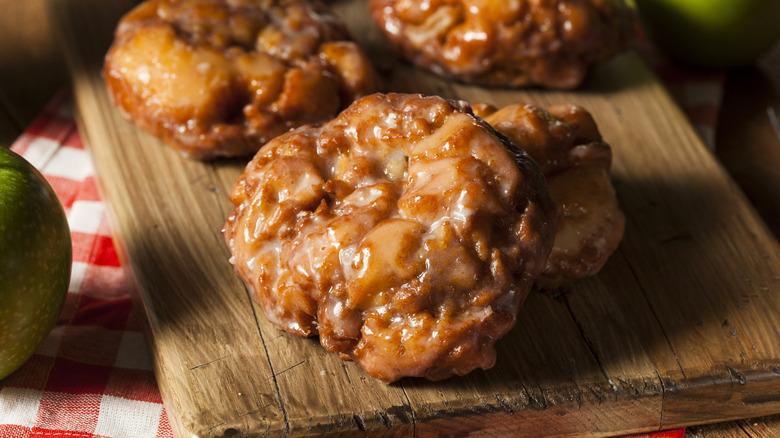
Most baked goods are at least in part exercises in getting the perfect texture — and apple fritters have one of the most satisfying textures of all of them. Yes, the taste of fresh apples and glazed, fried dough is part of the appeal; but the combo of crispy and chewy textures is the secret to a fritter's success. While the soft, apple-laden interior is relatively simple to achieve, a crunchy exterior is harder to pull off, especially when you're coating your fritters in a wet glaze. So you should use every trick in the book to help crisp them up. When talking to cookbook author and restaurateur Mark Filippelli about the must-know tips for tasty apple fritters, he told us one great addition is a little cornstarch.
According to Filippelli, subbing out a fraction of your flour for cornstarch in your fritter batter will help take the crispiness of your homemade apple fritters to the next level. You don't need to change anything else about the recipe and you don't need to add a ton — just a quarter cup or so of cornstarch will make a big difference for a standard batch. Cornstarch helps fritters (and many other baked goods) become crispy since it doesn't contain any gluten. In dough, gluten will bind together in strong networks, which can make the final product chewy. But by preventing gluten formation, cornstarch helps make fritters more brittle, which is how they get their crunch.
Add cornstarch to your fritter batter for the ultimate crunch
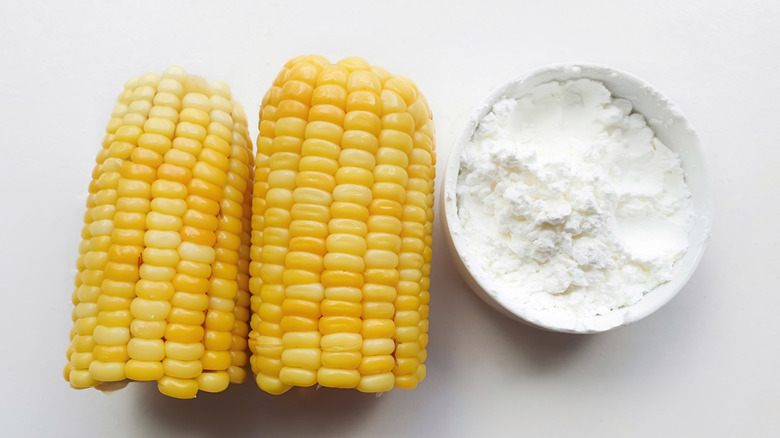
The other way cornstarch helps add crunch to fritters has to do with how it reacts with water. Starch of any kind will absorb moisture, causing it to gelatinize. When that soaked starch hits hot oil, the starch molecules will expand, separating them from one another. The heat then reduces the moisture that has concentrated in the starch, which means less moisture on the exterior, resulting in more crunch. This process also locks starch molecules into place in a looser and more porous network than they were originally in. This loose, open structure is brittle, and like the lack of gluten, also gives you the sensation of shattering crispness when you bite into a fritter.
There are other alternative types of starches to cornstarch that will have a similar effect on your apple fritter, like potato starch and rice flour. However, they aren't quite as effective as cornstarch. This is because of a type of starch called amylose, which helps reinforce the structures that produce crunchy textures. Higher levels of amylose are better for crisping, and cornstarch is 25% to 28% amylose, compared to the 20% to 22% of potato starch and roughly 20% for rice flour. Each will get the job done if that's what you have, but cornstarch is better. It's a simple staple that you almost certainly already having sitting in your pantry, but it can be totally transformative for your apple fritters.