

Never Add Salt To Cold Pasta Water — Here's What You Should Do Instead
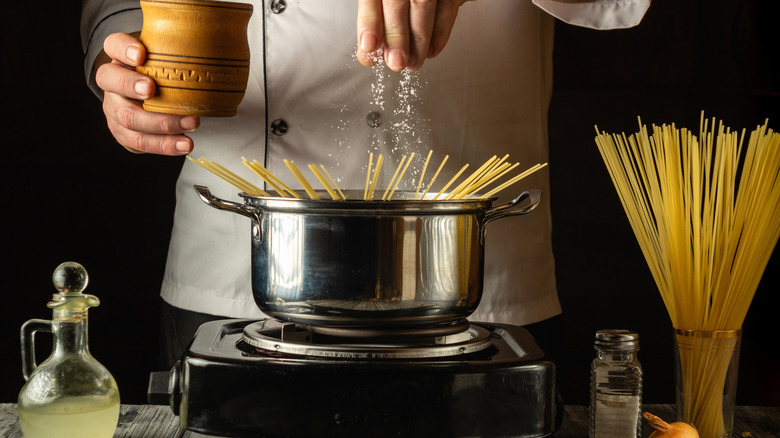
Add enough water to your pot to fully submerge your pasta, sprinkle some salt in, then toss in the noodles — sounds easy, right? Boiling pasta may seem like the simplest thing in the world, but there's heated debate when it comes to these steps, namely with salting. However, experts seem to agree on one thing, and that's to add salt right as the water boils.
The amount and the variety of salt, much like whether to follow up with the seasoning post-cooking, are all determined by personal preference. That said, science says that there's only one good time to salt pasta water. Sprinkling in the mineral right after filling a pot with water seems like the next natural step, but it can lead to pasta that's way too salty. When you add salt to cold water, part of that liquid will bubble up and evaporate as it boils. The salt, however, won't dissipate, leaving you with liquid that makes the noodles taste overly briny.
Additionally, salting too early means having to wait even longer before adding in the noodles. This is because salt slows water from boiling by increasing its boiling point. The mineral's ions attach to water molecules and attempt to hold them in place, meaning that a gentle simmer will take longer to explode into a rolling boil. To prevent this, always wait until the water is already boiling vigorously before sprinkling in some salt.
How much salt should you add to pasta water?
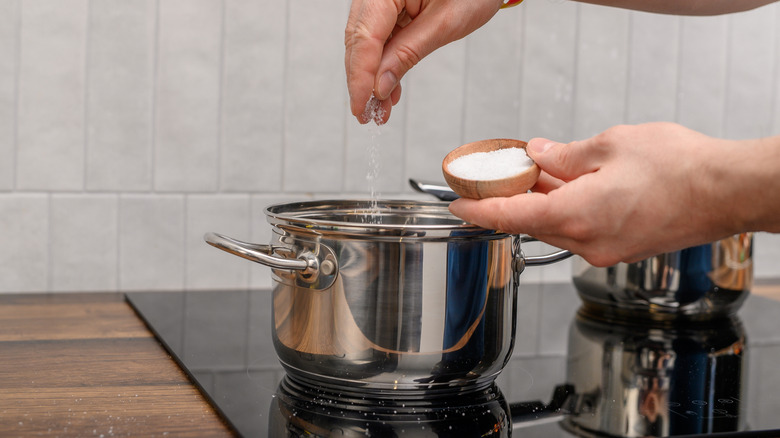
Even if you're insistent on always measuring out spices down to the last teaspoon, pasta water is one of those things where you may just salt until your conscience tells you it's enough. Still, your pasta water probably needs more salt than you realized. The noodles are the foundation to a delicious pasta dish, and they should be good enough to stand on their own, without any add-ons. You want each bite of the dish to be as delicious as the last, even if you don't have enough sauce to coat each inch of the noodles. Measuring out salt for a giant pot of water may seem time-consuming, but you'll need a minimum of one tablespoon of salt for every quart of water for the best results.
As for what type of salt to use, that cooking category provides you with a little more leeway. Iodized salt won't always be the best choice, since it can make pasta taste slightly metallic; however, if you have a zesty sauce and no other options, it'll do the trick. Sea salt or table salt also work. But, kosher salt's clean, straightforward taste will always be a stellar choice, especially since it'll allow bolder finishing salts to shine once the noodles are done cooking.