

This Unexpected Step Makes Foil Fit Inside The Pan Perfectly
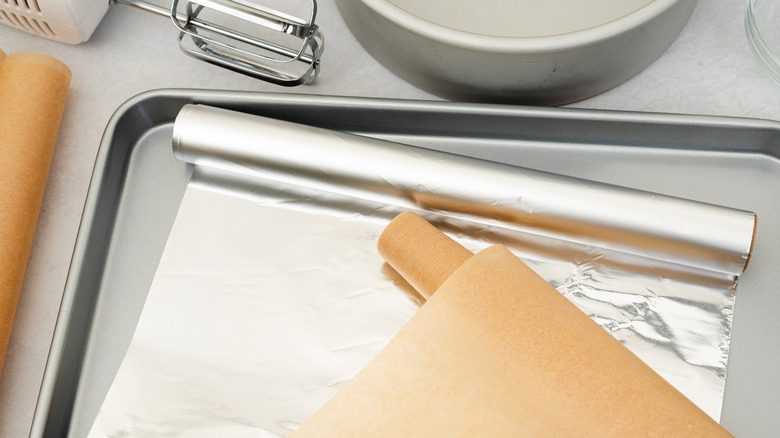
Aluminum foil is one of those kitchen staples we reach for without really thinking. Tear off a sheet, press it into a pan, hope for the best (which is usually just "less scrubbing"). But the result is often crumpled corners, torn edges, and foil that refuses to lie flat or lets cooking liquids seep under, creating more work and barely justifying its use. However, you can use this unexpected step: Just flip the pan over and press the foil down on the outside of it. Once the foil has taken on the exact dimensions, you lift it off, flip it, and set it neatly inside. Instead of wrestling the foil into shape, you let the material do what it naturally does: take on a form when pressed against a surface.
It's understandable that you may not have thought about it right away. We tend to think in terms of inside-to-outside, trying to line the space we want to cover, instead of working outside-in. But other crafts have long leaned on this way of thinking. Sewers pin fabric to dress forms; carpenters trace wood cuts from templates. Cooking is part of that same tradition. Each refinement in technique, even one as minor as reshaping foil, shifts the work from hassle to ease.
Folding, shaping, shielding: tips for making foil fit your pan
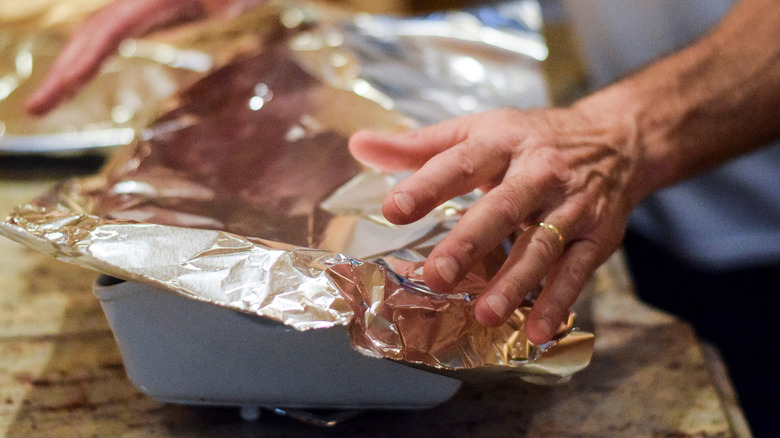
This outside-in method is reliable for most flat or gently curved pans, like sheet trays, square brownie tins, casserole dishes, and loaf pans. Highly detailed, textured shapes, like some Bundt molds are trickier, because the foil won't capture every ridge, though it can still give you a rough liner. And if your pan is larger than the foil roll itself, you can overlap two sheets with a folded seam in the middle for full coverage. This tip works for glass and ceramic pans, too, just be mindful of gently pressing the foil, so it doesn't tear.
Of course, it's important to remember that aluminum isn't chemically neutral. Too much contact with acidic or salty foods can leach metal into what you're cooking, so it's worth being thoughtful about when to reach for foil and when to choose another tool. It also doesn't keep your leftovers sealed properly from bacterial invaders, so use intentionally.
Thinking about foil this way, flexible, formable, somewhere between cloth and sheet metal, opens a new appreciation for the work of cooking itself. Recipes tell you what to make, but habits and tasks like this remind you how much of cooking is craft. It's bending, folding, fitting, measuring by eye and finger-feel. Domestic labor is full of these overlooked moments where new approaches appear, sometimes borrowed from other disciplines, sometimes stumbled on by accident. Let the material teach you what it wants to do, and you'll find the kitchen a more creatively satisfying place.