

The Beans You Should Be Using For Classic Ham And Bean Soup
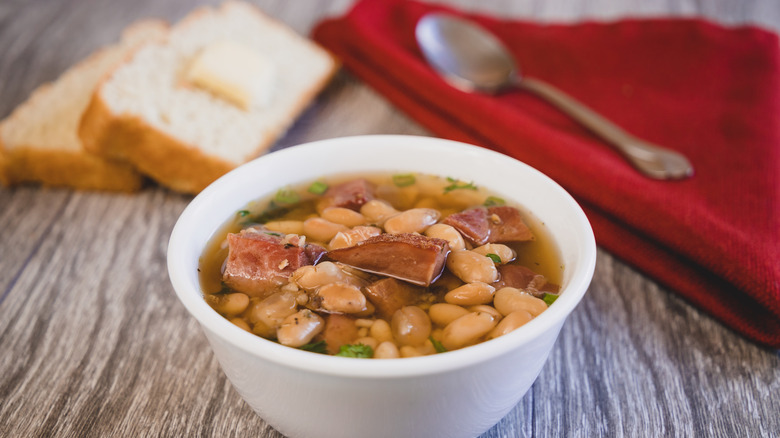
Fall pervades the air, with that crisp scent of wood smoke and nostalgic chill, and the inevitable craving for something warm creeps right in. On days like this, nothing beats having a steaming hot pot of ham and bean soup cooking on the stove. Normally, that's when you pull out the cans of beans that have been sitting in the pantry. This shortcut is so convenient that sometimes we forget that the true star of a classic ham and bean soup is actually dried beans. Flavor depth, textural delight, and a homey comfort gathered in a bowl — it all starts with this ingredient.
An overnight soak and hours of simmering might deter you from using dried beans, but rest assured, that time is well spent. Cooked with aromatics and spices, the beans' flavors are a slow build of depth and warmth, a far cry from the typical brininess you often get with canned beans. Those savory, herby notes sink right into the starchy beans, altogether coalescing into a rich base. This is how you get more than just a soup with bean toppings, but rather one of the most quintessential bean recipes. In this intricately-made version, the beans seamlessly fuse into the broth, and once the ham's signature smoky flavor joins in, your soup will become the homemade masterpiece it's always meant to be.
Dried beans are game changers for soups (when you use them right)
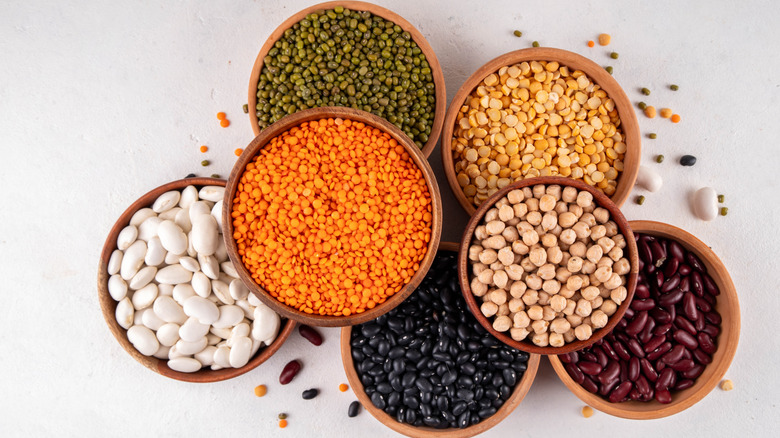
At the end of the day, a ham and bean soup is what you make it to be. You can blend a small portion to mix into the soup to thicken the texture, or play around with different types of beans to discover new nuances. Great Northern beans are quite a popular choice, dearly loved for their creamy softness and mildly nutty taste. That said, almost any type of white beans will work for a typical ham and bean soup. Cannellini beans are similarly amazing, although they can be a bit bolder. Even more earthy in their nuttiness are pinto beans, which are marvelous when your palate demands something hearty. Conversely, you've got navy beans that lean on the subtle side, which also means they will absorb the surrounding flavors flawlessly.
Now, what happens if you've been making ham and bean soup with the canned variety all this time? Substitution is possible, as long as you do it with the correct ratio. Don't make the mistake of using the exact amount of dried beans as canned beans, since they will expand to twice the size after soaking and cooking. Generally, start with half a cup of dried beans for every 15-ounce can of beans. Moreover, you might also want to use a bit more salt than usual for recipes that specifically call for canned beans. This is because the brine's saltiness might have already been balanced out with less seasonings and spices, so when dried beans come into play, a little mindful adjustment could be helpful.