

The Everyday Tool That Makes Deboning Salmon Quick And Effortless
We may receive a commission on purchases made from links.
Beyond learning new cooking techniques, upgrading your skills in the kitchen can mean learning how to prepare ingredients. Knowing how to treat a piece of fish correctly, rather than relying on your fishmonger, can have just as much impact on the final dish as any sauces or side dishes.
While filleting fish takes the salmon off the main skeleton, fish fillets may still contain what's known as pin bones or sharp spikes that run through the flesh. These can be sifted out as you eat but they are easy to miss and could leave you with a mouthful of nasty surprises. Removing the pin bones before cooking makes for a much more enjoyable dining experience, and it's a non-negotiable if you're making sashimi, cured salmon, or salmon tartare. The trick is learning how to do it without destroying the fillet.
Professional chefs would use fish tweezers designed for the job, but you can have the same success with a pair of needle-nose pliers. These provide you with both the grip and strength required for handling such a precise task under slippery circumstances.
How to debone salmon with needle-nose pliers
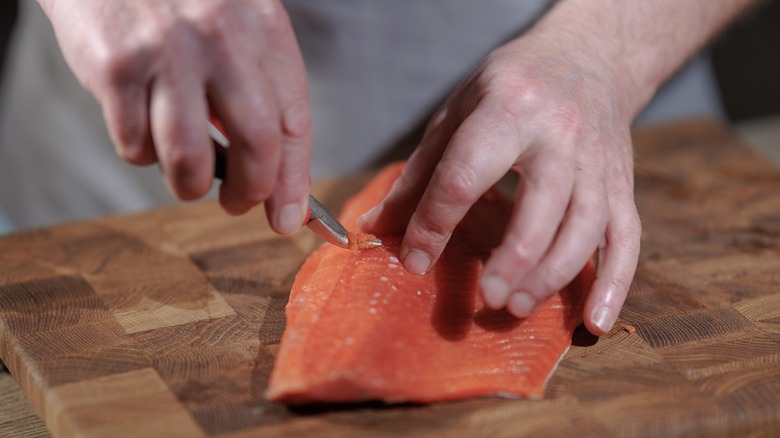
Pin-boning salmon isn't difficult, but it requires care to keep the fillet intact. The first step is to make sure the fish is very cold. This gives you firmer flesh to work with and less chances of tearing the meat.
Lay the fish skin-side down on a clean, stable work surface and run your fingers along the length of the fillet. You should be able to feel the tips of pin bones rising just above the surface. They're arranged in a line, so once you find one, you will be able to find the others too. Holding the fish fillet firmly but without squeezing, grab the end of a pin bone with the pliers. Pull in the direction that it's pointing; at a low angle towards the fish's head. Pulling directly up towards you can break the bone and leave half buried in the flesh.
Continue until all the bones have been removed, rinsing the pliers as needed. Each side contains 27-29 bones, so you can keep count to know if you've found them all. Alternatively, a UV light can be a handy tool to check for any that you've missed.