

The Searing Myth Everyone Still Believes About Pan Temperature
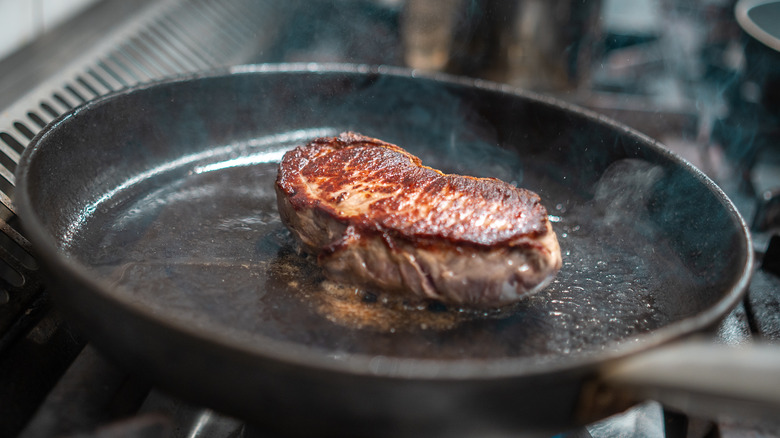
If you've ever seen a chef on television or a clip online talking about searing food, steaks in particular, you've likely heard them use the phrase "ripping hot" when referring to how hot the pan should be before searing. Ripping hot can mean letting the pan preheat on the stove over high heat or flame for a few minutes, sometimes even to the point where the pan or the oil starts smoking. While this ridiculously high temperature is great for busy steakhouses and Chinese woks, it's rarely necessary when cooking in your own home.
A hot pan is important for getting a good sear on meat, vegetables, cheese, and tofu, especially if it's a stainless steel pan, but the pan likely doesn't have to be as insanely hot as you might think. To achieve a Maillard reaction, which is the delicious browning that occurs when the sugars and proteins in food are heated, you only need to achieve a temperature above 300 degrees Fahrenheit. Once you reach much higher temperatures, that's when caramelization begins to occur as sugars heat, melt, and brown. The Maillard reaction is what you're looking to achieve when searing meat, not caramelization, so keeping temperatures moderate rather than ripping hot is perfect for steak and other meats. When a pan is too hot, it not only has the chance of overheating your cooking oil, but it can also lead to food that's simultaneously burnt on the outside and undercooked on the inside.
Preparation and cooking fat play a big role in searing
There are other ways to ensure you're getting the perfect sear on your steak, and these tips can be carried over to other cuts of meat you'll be searing, and even fish and vegetables as well. Ensuring that the meat has been patted dry and isn't straight-out-of-the-refrigerator cold are both key to achieving a nice sear, especially on a steak, as moisture on the hot pan will create steam and inhibit the Maillard reaction. You can also start the pan at a higher heat to achieve a beautiful sear on the outside, and then lower the heat a bit to continue cooking the insides without burning the nice crust you've created or risking either over- or undercooking.
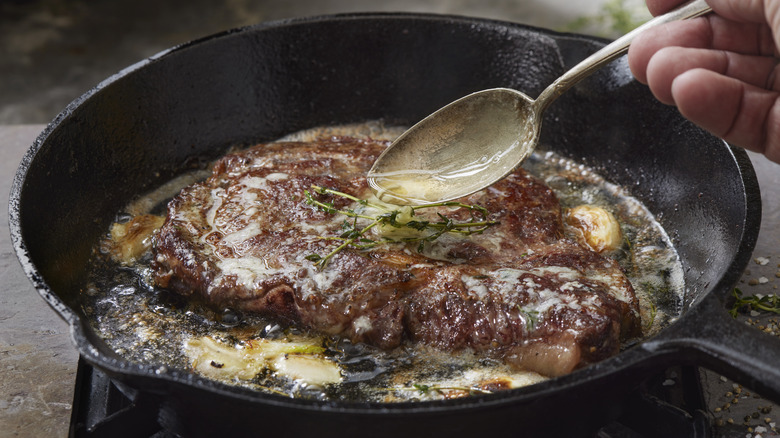
Another factor to keep in mind while searing in a hot pan is the smoke point of the fat you're using. If you're using a delicate fat like butter or extra-virgin olive oil, heating the pan above 325 to350 degrees Fahrenheit will cause the fat to begin to degrade, imparting an unpleasant acrid taste and emitting chemicals into the oil and food. Oils with a high smoke point, like avocado oil, are better to use for searing. If you're craving that classic butter-washed steak flavor, you can baste the steak with butter when it's almost done cooking. Just turn down the heat a bit, add a big chunk of butter to the tilted pan, and spoon the melted butter over the top of the steak for the last few moments of cooking.