

One Staple Cereal Is Banned In Other Countries Partially Due To Its Mascot
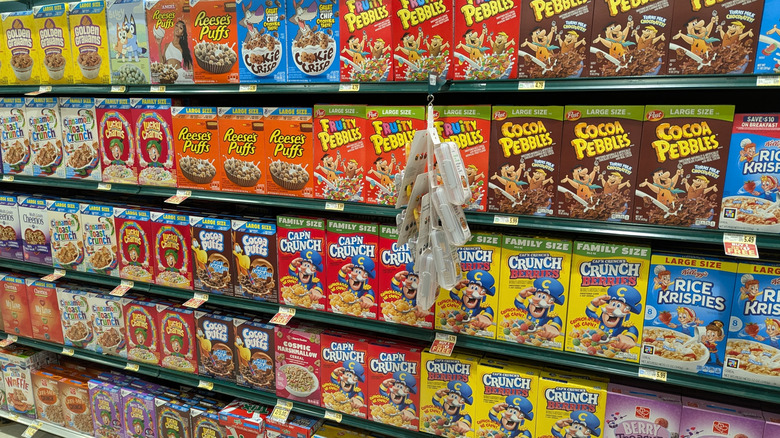
If you start your day with a filling bowl of cereal, you're definitely not alone — the U.S. cereal market was worth over $13.5 billion in 2024 (per Grand View Research. While many of us grew up with Toucan Sam, Lucky the Leprechaun, Count Chocula, and other iconic food brand mascots, those colorful characters aren't welcome everywhere — at least, not anymore. Even seemingly harmless Kellogg's Corn Flakes have been banned in some countries, partly for health reasons and partly because of its mascot, Cornelius the Rooster.
Even though corn flakes are often seen as plain and relatively nutritious, not everyone agrees they're fun for the whole family. In 2022, Mexico seized 380,000 boxes of Kellogg's cereal, including its Corn Flakes, under laws that prohibit marketing to children through the use of cartoon mascots (per AP News). The crackdown was part of the country's broader effort to improve children's diets after the use of brand mascots was identified as a potential contributor to the problem.
In 2018, Mexico enacted the law designed to protect children, which prohibited the use of children's characters or figures — including children or animals — that might appeal to kids under 14. According to a 2019 study, Mexico had "the highest prevalence globally for children who are overweight," and the country was taking measures to curb childhood obesity.
Mexico is not the only country to ban cereals
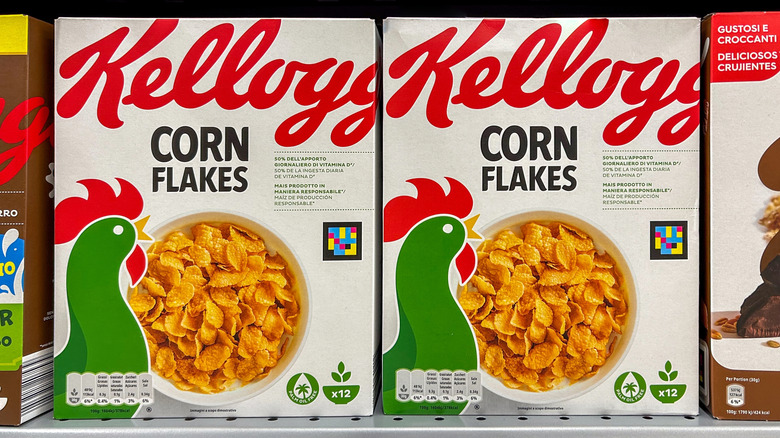
Interestingly enough, Denmark banned Kellogg's Corn Flakes in 2004. At the time, the country argued that the vitamin-enriched versions of various cereals were harmful and could be dangerous if eaten regularly, especially by children or pregnant people. Today, any fortified food sold in Denmark must be approved by the Danish Veterinary and Food Administration. The ban was not a blanket one; products could be reviewed and sold if they met specific guidelines. Some Danish supermarkets currently stock Corn Flakes and other Kellogg's cereals.
In Mexico, the ban on selling cereal with cartoon logos only applies to foods considered unhealthy — those high in calories, sodium, sugar, or saturated fat. Products exceeding certain thresholds must carry warning labels and are prohibited from using mascots. Mexican authorities seized boxes of Kellogg's cereal in 2022 because the Corn Flakes reportedly did not comply with these warning label requirements — and in response, Kellogg's changed the formulation of many of its cereal products.
If you go to Mexico today, you'll still see Tony the Tiger and Toucan Sam on some boxes. So how does that happen? Kellogg's reformulated the cereals, often replacing sugar with a type of zero-calorie sweetener called allulose. Crucially, Mexican food industry lobbyists successfully argued to the government that allulose is not an added sugar and therefore does not count toward the sugar content that triggers the mandated warning labels and mascot ban.