

Whale Poop Was An Original Mix-In For The World's Oldest Ice Cream Flavor
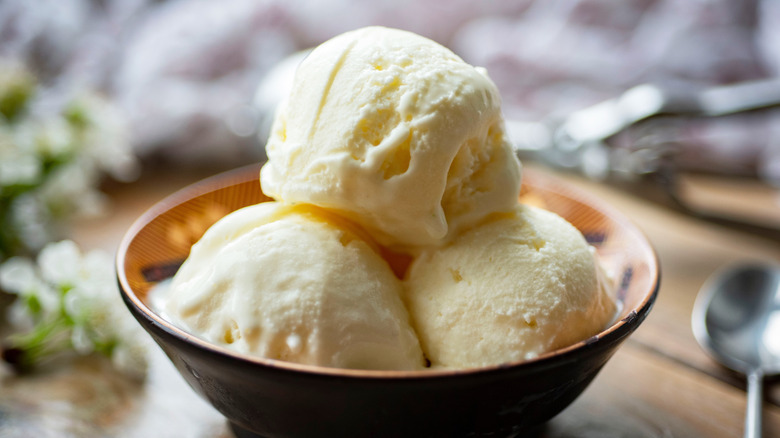
Whether you like simple chocolate or vanilla, or prefer something decadent like jamocha almond fudge covered in strawberries and caramel sauce, it's hard to top ice cream as one of the greatest desserts ever made. But refreshing ice cream recipes have come a long way since the treat was first created, and thankfully, progress means we no longer use ambergris — which is essentially whale poop.
Ambergris was a luxury additive in foods and perfumes for many years. For centuries, this greasy, smelly, hardened substance was harvested from the ocean, but little was known about its source. People were eating it, even using it as medicine, with no understanding of what it actually was. As the whaling industry grew in the 1800s, people learned that it is produced by sperm whales. It's believed that the hardened beaks of squid — which whales eat — are bound up in the stomach with mucus and digestive fluids, creating a sludgy, odoriferous blockage. In the past, some believed whales vomited ambergris, while these days most believe it is expelled from the other end of the creatures.
The earliest known recipe for ice cream dates back to the mid-1660s in the memoirs of Lady Ann Fanshawe. Her icy cream, as she called it, was made from cream boiled with mace, orange blossom water, and ambergris. The mix was sweetened with sugar, poured into a metal box, and then covered in ice to allow it to freeze. It was recommended that it be served with the same unfrozen, flavored cream on top. As far as vintage ice cream flavors go, this is an original that we might skip.
Ambergris in ice cream

Understanding how and why ambergris became a food additive is difficult in the modern world. When it's harvested from the ocean, it's described as smelling very unpleasant. It has a fecal odor, which is a long way from appetizing. However, as it cures in the sun and the salt of the sea, the smell is said to improve and become musky and even sweet. It's very rare to find and also extremely expensive. In 2020, a Thai fisherman found a 100 kilogram chunk worth over $3 million.
Fresh ambergris is not a pleasant product. But once it has dried out enough to be used in food applications, the true flavor is often hard for people to describe. Most of the adjectives used are vague and open to interpretation. Sweetness, often attributed to ambergris, is a way to describe the intensity of the flavor, but not the flavor itself. Others have described it as being earthy and aromatic, as well as briny.
As offensive as it sounds in principle, modern experiments making ice cream with ambergris have achieved stunning results — you can find evidence online of people creating it, but the ingredient isn't readily available, so it's not usually for sale. In fact, ambergris is illegal in the United States, which is part of the reason you won't see it in ice cream here. Even acknowledging how terrible it smells at first, the end product is described as incredibly delicious by those who have tried it and more intense than normal ice cream. However, if you're more in the mood for whale-free ice cream, try one of these ice cream brands we ranked.