

Why Cooking Salmon On Cedar Planks Is So Popular
We may receive a commission on purchases made from links.
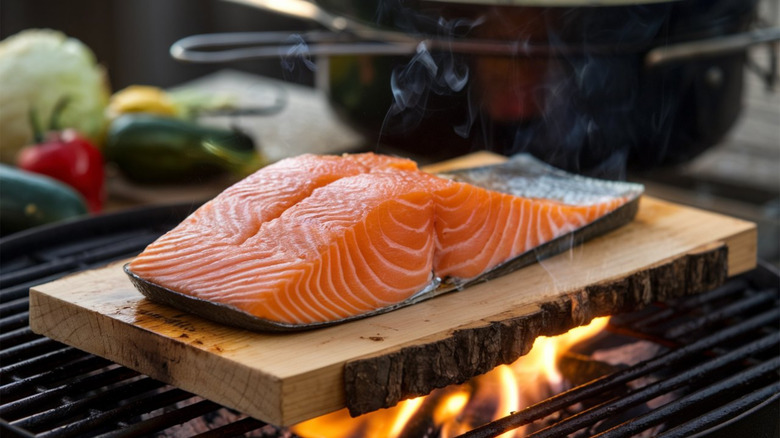
For many seafood lovers, there's nothing more intoxicating than fresh salmon sizzling on fiery, aromatic cedar planks. This grilling method has skyrocketed in popularity far beyond its ancient roots, with pro chefs and backyard grillmeisters embracing the smoky, subtly sweet flavor the wood imparts — with no worries of dried-out fish, fillets sticking to grill grates, or precious bits nose-diving into a smoky abyss. To top it all off, those slightly charred cedar planks double as artsy serving boards straight from grill to table.
With cedar wood, there's no need for oil, as the salmon steams to moist perfection with little hands-on interference. Instead of drying out, the cedar board absorbs the heat, transferring it indirectly to the salmon. It's an earthy, natural way of cooking fish, one that's hardly new in longtime culinary circles. Native peoples of the Pacific Northwest have been cooking with cedar for centuries, but it's far more than a utilitarian process. For Native tribes, it's a deeply rooted, time-honored culinary tradition in which cedar-baked salmon honors the food and forests providing livelihood and sustenance.
They revere salmon as more than a staple — it's central to life itself, particularly for past generations. Salmon cycles shape seasonal rhythms, sustenance systems, and mythologies across the region, and many species return seasonally to their spawning grounds, tying coastal communities to land and sea. Pacific Northwestern Native tribes, including the Salish and Chinook, traditionally secured salmon to upright cedar stakes or boards, covered with fir branches, and roasted them over open-pit fires. The practice is also common in Scandinavian countries and has become a mainstay of German-style Christmas markets across Europe.
Cooking salmon on cedar planks today
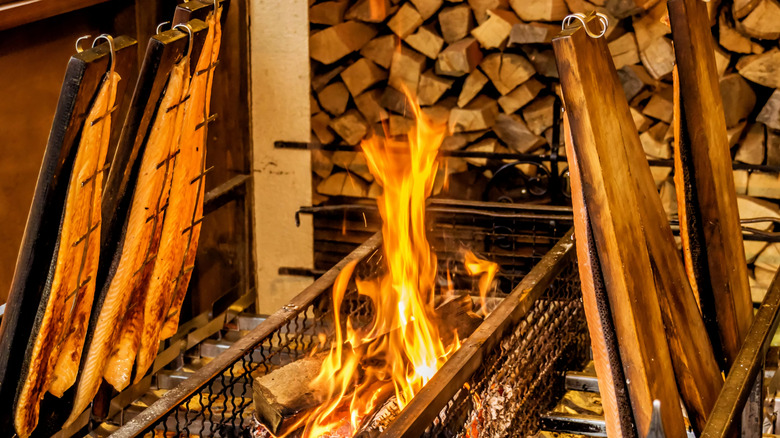
Much like modern cedar grilling, earlier Native techniques gently steamed the fish while infusing it with smoky cedar flavor — but it was (and still is) often ceremonial, a communal feast for marking special occasions or a successful salmon harvest. There's no longer a need to save cedar plank salmon for major gatherings, as today's flat cedar boards are readily available, including this 12-pack on Amazon made from textured American cedar wood.
These kinds of boards, usually more than half an inch thick, work in the oven as well as the grill. There's a chance of excess smoke or even flames as the wood heats up, but that's mostly solved by soaking the boards in water for at least two hours before cooking. It helps to keep a spray bottle of water nearby for potential intervention. Once the wood is prepped and ready, cooking methods abound, including these tips for adding a vibrant citrusy kick to cedar plank salmon.
Anything goes, from barbecue rubs to wine infusions; homemade compound butter; and luscious, smoky, sugar-brined salmon steaks or filets — which basically transforms brown sugar, coarse salt, and water into a flavor-packed brine for pre-soaking. There are loads of ways to use a cedar plank for more flavorful grilling, so draw on your own creative cooking instincts. This earthy, ancient cooking method brings a lot to the table, but there's one potential downside of grilling fish on a cedar plank. If you love crispy salmon skin, the steam largely prevents that from forming.