

Semi-Sweet Vs. Dark Chocolate: What's The Difference?
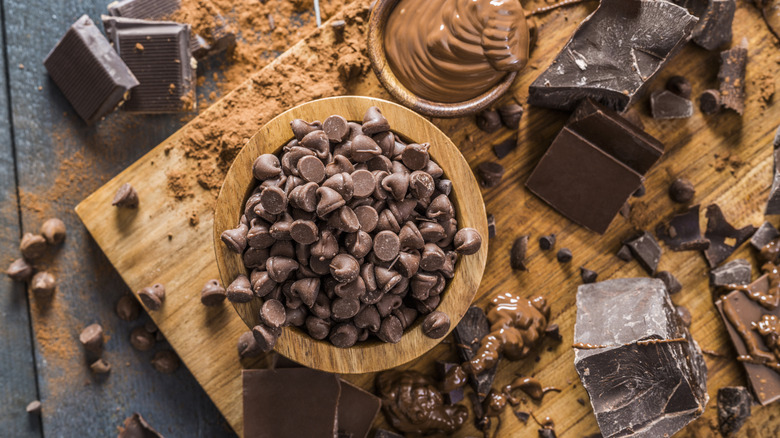
Seasoned bakers typically reach for semi-sweet chocolate to craft their treats. But, how is it different from dark chocolate, if at all? Both semi-sweet and true dark chocolate emphasize deep cocoa tones over any palate-piquing sugariness. They also share a common ingredient base: Cocoa solids, sugar, vanilla, and an emulsifying agent like soy lecithin for that crucial, delectably creamy texture. The difference between the two comes down to percentages. During the chocolate-making process, cacao nibs (the meat inside of roasted cocoa beans) get extracted and ground into chocolate liquor. This is pure chocolate, a mixture of cocoa solids and cocoa butter, not unlike how milk is a mixture of milkfat curds and liquid whey.
When a given chocolate bar is labelled with a cocoa percentage, it refers to how much of the bar is pure chocolate liquor. The more cocoa solids it contains, the more bitter it will taste on the palate. Also, relatedly, the more cocoa solids in any chocolate bar, the lower amounts of cocoa butter and sugar (there's simply less room in the equation for these elements). As a larger category, dark chocolate encompasses semi-sweet, bittersweet, and bitter chocolate types. So, technically, semi-sweet chocolate is actually a subtype of dark chocolate, and it's also the sweetest tier in the category. More specifically, semi-sweet chocolate clocks in at 35% to 65% cocoa solids, and typically contains less than 50% sugar (hence "semi-sweet").
Semi-sweet chocolate is the type of dark chocolate with the lowest cocoa percentage
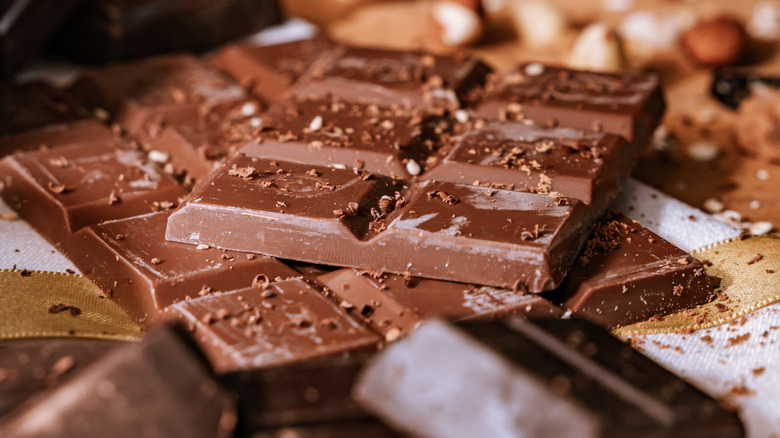
Just darker than semi-sweet, bittersweet dark chocolate ranks more bitter with 65% to 80% cocoa solids. Many dark chocolate fans actually prefer this class, as 70% cocoa solids make for an accessible, mellow snacking chocolate with a higher quality. True dark chocolate, the darkest tier, packs 80% cocoa solids or more and does not contain any added milk solids so it's especially tangy. While lower in sweetness, true ultra-dark chocolate emphasizes more nuanced cocoa tones, depth, intensity, and richness than other types. True dark chocolate is also a bit dryer and chalkier compared to its semi-sweet counterpart, but this textural contrast isn't significant enough to make one better suited to baking or snacking than the other. It's also worth noting that most bars labelled as "dark chocolate" don't exceed 80% cocoa content, often also falling in the 65% to 80% range (which technically straddles the bittersweet-dark subcategory division line).
Above 80% and the flavor starts leaning unpleasantly bitter, so be forewarned if you're a dark chocolate newbie. As a point of reference, on the other end of the spectrum, milk chocolate contains roughly 10% to 30% cocoa solids. This leaves a lot of space for vanilla, sugar, dairy, and other deliciously creamy emulsifiers. This wiggle-room has led to the creation of super accessible snacking chocolates like Butterfinger candy bars (which actually don't meet the criteria to be classified as "chocolate" at all). A lower percentage of cocoa solids is also responsible for milk chocolate's creamier texture and easier meltability compared to semi-sweet and true dark chocolates.