

This Is The Ideal Freezer Temperature For Perfectly Frozen Ice Cream

Ice cream lives and dies by the temperature of its surrounding environment. Sitting at the table for one conversation too long, and it's reduced to a sad, creamy soup. Even before that, this fickle dessert needs to be stored properly, and we're talking about more than just a cold corner of the freezer here. Getting the temperature just right is your secret to preserving the ice cream quality for as long as you have it.
According to the International Dairy Foods Association (IDFA), the ideal temperature for freezing ice cream at home is between -5 and 0 degrees Fahrenheit. Fortunately, below zero is also the ideal temperature range that keeps frozen food safe, even without preservatives. And just in case you were curious, it's generally not possible to accidentally over-freeze ice cream with an overly cold temperature. While a higher range will certainly affect the dessert's overall quality, anything lower than 0 degrees Fahrenheit is relatively harmless.
At this range, your ice cream can maintain that coveted textural duality: silky smooth and airy soft, yet also dense enough to make a flavor impact. This is also because it can prevent ice cream freezer burn, which is largely a result of improper storage, particularly temperature fluctuation that leads to the formation of ice crystals. Even though the ice cream is technically still edible, this dreaded condition creates an unpleasantly bland taste and a scratchy texture that makes it much less enjoyable.
Temperature stability is also a huge factor
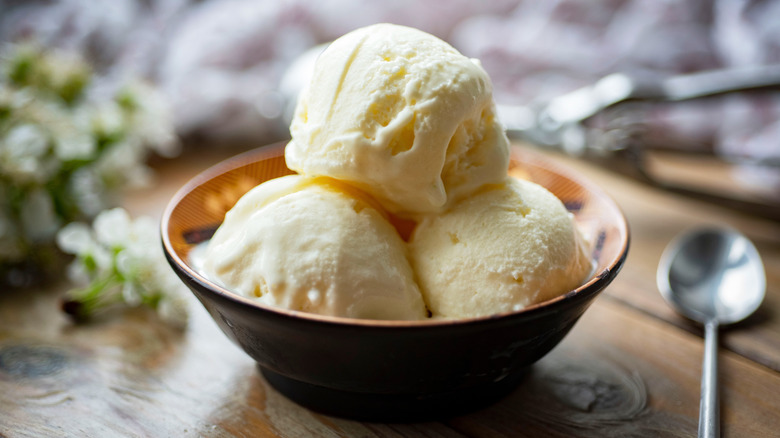
Storing the ice cream at the right temperature range is only half the battle. You must also ensure it is stable throughout the entire process. This means you shouldn't allow the ice cream to melt and re-freeze, possibly by taking it out of the freezer too early when grocery shopping or letting it sit on the counter for too long. Not only does this make the texture lose that airy creaminess and become much grainier, but it could also potentially cause bacterial growth.
Another contributing factor to the temperature stability is the ice cream's spot in the fridge. Place it in the back of the freezer, where it is furthest away from room-temperature air. Conversely, near the door is where the ice cream will be most likely to develop freezer-burn due to constant temperature fluctuation. The container itself should also always be airtight. To be extra careful, you can cover the top with wax or parchment paper before closing the lid to minimize moisture evaporation and ultimately, freezer-burn.
Last but not least: keeping an eye on the freezer's temperature. Some freezers come with a temperature gauge, others have a built-in digital thermometer, and quite a few have none at all. In any case, you can always purchase a freezer thermometer to get the most accurate reading. Place it at the center of the freezer rack and wait for about 24 hours before checking to learn precisely how cold your freezer currently is.