

7 Signs You're In A Superior Italian Restaurant, According To Scott Conant - Exclusive
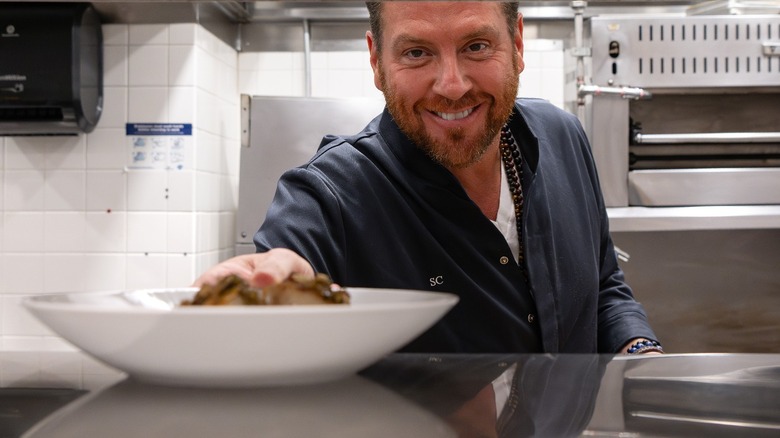
Though there's no shortage of Italian chain restaurants for Americans to choose from, finding an eatery that serves truly authentic, high-quality food can be a bit trickier. So to learn more about the differences between a superior Italian restaurant and those serving more Americanized Italian cuisine, we sat down with celebrity chef and culinary icon Scott Conant ahead of his appearance at The Bahamas Culinary & Arts Festival this October.
The James Beard Award-winning chef, cookbook author, and Food Network alum is no stranger to the world of Italian cuisine. He was behind the legendary Scarpetta in New York City (with which he is no longer affiliated), and he currently helms several restaurants, including his latest venture, Leola, which is located at the Baha Mar Resort in Nassau, Bahamas.
While Conant offered some very specific keys to identifying a top-tier Italian restaurant, his overall take on the matter may be less clear cut than you anticipate. To discover all the details from our exclusive interview with the famous chef, keep reading, as we reveal Scott Conant's signs you're in a superior Italian restaurant.
The food and ambiance reflect a spirit of generosity
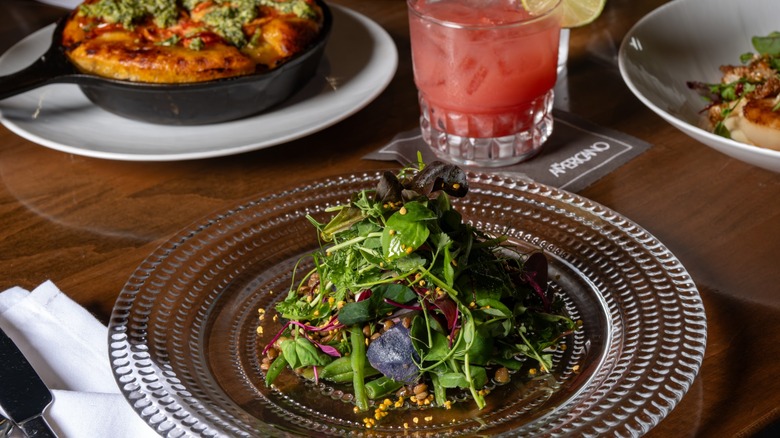
Many of us have been to a hole-in-the-wall Italian place around the corner — the type of spot where everyone who walks through the door immediately feels like they're family. There's often an inherent congeniality, the ambiance is boisterous, loud, and warm, and the food is abundant, comforting, and delicious. And according to Scott Conant, these are crucial indications that you're in a worthwhile establishment.
"I don't care if you're a three-star Michelin Italian restaurant or you're the local dive bar around the corner," Conant explained. "You want that immediate, it grabs at your soul and it pulls you in. For me, that's what you're looking for from your Italian restaurant." This is a sentiment echoed by other noteworthy culinary superstars; for instance, Giada Di Laurentiis's favorite Italian restaurants in the U.S. evoke that spirit of home, and of spending the day cooking with your nonna.
It also reflects the fundamental structure of dining in Italy, where regardless of the type of restaurant you are visiting, you can expect a humble and welcoming atmosphere. "You really want soulful, honest food from an Italian restaurant," Conant added. "I think that inherent generosity, that spirit of generosity coming from the kitchen ... from your service team is really important, as well."
A strong antipasti menu
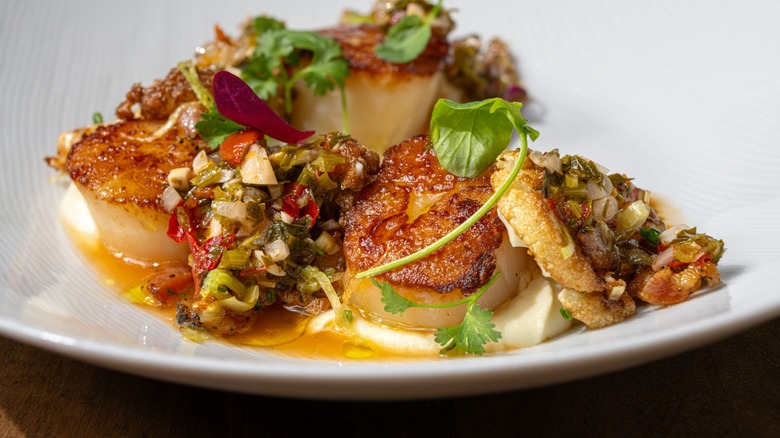
When it comes to the food at a superior Italian restaurant, Scott Conant views it through the lens of someone raised in an Italian-American family, who has also worked in Italian restaurants run by actual Italian individuals. This context allows him to be discerning, but not elitist, when it comes to expectations about the menu. Still, in his estimation, any top-notch Italian restaurant should be outfitted with a robust antipasti menu.
As Conant told Tasting Table, "I think that antipasti moment, particularly for an Italian restaurant, is really vital and important. I think that that's the entree to conviviality at the table, if you will ... those are the things that whet the appetite, and then you're getting ready for the pasta."
Among the items he enjoys serving at his restaurants are an elevated fritto misto or a classic fried calamari. He also appreciates an assortment of smaller, snack-sized antipasti, like bowls of olives, almonds, bread, giardiniera, salume, and some authentic Parmigiano Reggiano topped with balsamic vinegar.
Dishes with a classic sensibility

The remaining menu items should reflect a classic sensibility, but fit the specific bent of the restaurant. This not only skews the expectations of the clientele coming to the restaurant, but informs what dishes may be appropriate. Within these parameters, the menu can be adapted and elevated within reason. "It's a little bit of abundance," Scott Conant said, "which is I think to be expected with Italian restaurants. But there's also a little bit of restraint and refinement within the abundance ... I am always trying to identify that balance and nuance."
As for specific dishes, Conant isn't opposed to pizza on an Italian menu, but modern iterations aren't his cup of tea. A classic Roman or Neapolitan-style pizza are among the only ones he would consider including on a restaurant menu. The same goes for meatballs. While a well-done spaghetti with tomato sauce can be phenomenal, Conant says the only meatballs he loves are the ones his mom used to make, which belong at home — not on the dinner plate at a fine Italian restaurant.
Desserts, however, can be the place to experiment and put a spin on classic recipes, like a Caribbean-style tiramisu dulce de leche mashup. As Conant stated, "Personalizing or taking that inspiration from your locale and applying it to something Italian, that's a lot of fun, and I think dessert is a perfect place for something like that."
The wine list should feature old world wines

When it comes to the wine list, Scott Conant believes old world wines should be prominently featured on the menu of a superior Italian restaurant. "New world wines sell," he said, "and so we'd be crazy not to have them there, but I think with flavor profiles that I try to develop with food, it normally makes sense to lean into old world style wines ... those are the wines that resonate most with me and I think they go best with my food."
For the uninitiated, old world wines are defined as those produced in Western Europe, where the art of wine-making originated. These wines tend to be lower in alcohol content and have distinctive flavor profiles indicative of the unique terroir of the region. These wines may also be produced using traditional wine-making practices, though this isn't always the case.
Examples of old world wines include Barolos, Barbarescos, and super Tuscans. These wines tend to boast high acidity levels and a distinctive minerality, while being lighter-bodied. These characteristics make them ideal for pairing with authentic Italian dishes that are punctuated with fresh herbs, like rosemary, basil, and oregano, as well as fattier meats, like a hearty ragu alla bolognese or a succulent osso buco.
Fresh pasta is imperative

There is a time and place for dry versus fresh pasta, and Scott Conant believes one of those instances is when dining at an Italian restaurant. "People expect to see those artisan touches," Conant told us, which is why he maintains a superior Italian restaurant should offer at least a handful of fresh pasta options to wow its clientele.
Since fresh pasta typically is made using eggs, it can be more delicate, smoother in texture, and have a richer flavor. It's often best-suited to dishes featuring dairy-based sauces, including a classic Alfredo or cacio e pepe. Dried pasta, by contrast, tends to have a firmer texture and coarser surface owing to the extrusion process. These characteristics make them ideal for meat-based sauces or those that are heartier in nature, including a classic ragu alla Bolognese or spaghetti alla carbonara.
Again, it ultimately comes down to what the focus of the restaurant is. In circumstances where the restaurant has an Italian-American bent, quality dry pasta might be perfectly well-suited to the dishes on the menu. Conversely, a Piedmontese or Tuscan-inspired restaurant would be remiss in not including some house-made pasta dishes, like agnolotti del plin or pici pasta with puttanesca.
Espresso is a must

As for espresso, Scott Conant is adamant that any fine Italian restaurant worth its salt must have a solid coffee service. "There have been restaurants that call themselves Italian that don't have espresso, and that's unacceptable ... If you don't have an espresso at your restaurant, thank you very much, I'll see what's happening next door."
Italians are professionals when it comes to drinking espresso and espresso-based drinks. It's part of their daily lives and one they take extremely seriously. Not only is the espresso machine itself critical in the process, the quality of the beans, and even the skill of the barista, are crucial in producing an superior Italian restaurant-worth brew.
There's another reason Italians drink espresso late at night after a meal: It's considered to be a digestive aid after a substantial meal. This is especially true of a shot of espresso, versus a dairy-laden cappuccino or latte. When coffee is consumed after a meal, it encourages the production of stomach acids, which jumpstarts the digestive process. It also stimulates peristalsis, which helps move food through the digestive tract more efficiently.
The ingredients used should be top-notch

The quality of the ingredients at an Italian restaurant must also be top-notch according to Scott Conant, with a particular emphasis on two items. As he explained, chef Paul BartolottaI once told him, "'I never sacrifice on my tomatoes and I never sacrifice on my extra virgin olive oil,' and based on that, I think that he couldn't be more correct."
The real key is how you can elevate these commodities and transform them into something that will exceed the expectations of his guests. This requires an understanding of the principles and philosophy of Italian cooking, as well as strong foundation in technique, and knowledge of how these ingredients are intended to intermingle. "I think there's also a big difference between Italian cuisine," he stated, as opposed to "putting a bunch of Italian ingredients on the plate and calling it Italian cuisine."
Additionally, Conant uses three words when prompted to encapsulate his philosophy in the kitchen and his approach to cooking: "honesty," "integrity," and "soul." These are all aspects of the spirit of generosity that he articulates as fundamental to a superior Italian restaurant, after all, and what sets them apart from others.
For more information on The Bahamas Culinary & Arts Festival, click here. To learn more about Conant's new restaurant Leola at the Baha Mar Resort in Nassau, Bahamas, click here.